

How Often Should a San Tan Valley Pool With a Water Feature Be Serviced?
A San Tan Valley pool with a raised stone wall, scuppers, or a spillway needs a weekly visit from a trained tech, not a once-a-month check-in. These features run the pump far more than a plain pool, which speeds up wear on equipment and raises the risk of calcium and mineral staining on stone and tile. The pool is often the second biggest investment on the property after the house itself, and it needs to be treated that way.
Why new-build San Tan Valley pools run their pumps so much harder
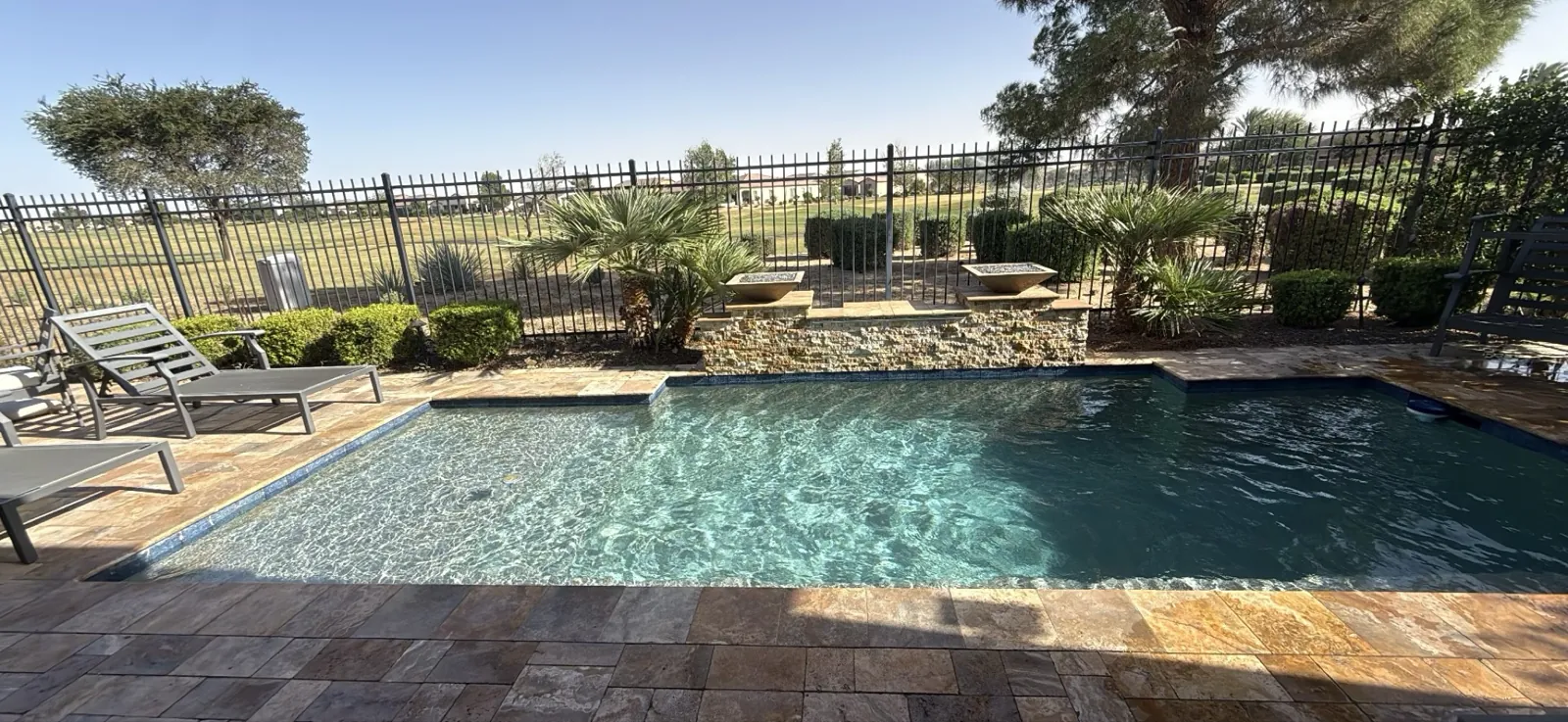
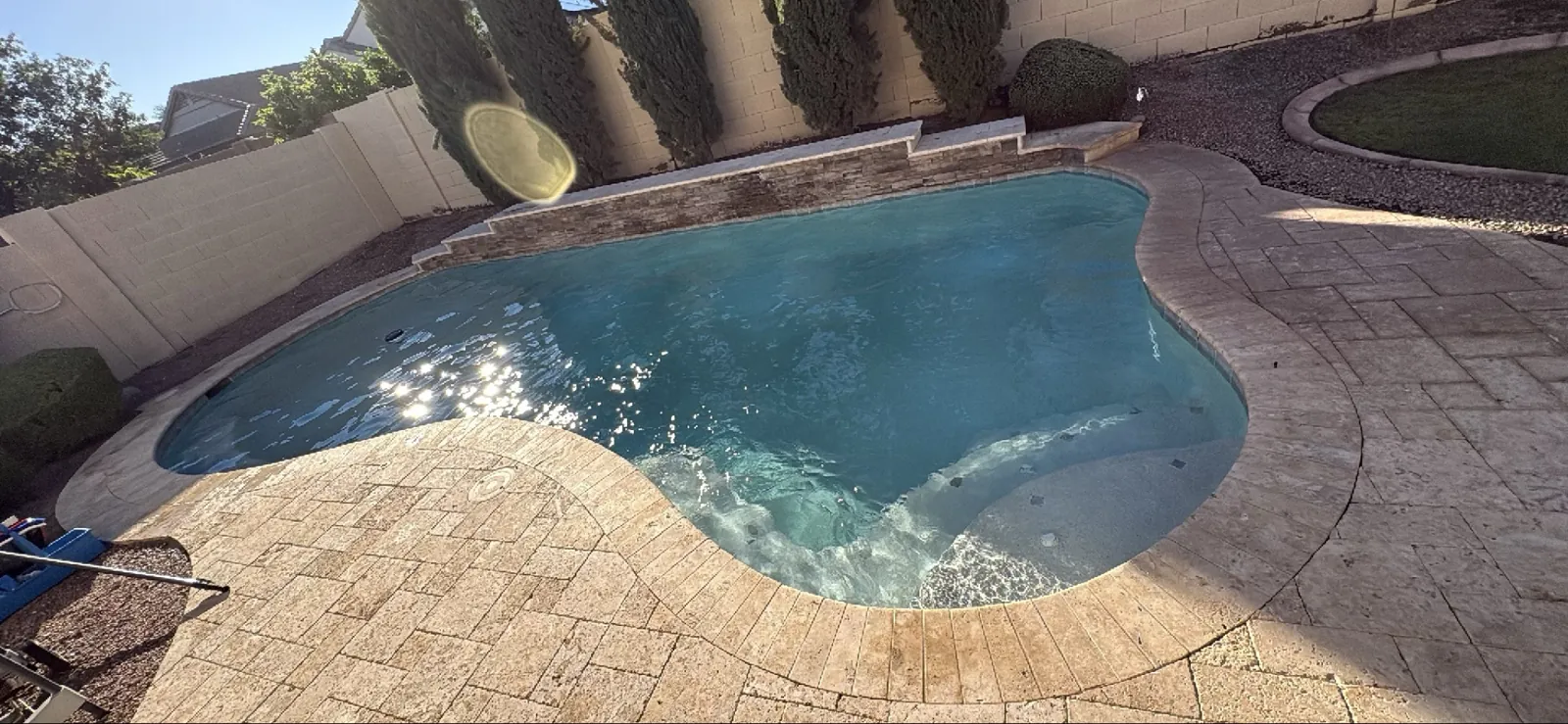
Walk through almost any newer backyard in the Encanterra or Ironwood Crossing area and you will see the same layout: a raised stone wall behind the pool, one or two scupper bowls, and water spilling into the pool almost around the clock. Builders like this look, and it is a good one, but it changes how the pool actually operates.
A plain pool only runs its pump long enough to filter and circulate the water. A pool with a water feature often runs the pump on an extra program just to keep the spillway going, sometimes for hours longer each day. That is more run-time on the motor, more wear on seals and bearings, and a pump that reaches the end of its service life sooner than it would on a standard backyard.
What our techs actually see on these weekly stops
On this month's weekly stops in San Tan Valley backyards with raised stone walls and scuppers, the water itself is usually clear and clean, the kind of result a homeowner expects. But the clear water can hide what is happening underneath it. A constantly running water feature pulls extra load through the plumbing, pushes more water across the tile waterline, and leaves stone and grout exposed to evaporation and mineral drops that a still surface never sees.
This is why these pools need a trained eye at every visit, not just a net and a test strip. A tech who knows what a scupper pool is supposed to look like will catch a pressure gauge creeping up, a faint ring starting on the tile, or a jet that has lost some of its punch, long before it becomes a bigger repair.
Calcium and mineral staining on stone and tile
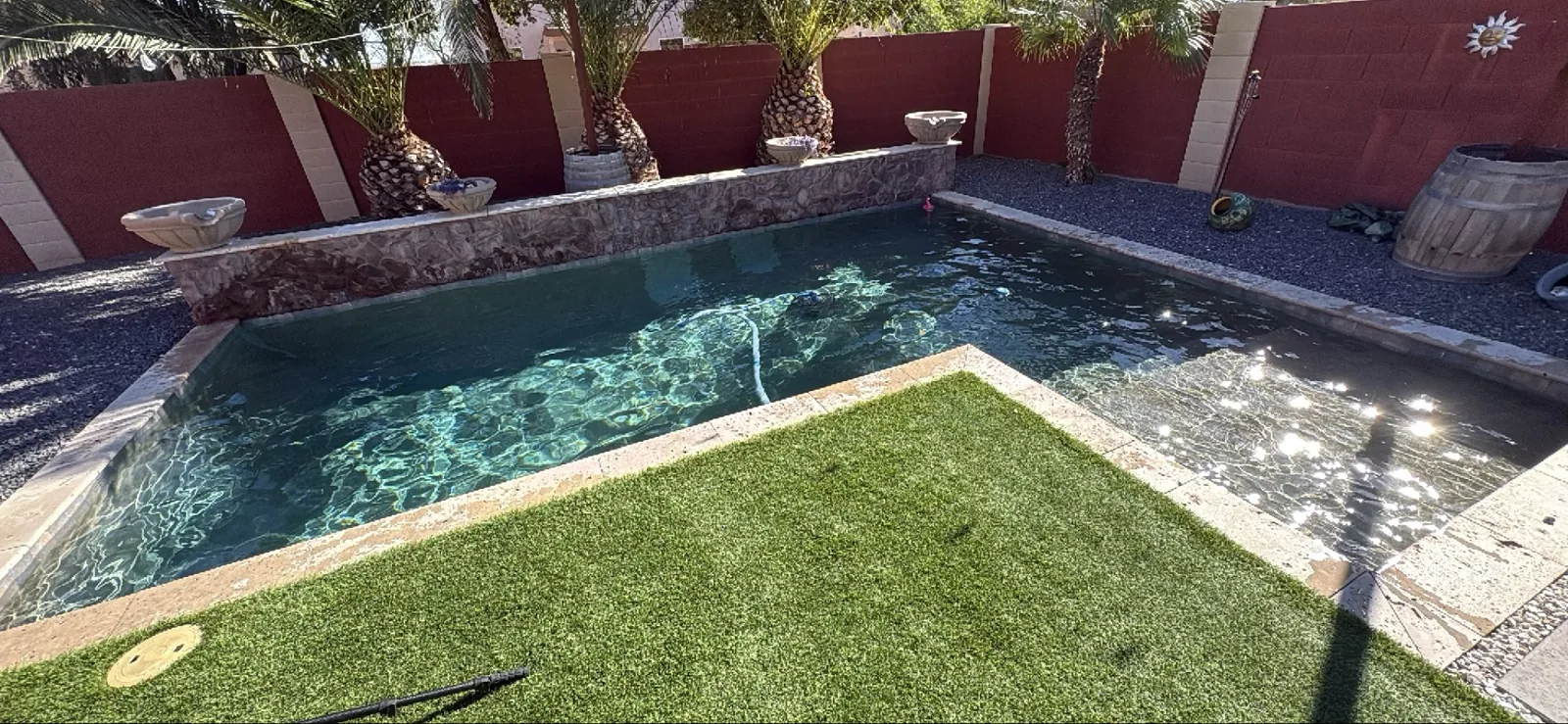
San Tan Valley's water carries hardness that shows up as scale on anything water touches repeatedly. On a plain pool that mostly means the waterline tile. On a pool with a raised stone wall and scupper bowls, it also means the face of the stone, the lip of the bowl, and the spillway channel, all of which get wetted and dried out again every single day the feature runs.
Caught early, this is light buildup that comes off during a normal cleaning. Left alone, it hardens into the kind of deposit that needs a proper drain, acid wash, and tile clean to remove. Weekly eyes on the stone and tile are what keep it in the easy category.
Pump and equipment wear from constant flow
The extra run-time a water feature demands adds up fast over a Valley summer and into a fall like this one. We watch for pressure gauges reading outside their normal range, pumps cycling more than they should, and filters loading up faster because more water is moving through them each day. One of our visits this month was a bottom mount pressure gauge replacement, a small part, but one that matters on a feature pool because an inaccurate reading can mask a filter or pump problem until it gets expensive.
When a pump does reach the end of its life on one of these systems, a variable-speed replacement typically runs $2,500 to $3,500 installed, and running the correct program for a water feature from day one is what gets the most years out of it. A diagnostic visit to check a pump, pressure, or flow issue runs $95 to $165.
Filters work harder behind a water feature
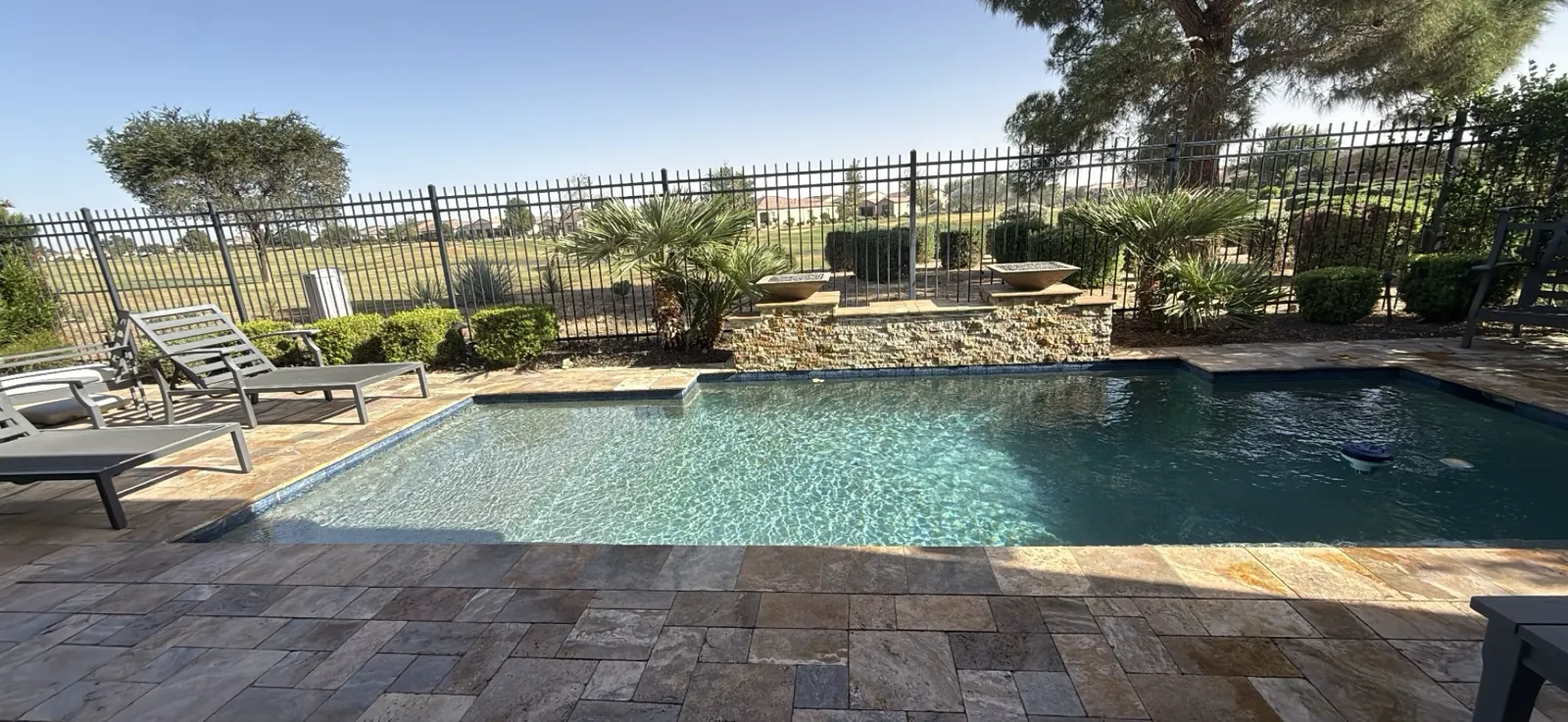
More flow time means more debris and more fine particulate passing through the filter, which shortens the interval between cleanings. A cartridge filter clean is $125 and a DE filter clean is $150, and on a feature pool we check filter pressure every visit rather than waiting for the owner to notice weak flow at the jets. If a filter system is old enough that cleaning no longer restores pressure, a full replacement typically runs $1,800 to $3,000.
What a weekly visit actually protects
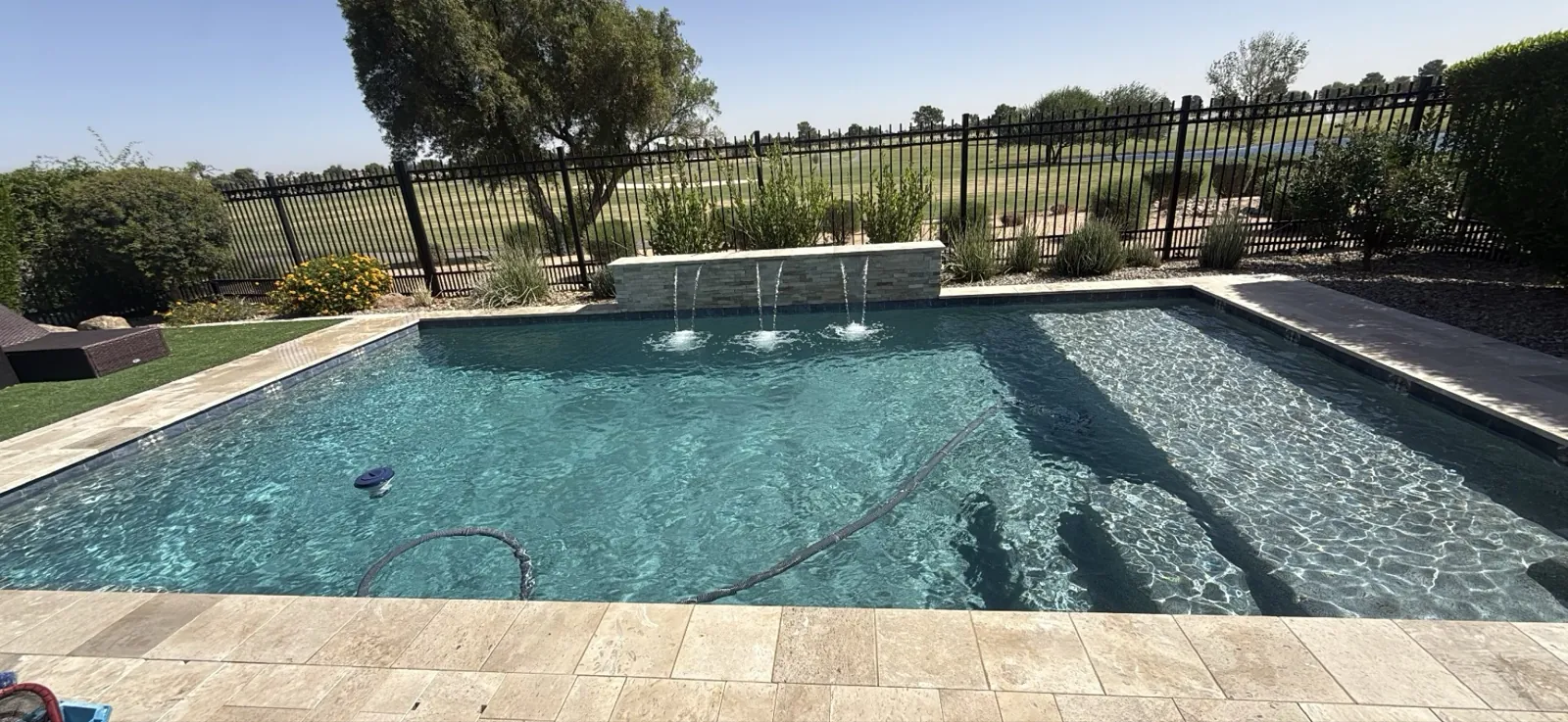
Weekly service on a feature pool is not just about keeping the water blue. It is about protecting an asset that cost real money to build, from the stacked stone to the equipment pad. A tech on site every week catches the small things, a slightly higher pressure reading, a faint mineral line starting on a scupper bowl, a jet pattern that has changed, while they are still small and inexpensive to fix.
Weekly service with chemicals included starts at $179 a month, or $140 a month plus chemicals. If a pool has been neglected and has slipped toward green, a green-to-clean service starts at $300 and typically runs $300 to $700 depending on how far it has gone.
Protecting the investment through monsoon dust and fall
San Tan Valley's monsoon dust settles into every surface, and on a feature pool it finds its way onto stone ledges and into scupper bowls as well as the pool floor. As we move into November and the dust settles with cooler weather, it is a good time to have a tech check the full system, pump programming, filter condition, and the stone and tile, rather than waiting until spring to find out something wore down over the summer.
A properly maintained feature pool holds its value and its looks for years. One that gets checked only occasionally tends to need a bigger repair sooner, whether that is a pump, a filter, or an acid wash to reverse staining that had time to set in.
Frequently asked questions
How often should a pool with a water feature be serviced in San Tan Valley?
Weekly. The extra pump run-time from a raised wall or scupper feature means more wear on equipment and more exposure for stone and tile than a plain pool gets, so a trained tech needs to check it every week, not every few weeks.
Do water features really wear out pump equipment faster?
Yes. A spillway or scupper that runs most of the day adds hours of extra run-time on the pump beyond normal filtration, which shortens the life of seals, bearings, and the motor compared to a pool without a feature.
Why does San Tan Valley's water cause staining on stone water walls?
The local water carries hardness that leaves mineral deposits wherever water flows and evaporates repeatedly. A scupper or spillway wets and dries the stone every day, so calcium buildup shows up there faster than on a still pool wall.
What does weekly service include for a feature pool?
Our techs check water chemistry, filter pressure, pump operation, and the condition of the stone and tile around the feature at every visit, since a feature pool shows wear in more places than a standard pool.
What if staining has already built up on the stone or tile?
A drain, acid wash, and tile clean removes established calcium and mineral deposits from stone and tile. Catching buildup early during weekly visits usually avoids needing that service in the first place.
Tartan Pools is a licensed pool service and repair contractor (Arizona ROC #349378) based in Queen Creek, serving Queen Creek, San Tan Valley, Gilbert, Mesa, Chandler and Tempe.