

What Does a Pool Technician Check During Weekly Service in Queen Creek?
A Queen Creek pool technician checks far more than water clarity on a weekly stop. A proper visit covers the equipment pad (pump, filter, valves, salt cell if present), the tile line and plaster for calcium or staining, the decking for cracks or heaving, and the chemistry needed to protect all of it from our hard water and heat. Skimming leaves is the part you see. The equipment and surface checks are what keep a pool from turning into a five-figure repair.
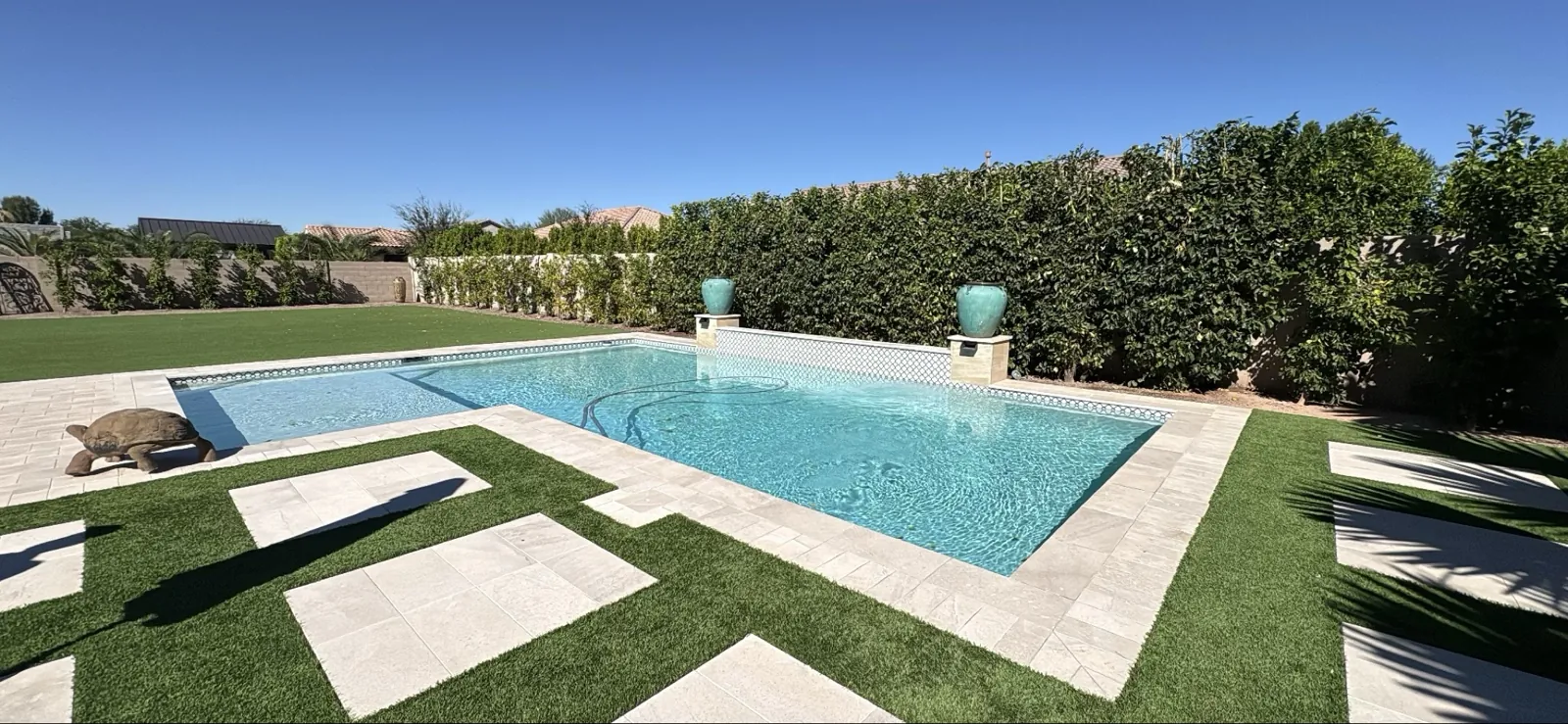
Why a Pool Is More Than Clear Water
In Queen Creek, a pool and its surrounding decking, tile, and equipment represent one of the largest investments on the property, often second only to the home itself. Arizona heat, hard water, and monsoon dust do not take a week off, and neither should pool care. A pool that looks fine on the surface can still be losing ground underneath: calcium creeping into tile grout, a pump bearing starting to whine, or a filter slowly losing pressure.
Weekly service exists to catch these things early, while they are still a $45 salt cell clean or a $125 filter clean instead of a full equipment swap. That is the real job. The leaves are just what is visible from the kitchen window.
The Equipment Pad: The Part Most Homeowners Never See
Every stop includes a walk-through of the pad itself. Techs look at pump seals for weeping, check filter pressure against baseline, and inspect valves and o-rings for wear before they fail. On a recent Queen Creek stop, a customer had flagged a concern about their Pentair system, and the visit included checking the air relief valve for proper function, part of catching pressure issues before they turn into a cracked filter lid or a pump running dry.
This is also where salt cell buildup, worn check valves, and aging variable-speed pumps get flagged before they strand a family with a dead system in July. A pump replacement runs $2,500 to $3,500 installed, which is a strong reason to catch early warning signs during a routine visit rather than after a failure.
Tile Lines and Plaster: Where Queen Creek's Hard Water Shows First
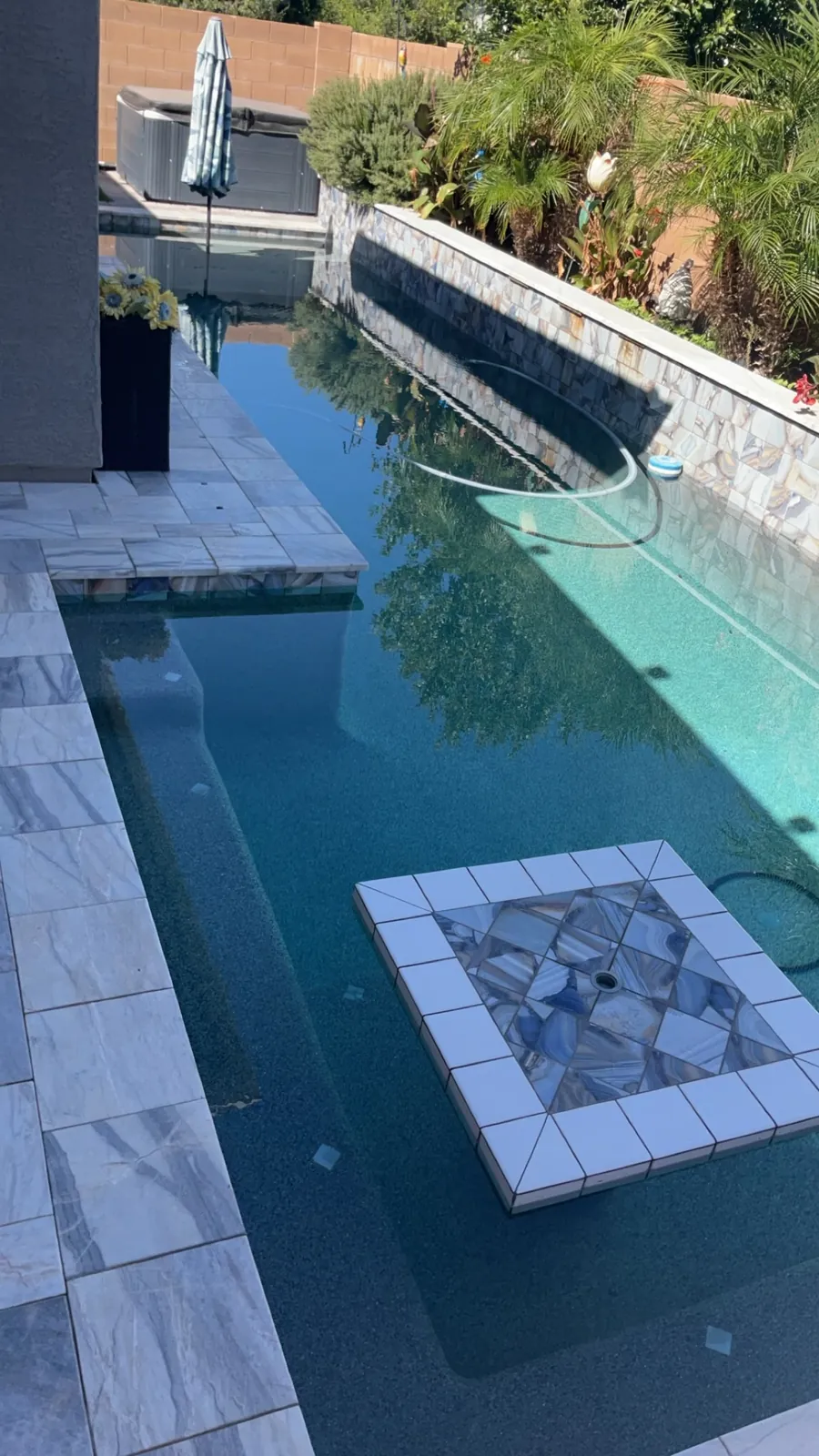
Queen Creek's hard water leaves calcium scale along the waterline faster than most homeowners expect, especially on raised tile walls and spillways common in newer backyards. Techs run a hand and eye along the tile line every visit, looking for the early haze that signals scale starting to bond to grout. Left alone, it hardens, dulls the tile, and eventually calls for an acid wash. Caught early, it is a quick brush and a chemistry adjustment.
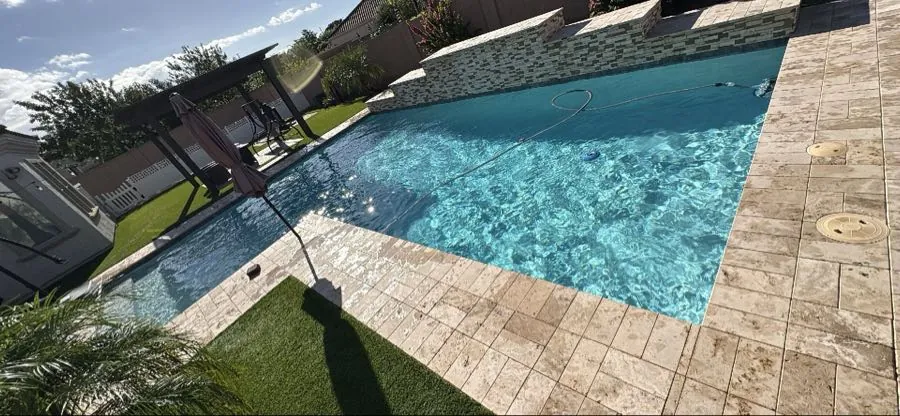
Plaster and pebble finishes get the same attention: staining, rough spots, or etching are noted before they spread. One October evaluation visit on a dark-bottom pool with a stacked-stone wall and submerged tile bench confirmed what a well-maintained finish should look like, clear water, no staining, tile and stonework holding up well under consistent care.
Travertine Decking and Hardscape: Protecting What Surrounds the Pool
Travertine and paver decking take a beating from Queen Creek sun, monsoon grit, and splash-out chemistry. Techs keep an eye on deck drains, grout lines near the coping, and any heaving or cracking that can follow our clay soil through summer heat cycles. A clean, well-rinsed deck also keeps dust and debris from blowing back into the pool, which cuts down on filter load between visits.
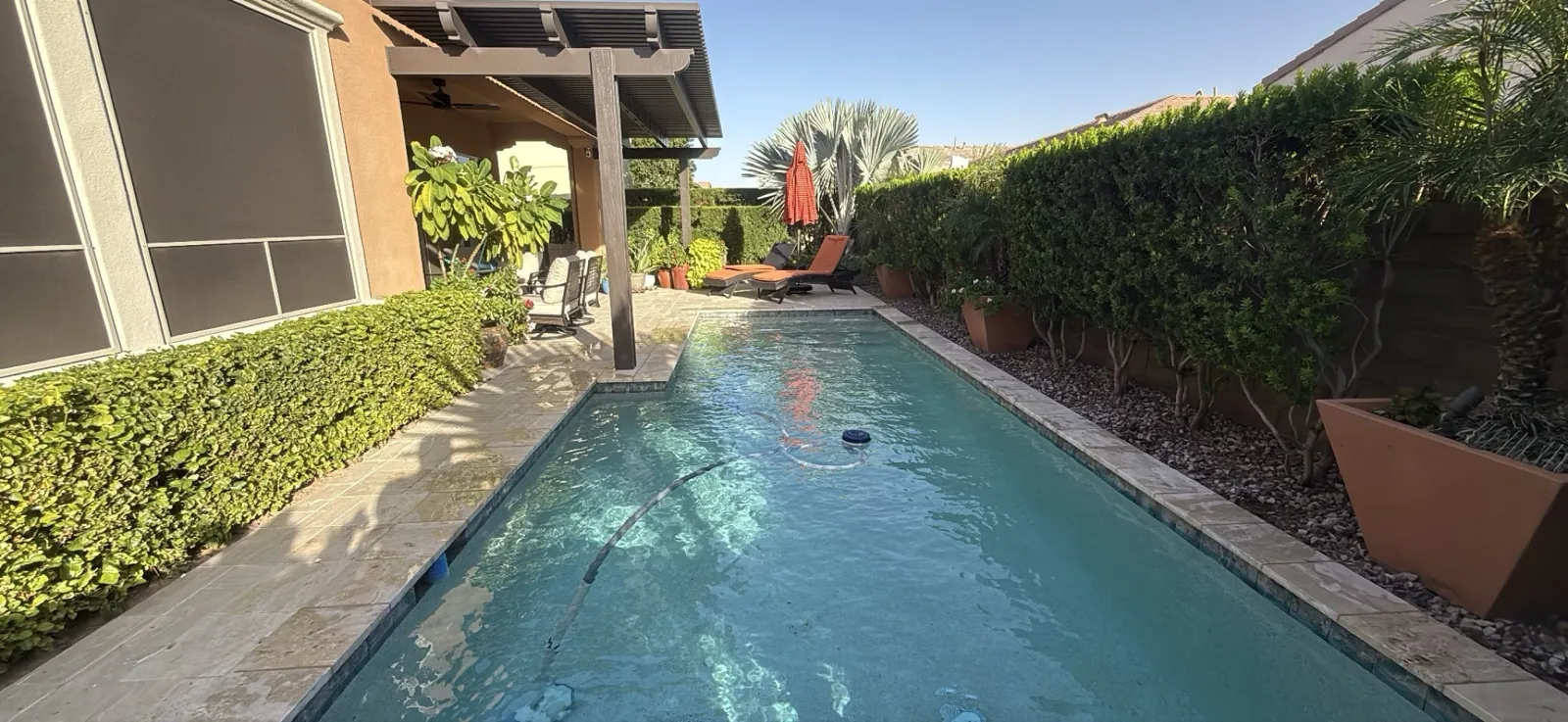
On a lap pool visit this month, the travertine surrounding the pool and spa area stayed clean and well kept alongside clear water, a good example of what consistent weekly attention looks like when nothing is left to build up.
What Actually Happens During the Vacuum and Clean
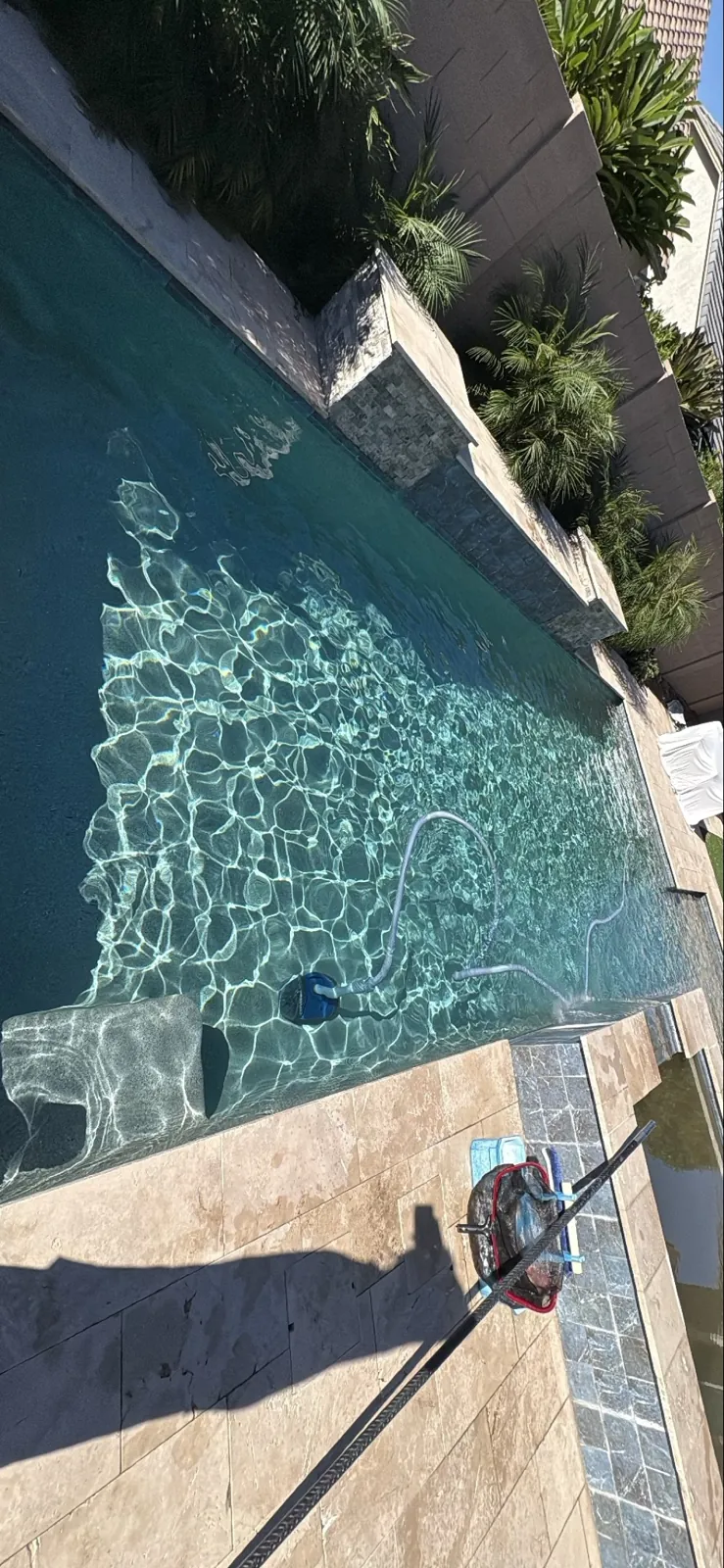
The hands-on part of the visit is where most of the debris and fine silt gets pulled before it settles into plaster or clouds the water. Techs run a manual vacuum across the floor, work the walls and steps, and brush tile as needed. On one October stop, the vacuum hose and head were still mid-task in a narrow, elongated pool, catching material before it could settle into the grout lines of a raised stone wall feature.
- Skim surface and empty skimmer baskets
- Vacuum floor and brush walls, steps, and tile line
- Test and balance chemistry
- Check pump, filter pressure, and visible equipment
- Inspect decking and tile for early wear
On another stop, a pole and hose were left floating mid-service near a raised tile wall and water feature spillway, a sign of active work in progress rather than a quick skim-and-go.
Filters, Spas, and the Parts People Forget
Cartridge and DE filters do the quiet work of keeping water clear, and they need periodic cleaning to keep pressure in range. A cartridge filter clean runs $125, a DE filter clean $150, both far cheaper than a filter system replacement at $1,800 to $3,000 once years of buildup force the issue. Spas get checked too, even when covered, since jets and covers trap moisture and debris that can affect water chemistry on the main pool.
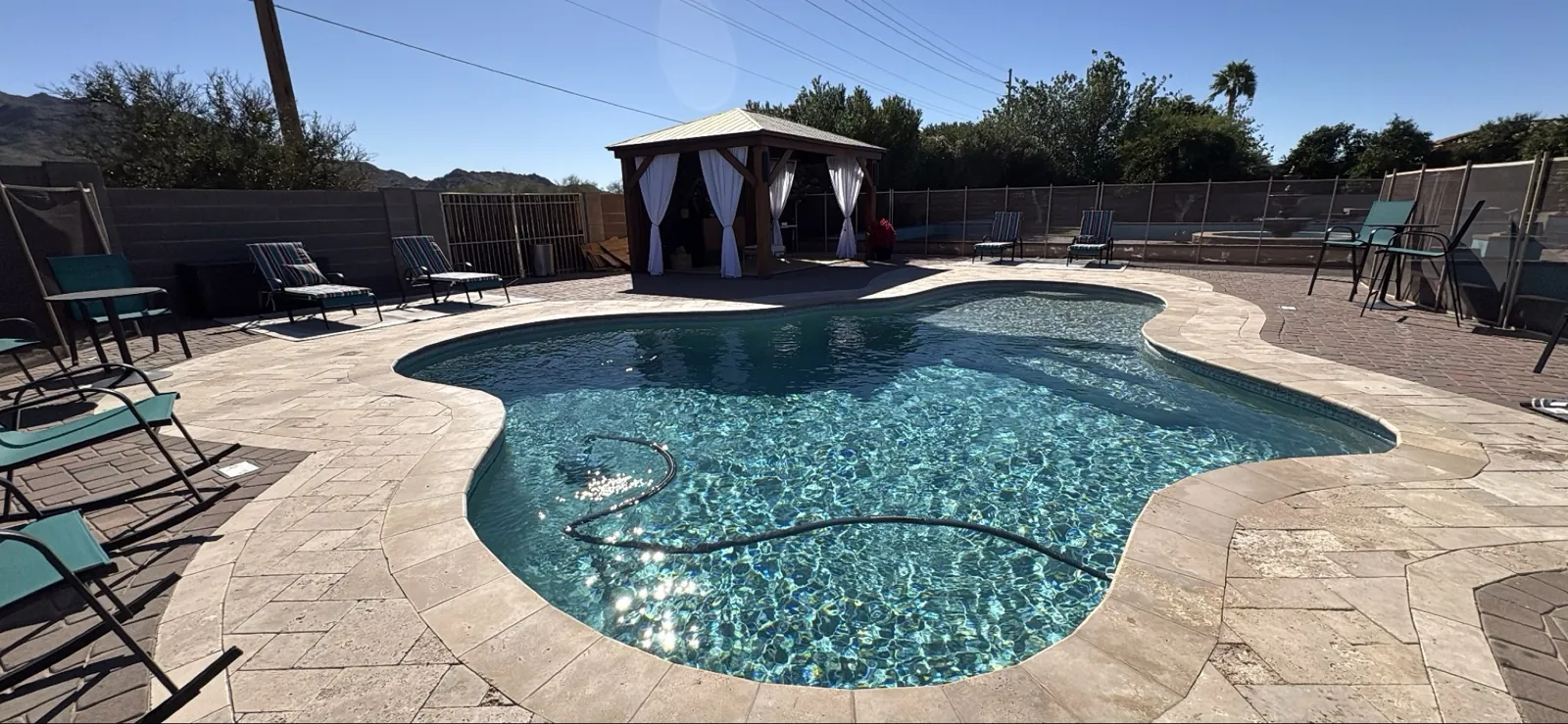
A gazebo-shaded pool and spa combo serviced this month, with a vacuum hose running from the shallow end, is a good example of a full-property check rather than a pool-only glance.
What This Costs in Queen Creek
Weekly service starts at $140 a month plus chemicals, or $179 a month with chemicals included. A diagnostic visit for something specific, like a pump that is cycling oddly or a filter losing pressure, runs $95 to $165. If a pool has been neglected and turned green, a green-to-clean service runs $300 to $700 depending on condition. These numbers are small compared to the cost of replacing equipment or redoing a finish early because warning signs were missed.
Tartan Pools is a licensed Arizona contractor, ROC #349378, and our techs are trained to spot these issues on routine visits, not just react to emergencies.
Ready for Consistent Weekly Protection?
If your Queen Creek pool has not had a consistent eye on the equipment pad, tile line, and decking lately, now is a good time to start. Text or call (480) 999-9226 for a free quote, or visit our Queen Creek pool services page to see how weekly service works.
Frequently asked questions
What does a pool technician check during a weekly visit in Queen Creek?
A tech checks the equipment pad (pump, filter, valves), the tile line and plaster for calcium or staining, decking for cracks or heaving, and water chemistry, in addition to skimming and vacuuming.
Why does Queen Creek's hard water affect pool tile?
Hard water leaves calcium scale along the waterline, which bonds to tile grout over time. Weekly brushing and chemistry checks catch this early before it requires an acid wash.
How much does weekly pool service cost in Queen Creek?
Weekly service starts at $140 a month plus chemicals, or $179 a month with chemicals included.
What happens if equipment problems are missed during service?
Small issues like a worn air relief valve or early salt cell buildup can turn into major repairs, such as a pump replacement at $2,500 to $3,500, if not caught during routine visits.
Does weekly service include the spa?
Yes, a full service visit checks the spa and its cover along with the main pool, since trapped moisture and debris can affect overall water chemistry.
Is Tartan Pools licensed in Arizona?
Yes, Tartan Pools is a licensed Arizona contractor, ROC #349378, serving Queen Creek, San Tan Valley, Gilbert, Mesa, and Chandler.
Tartan Pools is a licensed pool service and repair contractor (Arizona ROC #349378) based in Queen Creek, serving Queen Creek, San Tan Valley, Gilbert, Mesa, Chandler and Tempe.