

Raised Spas and Water-Feature Walls in Queen Creek: Keeping Them Calcium-Free
Raised spas, scuppers, and spillway walls are showing up in nearly every new-build Queen Creek backyard because they look great and feel like resort water. The tradeoff is more calcium exposure and more surface for scale, since that water sheets over tile and stone 24 hours a day. Keeping these features clean takes weekly brushing of the spillway edges plus periodic tile cleaning, usually before scale becomes visible white buildup.
Why are raised spas and spillway walls so common in new Queen Creek pools?
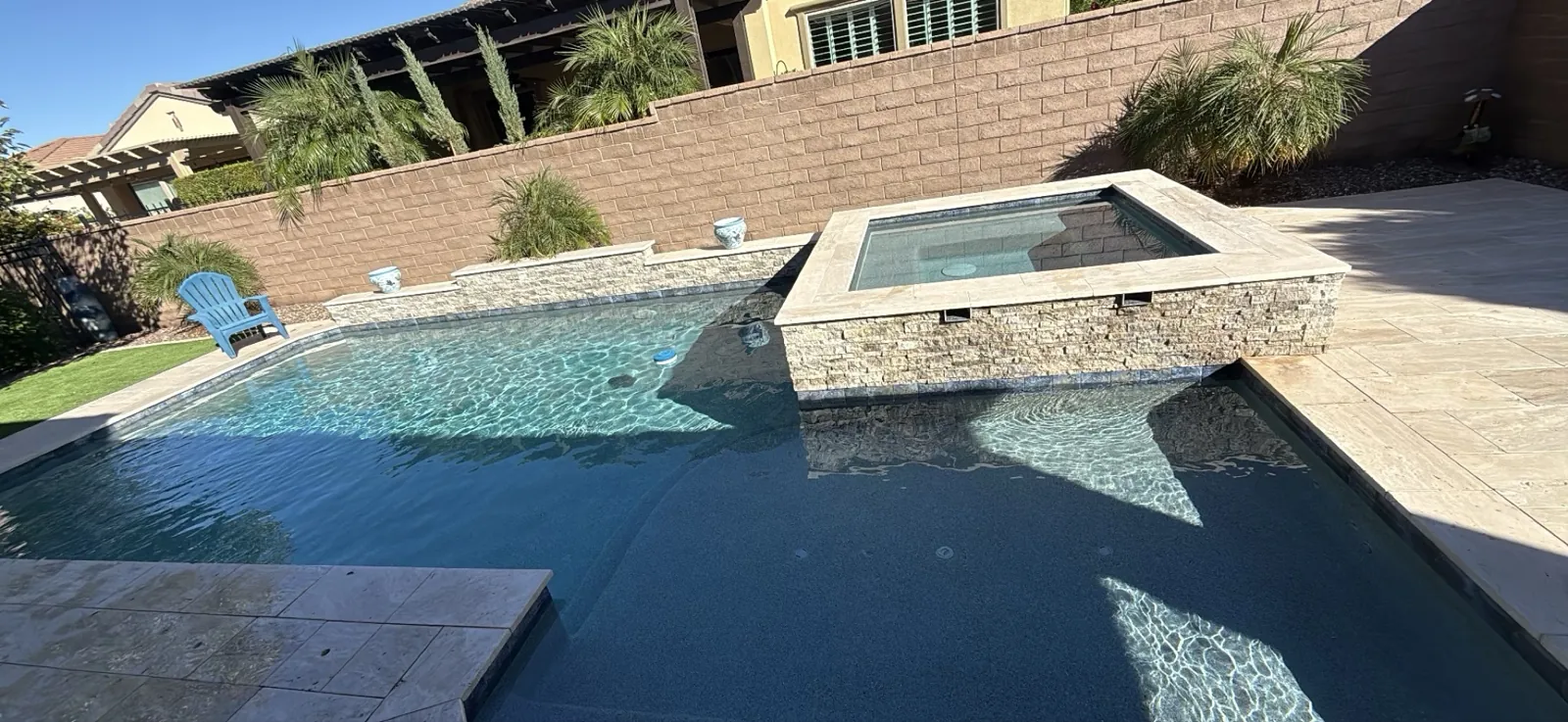
Our техs are out in new-build communities across Queen Creek every week, and this month alone we serviced more than a dozen backyards with raised tiled spas, water scuppers, or sheeting spillway walls feeding into the main pool. Builders and designers like these features because they add sound, movement, and a resort look without taking up extra yard space. A raised spa also lets homeowners heat a smaller volume of water separately from the pool.
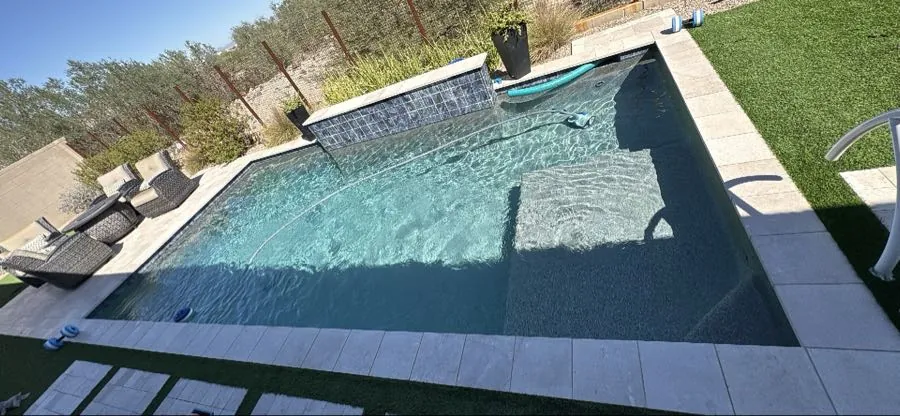
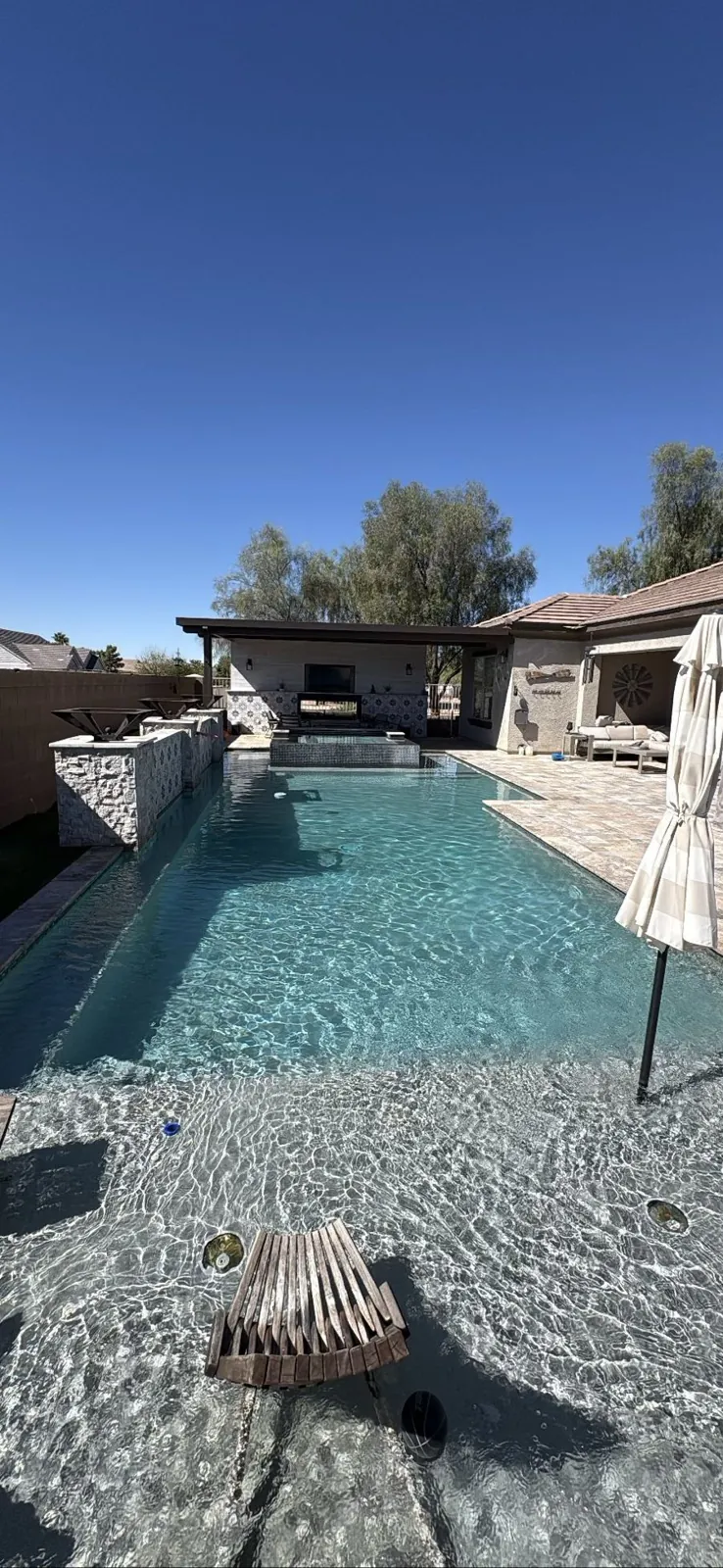
We see the same basic layout again and again: a raised spa or accent wall clad in stone, tile, or stacked rock, with water spilling over an edge or through scuppers into the pool below. It is a good-looking design, and when it is maintained well it stays that way.
Why does Queen Creek water make these features harder to keep clean?
Queen Creek water, whether from the well system or the city supply, runs hard. That means it carries a load of dissolved calcium and minerals. In a normal pool that water mostly sits still or circulates below the surface. On a spillway wall or scupper, the same water sheets continuously over tile and stone, evaporating as it goes and leaving mineral deposits behind every single day.
That is why the first place we check for scale on any service stop with a raised feature is the spillway edge and the waterline right where it meets the pool. It is almost always the first spot to show white or gray buildup, well before the rest of the tile or plaster shows any wear.
What does a well-maintained spillway wall actually look like?
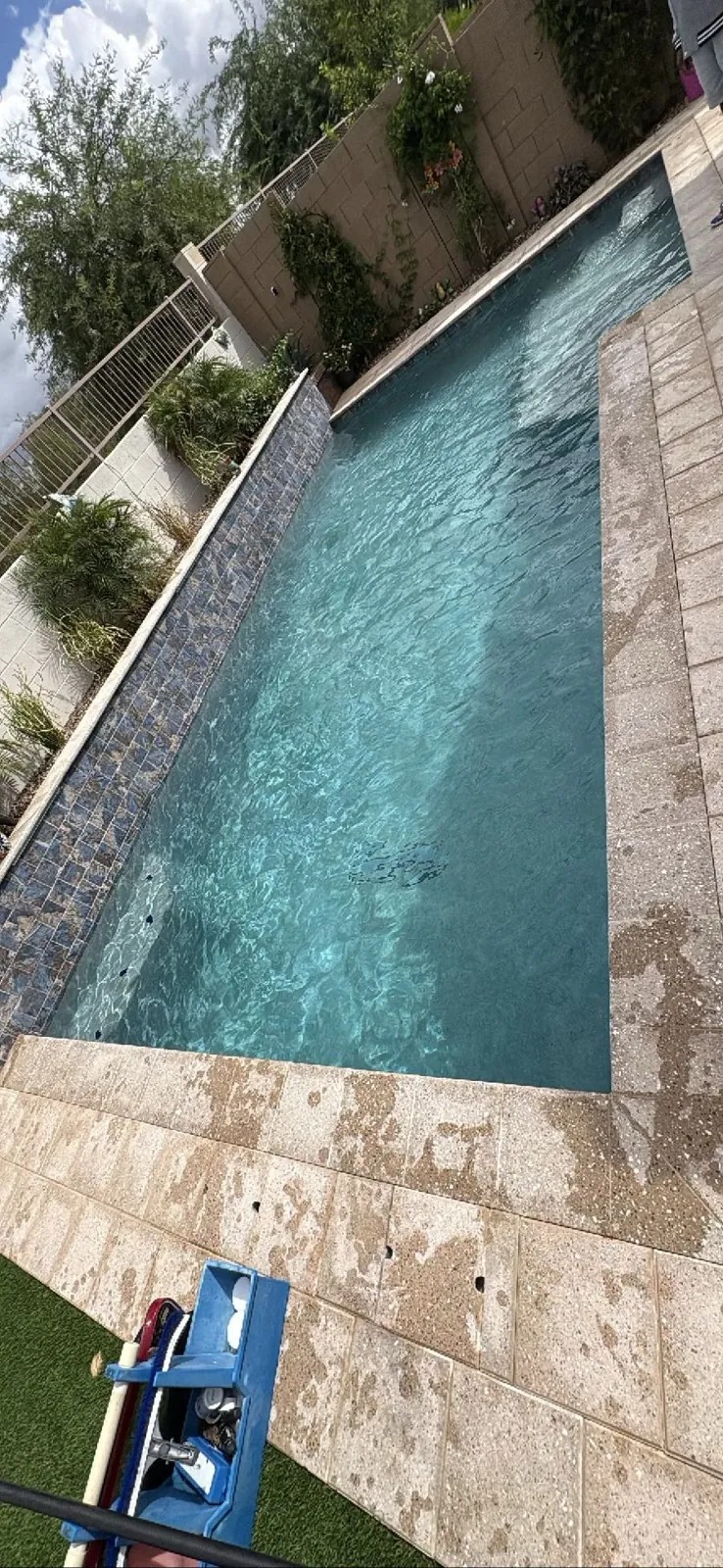
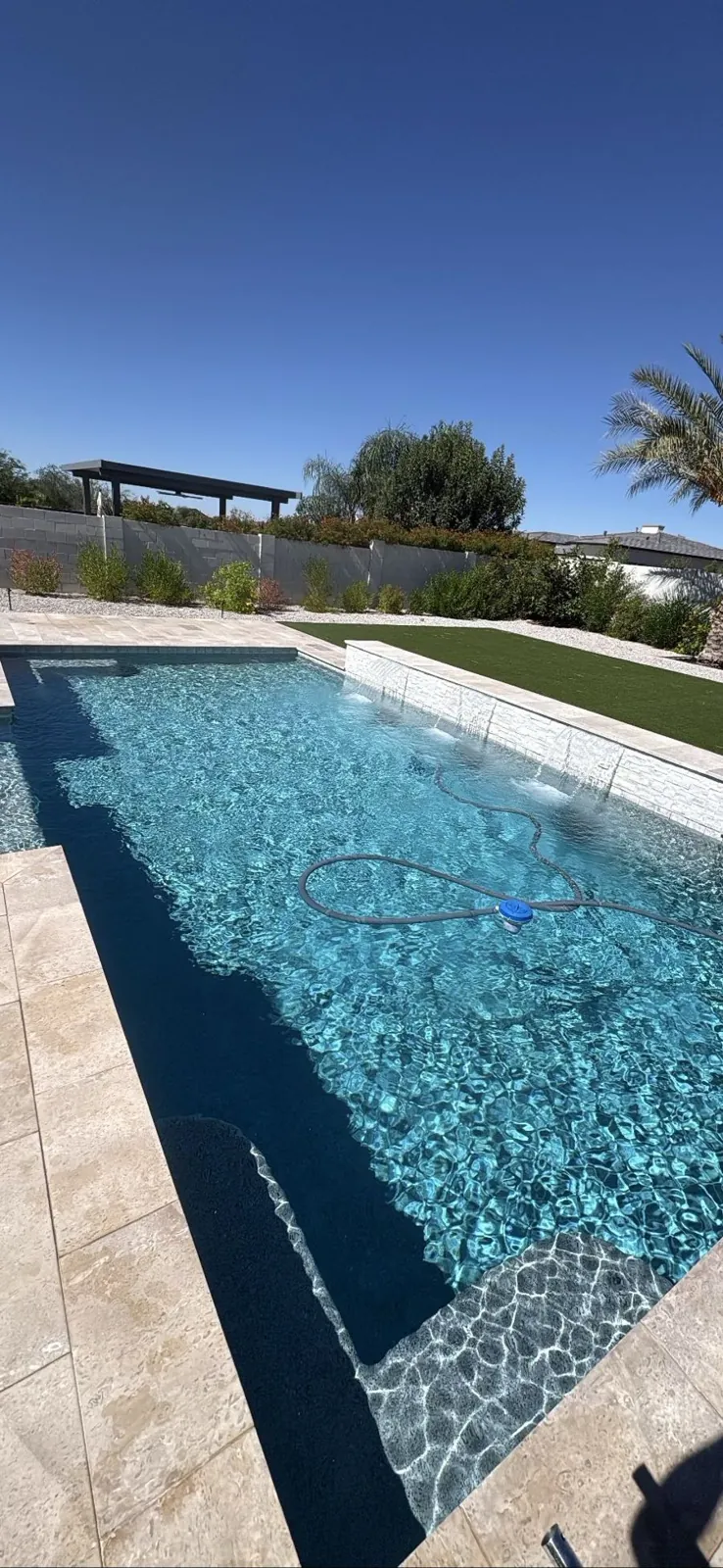
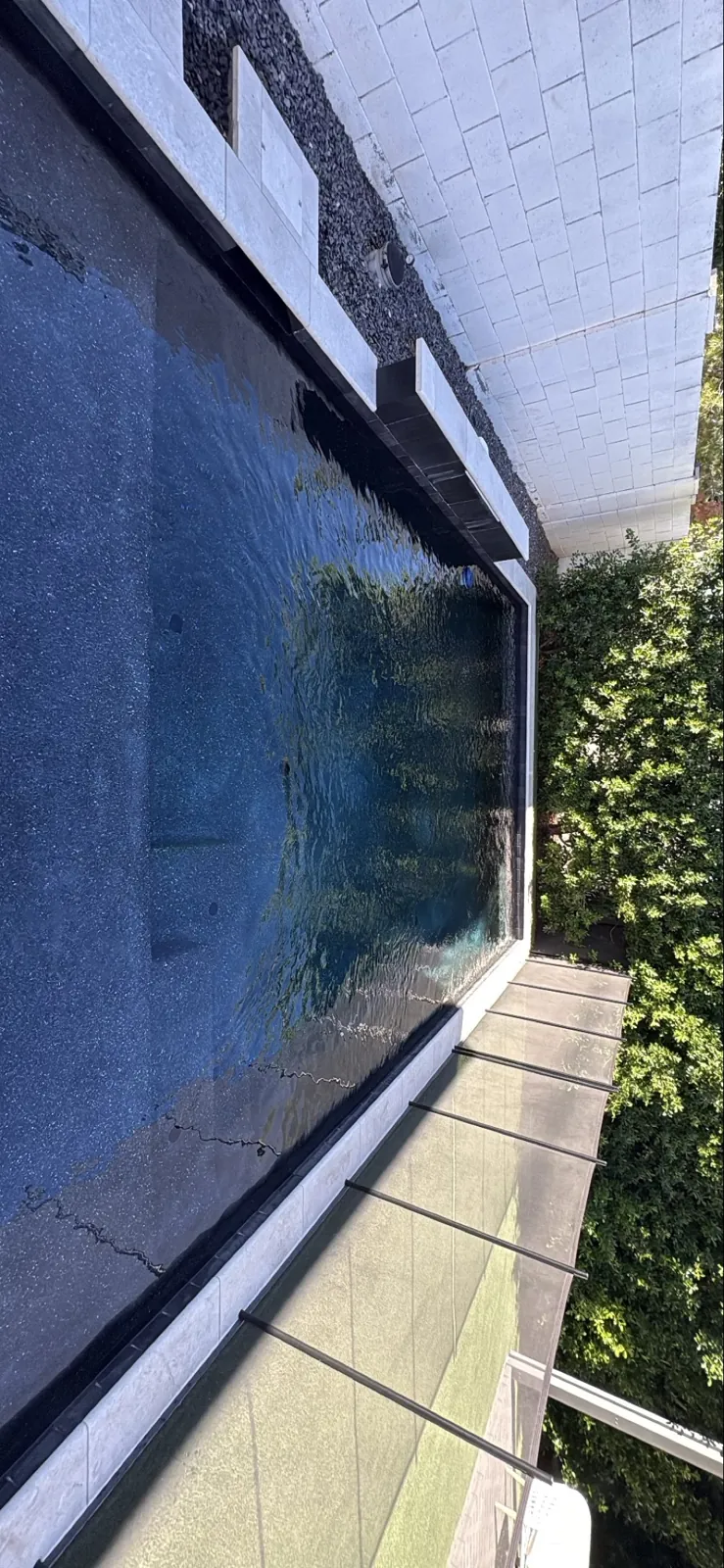
The photos below are from our October service routes in Queen Creek, not staged shots. A raised spa with stone veneer spilling into a dark pebble pool, a tiled wall with multiple scuppers, a sheeting waterfall wall off an aerial view, and a vanishing-edge style stone wall all show the same thing: clear water and clean tile when the feature gets brushed on a regular schedule.
What early calcium scale looks like before it gets bad
Calcium scale does not show up overnight, but on a spillway wall it builds faster than almost anywhere else in the pool. The earliest sign is usually a faint white haze or rough texture right along the lip of the scupper or spill edge, sometimes paired with light mineral spotting on the deck below where water splashes or drips. Caught at this stage, a brush and some extra attention during the weekly visit is usually enough to keep it from setting into the grout and tile.
Once that haze turns into a chalky, raised white deposit that does not wipe off, brushing alone will not remove it. That is the point where an acid wash or a tile cleaning service is the better call instead of fighting it weekly with a brush.
Does a raised spa or spillway wall mean more weekly maintenance?
Yes. A raised spa wall or scupper feature adds real surface area that a flat pool does not have, and all of it needs to be brushed, not just the pool floor and walls. On our weekly stops with these features we spend extra time on:
- The spillway lip and scupper openings, where scale starts first
- The tile line behind and around the raised wall
- The spa floor and bench, since spas run warmer and concentrate minerals faster
- The plumbing and valve that feeds the spillway, which is an added mechanical point that can fail or clog
That plumbing point matters more than homeowners expect. A spillway or scupper usually runs off a dedicated valve or its own small pump. When it starts running weak, spitting air, or stops flowing altogether, it is often a valve or plumbing issue rather than anything wrong with the main pool equipment.
When is brushing enough, and when do you need tile cleaning?
Weekly brushing handles ordinary scale if it is kept up consistently, especially right after the water feature's spill edge starts to feel rough rather than smooth. Once deposits build into a visible white crust that brushing will not budge, or when the texture has bonded into the grout lines, it is time for a professional tile cleaning instead of more scrubbing.
For most Queen Creek pools with raised features, we recommend a tile cleaning check at least once a year, sooner if the spillway runs constantly or the spa gets heavy use. Our pool tile cleaning service in Queen Creek is built around exactly this kind of calcium buildup on scuppers, spillways, and waterline tile.
What if the pool has gone green or the feature has stopped running?
Occasionally a pool with a raised spa or spillway gets neglected long enough that it turns green, usually because the feature's valve gets ignored along with everything else. If that happens, a standard cleanup brings it back, priced from $300 and typically running $300 to $700 depending on how far it has gone. If the spillway plumbing itself needs diagnosing, a standalone diagnostic visit is $85.
We service 331 Queen Creek pools on a weekly schedule right now and have completed 11,906 visits across the city in the last 12 months, including a steady stream of these raised-spa and spillway designs. We know what normal wear looks like on them and what needs a closer look.
Keeping your water feature running clean
If your Queen Creek pool has a raised spa, scupper wall, or spillway and you are noticing rough or chalky edges, it is worth a look before it sets in. Weekly service from $140 a month plus chemicals, or $179 a month with chemicals included, covers the brushing these features need. You can see what full weekly service includes on our Queen Creek pool service page, or text or call (480) 999-9226 for a free quote.
Frequently asked questions
Why does calcium build up faster on spillway walls and scuppers?
Water sheeting over tile or stone evaporates constantly, leaving mineral deposits behind every day. A normal pool wall is submerged most of the time, so it does not see the same exposure.
How often should a raised spa spillway be brushed?
It should be brushed every week along with the rest of the pool. The spill edge and scupper openings need extra attention since they are the first place scale shows up.
Can I remove calcium scale myself?
Light haze often comes off with regular brushing. Once it hardens into a chalky, raised deposit, it usually needs a professional tile cleaning or acid wash instead.
What does tile cleaning cost in Queen Creek?
Tartan's tile cleaning service addresses calcium buildup on scuppers, spillways, and waterline tile. Pricing depends on the scope of the job, so reach out for a quote based on your feature.
Does a spillway wall add extra points of failure?
Yes. Most scuppers and spillways run off a dedicated valve or small pump. Weak flow or air in the line is often a plumbing issue rather than a main equipment problem, and a diagnostic visit priced at $85 can identify it.