

Why Your Queen Creek Pool Water Looks Hazy in November Even Though the Filter Is Running
A hazy pool in November is almost never about debris or a broken filter. As water temperature drops, chlorine demand and bather load misreport themselves, and shorter days mean most pumps are running fewer hours than they need to. The fix is a chemistry and run-time adjustment, not a one-time scrub, which is exactly what a weekly tech corrects during the normal stop.
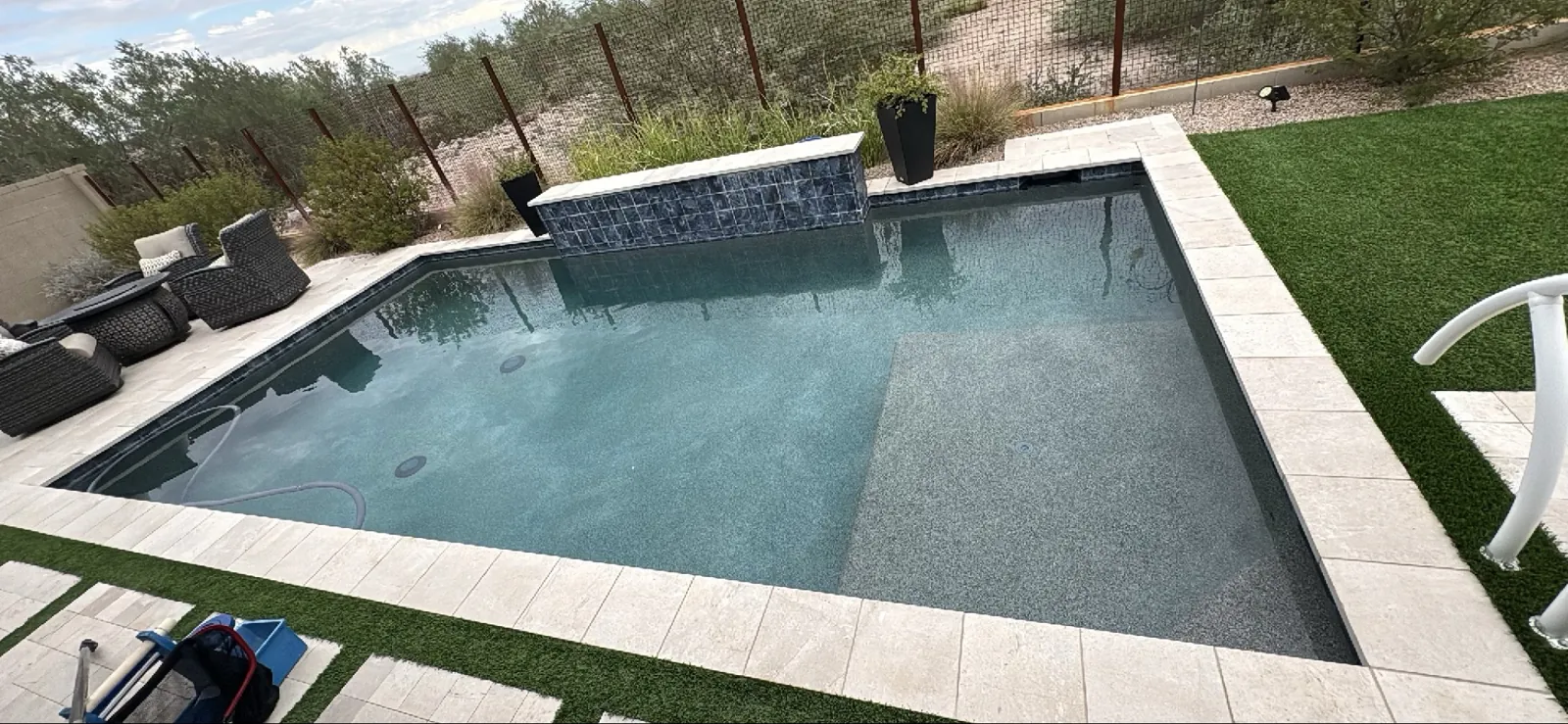
Why does pool water turn hazy when nothing looks wrong?
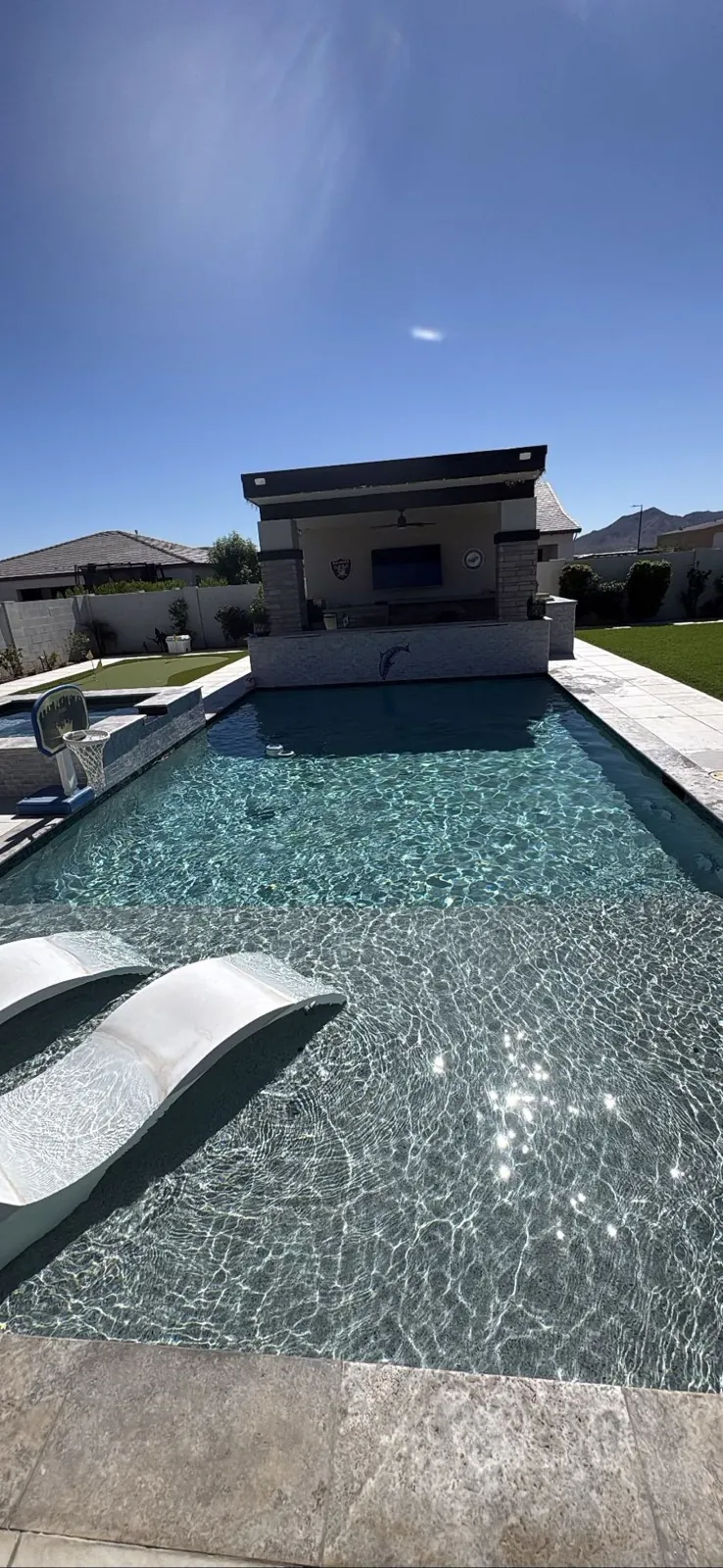
This month on our Queen Creek routes we saw the same pattern over and over. Most backyards were crystal clear after a normal weekly visit, tile clean, water blue, no debris in sight. But one stop caught the water mid-visit with a slightly cloudy, hazy look, even though the tile and coping were spotless and there was no leaf litter or staining anywhere. That is the tell. When the surfaces are clean but the water still looks dull, the problem is dissolved, not visible. It is chemistry and circulation, not cleaning.
What changes in Queen Creek pool water in November
Cooler water holds chlorine differently than summer water. As temperatures drop through the 60s and 50s, chlorine breaks down more slowly, so a reading on a test strip can look fine even though there is not enough active sanitizer actually working against fine particles and early algae growth. At the same time, most homeowners cut back pump run-time once the heat breaks, assuming a shorter cycle is enough. It usually is not. Fall dust, cooling nights, and lower bather load all change the water chemistry at once, and a pool that looked perfect in September can turn hazy within a week or two if nothing is adjusted.
What a weekly tech actually adjusts to fix it
On the hazy stop this month, the equipment pad showed no leaks or failures. The fix was the same set of adjustments we make on most fall accounts:
- Extending pump run-time to match the lower water temperature, since cooler water needs more circulation time to keep particles from building up
- Rebalancing chlorine and stabilizer levels for the shorter, cooler days instead of trusting a strip reading alone
- Backwashing or cleaning the filter if it is holding onto fine particulate that a visual check will not catch
None of this shows up by eye. It is why a pool can look clean
to a homeowner and still read hazy, and why a trained tech checks the water chemistry and the equipment pad every single visit rather than just skimming and brushing.
What a properly adjusted Queen Creek pool looks like this time of year
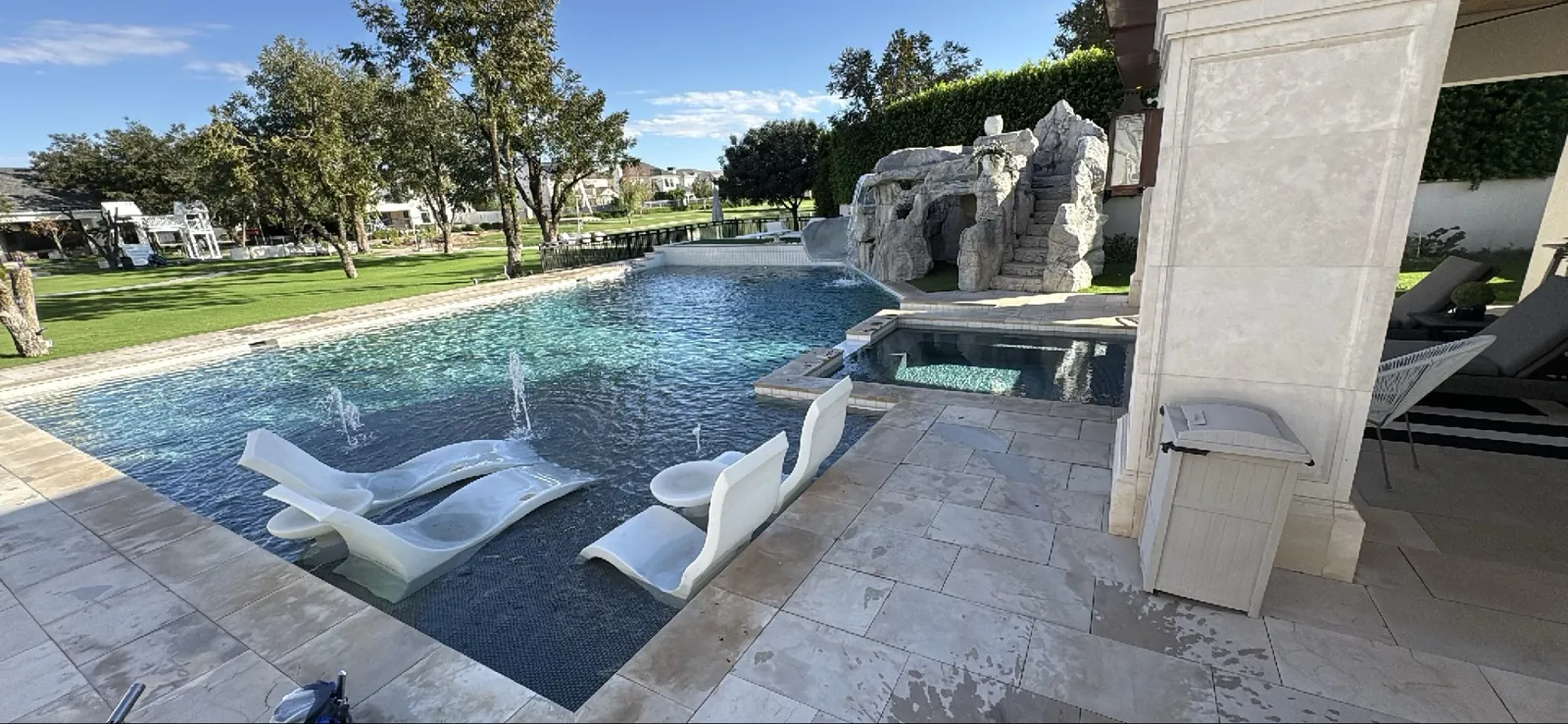
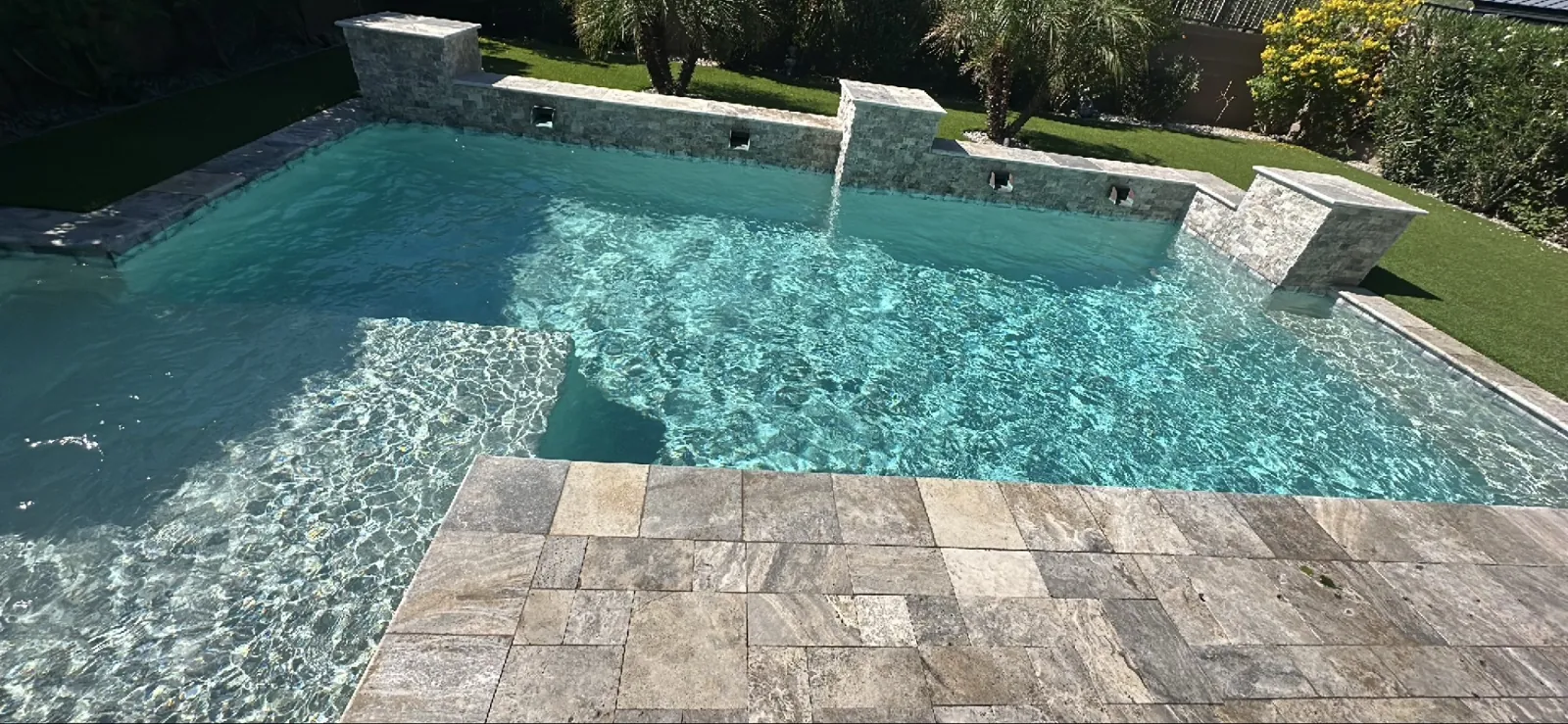
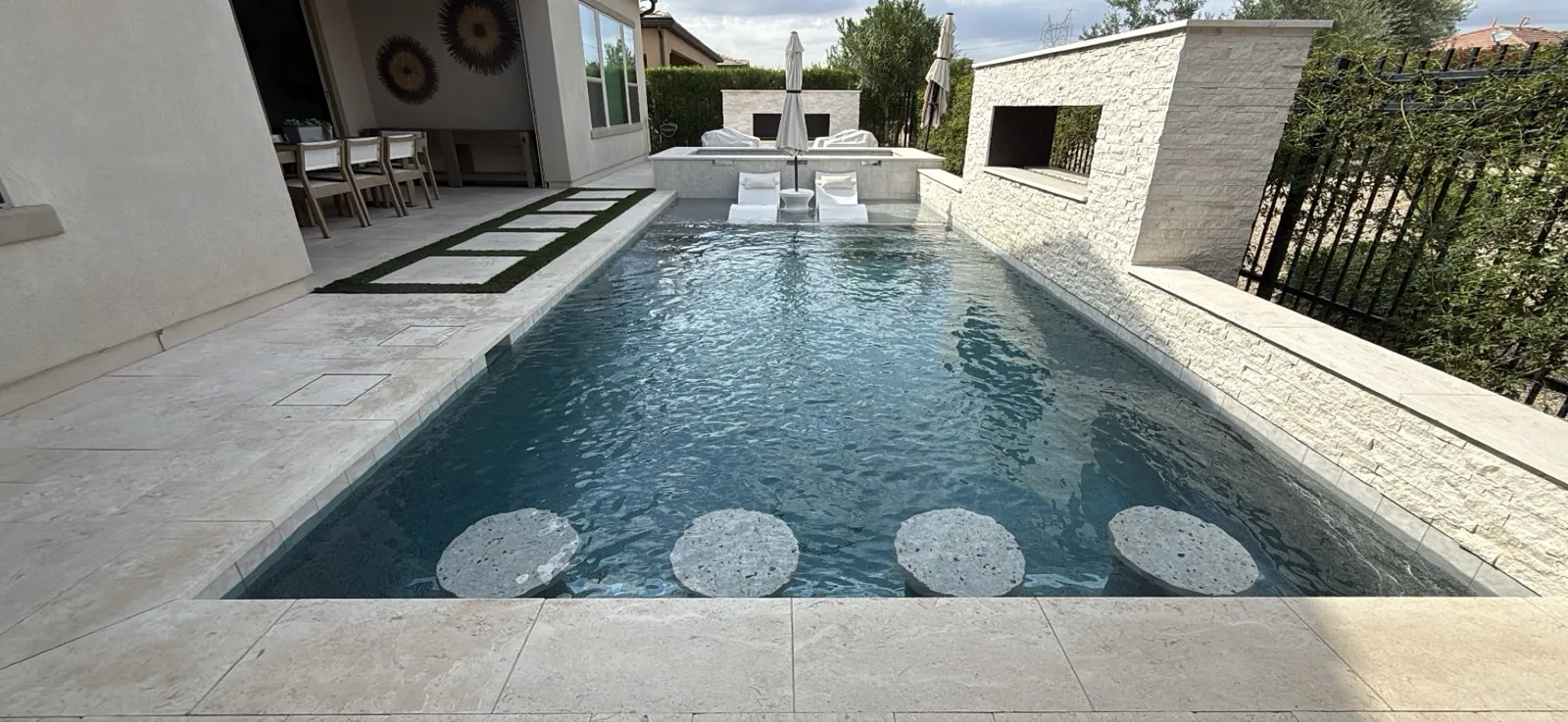
The other stops on this month's routes show what the water should look like once run-time and chemistry are dialed in for fall. Clear water, clean tile, and no haze, even with artificial turf, travertine decking, and water features that make debris and staining easy to spot if something is off.
Can I fix cloudy water myself, or does it need a tech?
A homeowner can shock a pool and run the pump longer, and sometimes that clears things up. But guessing at chlorine and stabilizer levels in cooling water often means overcorrecting, which burns through chemicals without solving the real issue. A professional chemical balance during a normal weekly visit catches the shift before it turns into algae or a filter problem. If a filter has not been cleaned in a while, that is often the other half of the fix, cartridge filter cleaning runs $125 and a DE filter clean runs $150, both well worth it compared to letting a hazy pool slide into a green one.
What happens if hazy water gets ignored
Left alone through a cool November, hazy water can tip into algae growth once chlorine demand outpaces what is left in the water. At that point it is no longer a quick fix. A full green-to-clean service runs $300 to $700 depending on how far it has gone, far more than the cost of catching it early with a weekly visit. Keeping ahead of the seasonal shift protects the pool as the asset it is, right behind the home itself on most Queen Creek properties.
How weekly service catches this before it becomes a bigger job
This is the core of why weekly service exists. A tech who sees the same pool every week knows what its water looked like last visit and can spot a shift before a homeowner would ever notice. Weekly pool maintenance starts at $140 a month plus chemicals, or $179 a month with chemicals included, and covers exactly this kind of seasonal adjustment along with the regular brushing, skimming, and equipment check.
Get ahead of fall cloudiness
If your pool looks dull or hazy this month despite looking clean, it is worth a check before it turns into a bigger job. Tartan Pools is a licensed Arizona contractor, ROC #349378, and our weekly techs handle this exact fall transition across Queen Creek pool service routes every week. Text or call us at (480) 999-9226, or request a free quote, to get your water back to clear before the holidays.
Frequently asked questions
Why is my pool cloudy in November if the filter is running?
Cooler water changes how chlorine behaves and most pumps run fewer hours once the heat breaks. The filter can be working fine mechanically while the water chemistry and run-time are no longer matched to the season.
Does cloudy water always mean algae is coming?
Not yet, but it is an early warning sign. Hazy water with clean tile and no staining usually means chlorine demand or circulation needs adjusting before algae has a chance to take hold.
How long should my pump run in the fall in Queen Creek?
Run-times should be extended compared to a typical summer cycle, since cooler water needs more circulation time to keep fine particles from building up. A weekly tech adjusts this at each visit based on current water temperature.
What does a weekly pool tech check that I can't see myself?
A tech tests actual chemical levels rather than relying on a quick strip reading, checks the filter for fine particulate, and verifies pump run-time against the season. These are the details test strips and a visual check often miss.
What if my pool has already turned green?
A green-to-clean service brings it back, typically $300 to $700 depending on how far along it is. Catching haziness early with weekly service is cheaper than letting it get to that point.
Tartan Pools is a licensed pool service and repair contractor (Arizona ROC #349378) based in Queen Creek, serving Queen Creek, San Tan Valley, Gilbert, Mesa, Chandler and Tempe.