
Why San Tan Valley Water Features Show Calcium Buildup First
Raised stacked-stone spas, scuppers, and rock waterfalls show calcium buildup faster than flat pool walls because water constantly splashes, evaporates, and dries on that stone, leaving mineral deposits behind every cycle. San Tan Valley's hard, well-fed water makes this worse than in neighboring cities. Weekly brushing and balanced water chemistry are what keep these features looking like new instead of chalky white or stained.
Why do water features collect calcium faster than the rest of the pool?
A flat pool wall sits underwater most of the time. A raised spa wall, a scupper lip, or a rock waterfall is wet, then dry, then wet again, all day long. Every time water evaporates off that stone, it leaves behind the calcium and minerals it was carrying. Over weeks, that residue builds into a white, crusty scale.
San Tan Valley pools are especially prone to this because a lot of homes here run on well water or a water source with higher hardness than the surrounding valley. That means every splash on a stacked-stone wall is depositing more mineral than it would in a city with softer tap water. The constant motion of a waterfall or scupper just speeds up a process that's already working against stone surfaces here.
What does early calcium buildup look like on a spa wall?
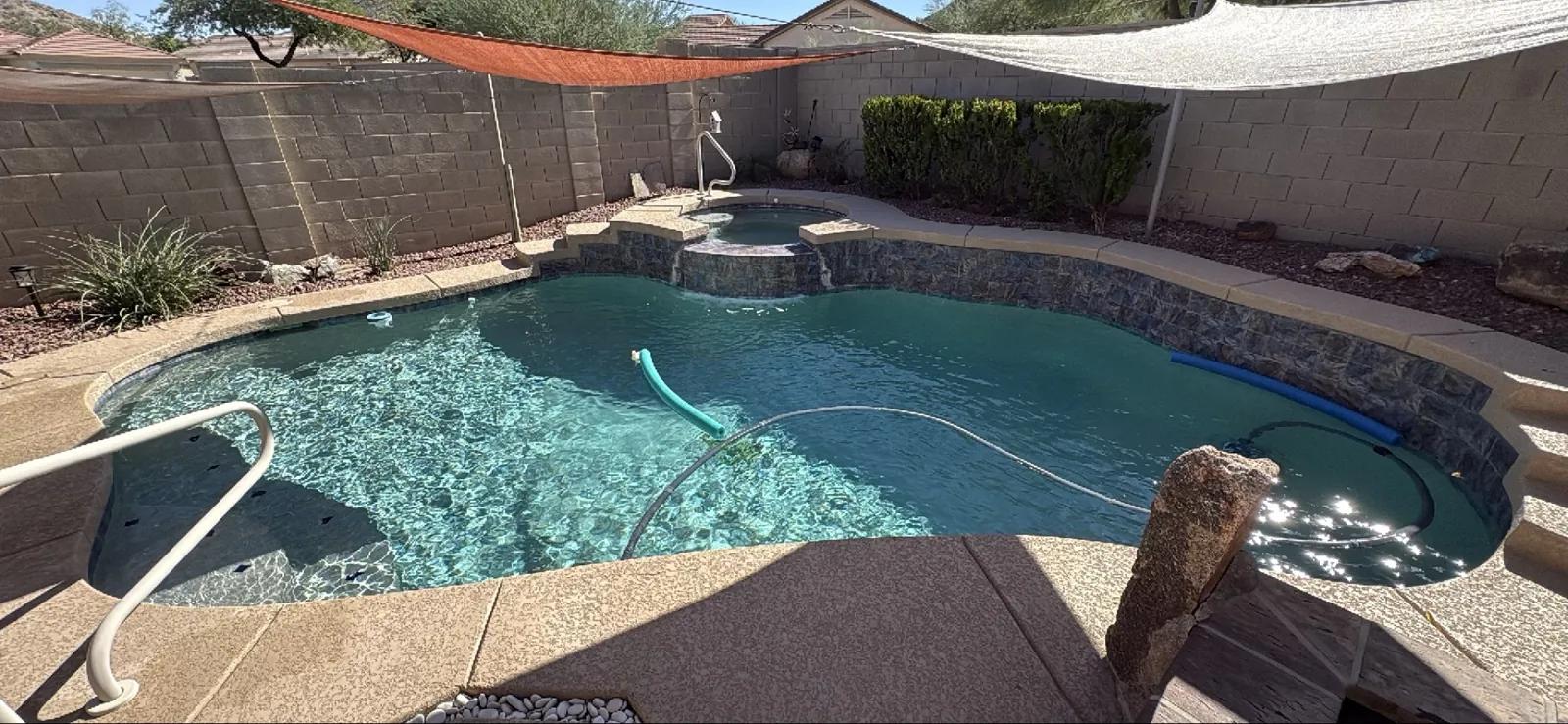
On a recent weekly stop, our tech found the first signs of calcium starting on a raised spa wall with a rock-accented spillway, shaded under a pair of sun sails. The water itself was clear and well balanced, with only a pool noodle and the vacuum hose in sight. But along the stacked stone where water constantly sheets down from the spa, a light, pale buildup had started to form.
This is the stage where calcium is easiest to manage. Caught early with brushing and a mild acid wash if needed, it wipes away. Left for a season, it hardens into scale that needs a professional tile and calcium removal service to fully clear.
What is that dark staining on a rock waterfall feature?
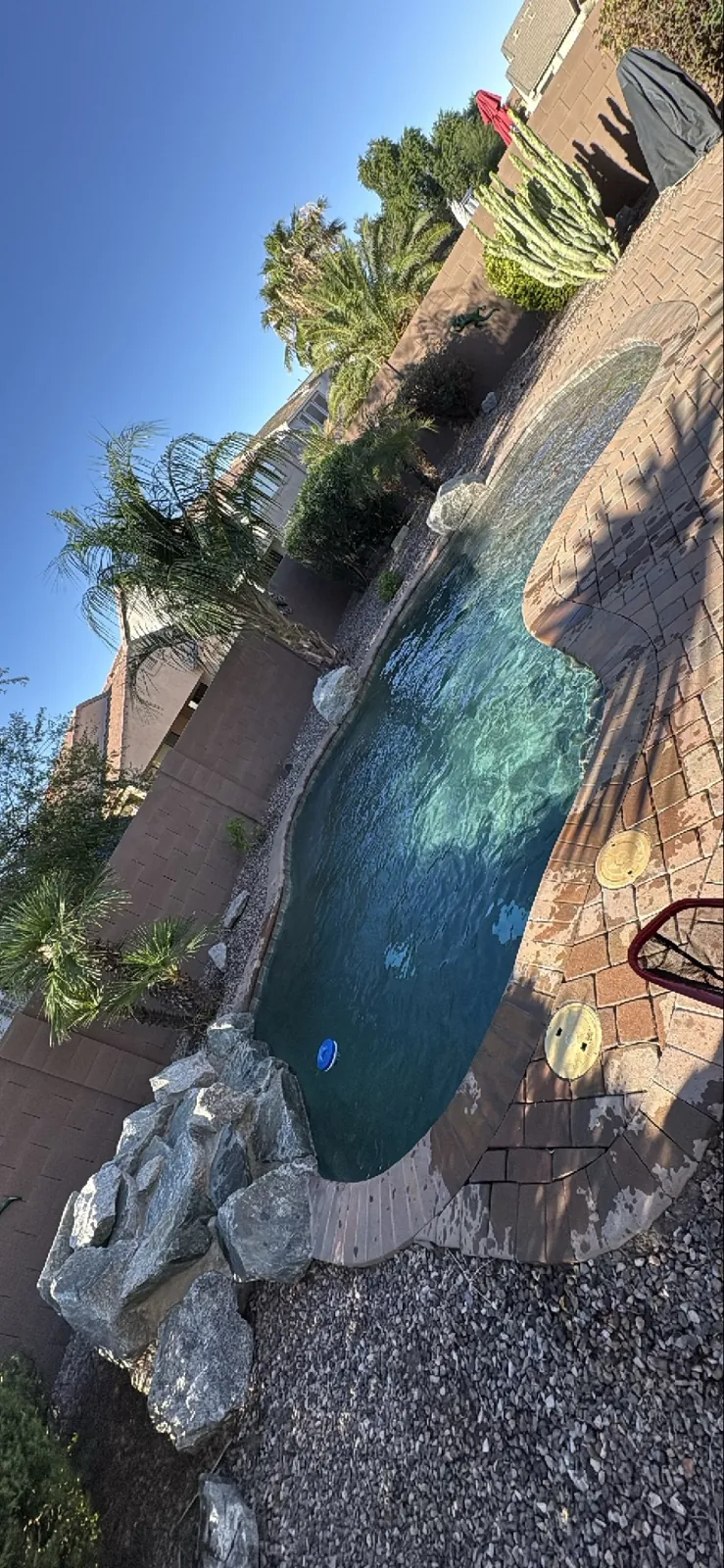
Calcium isn't the only mineral problem showing up on San Tan Valley rockwork. On another weekly visit, a decorative rock waterfall pouring into a freeform pool showed minor efflorescence, the dark or chalky staining that forms when water carries dissolved minerals up through porous stone and leaves them on the surface as it evaporates. The pool water around it was still clear and clean, with only light debris near the feature.
Efflorescence and calcium scale often show up on the same feature at the same time, because both come from water sitting and drying on stone instead of staying submerged. A rock waterfall, with its many ledges and crevices, gives mineral-laden water dozens of extra surfaces to dry on compared to a smooth pool wall.
Can regular brushing really keep stacked stone spotless?
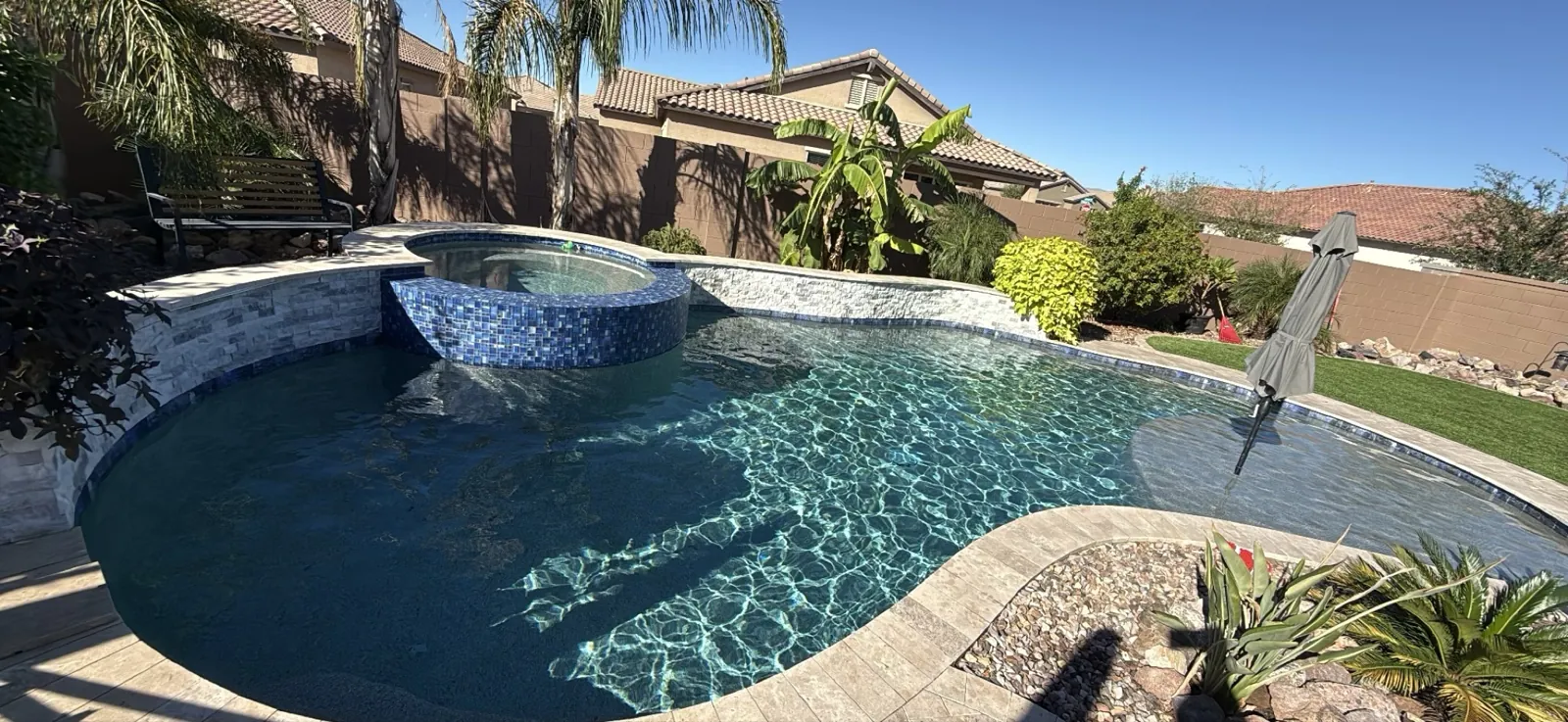
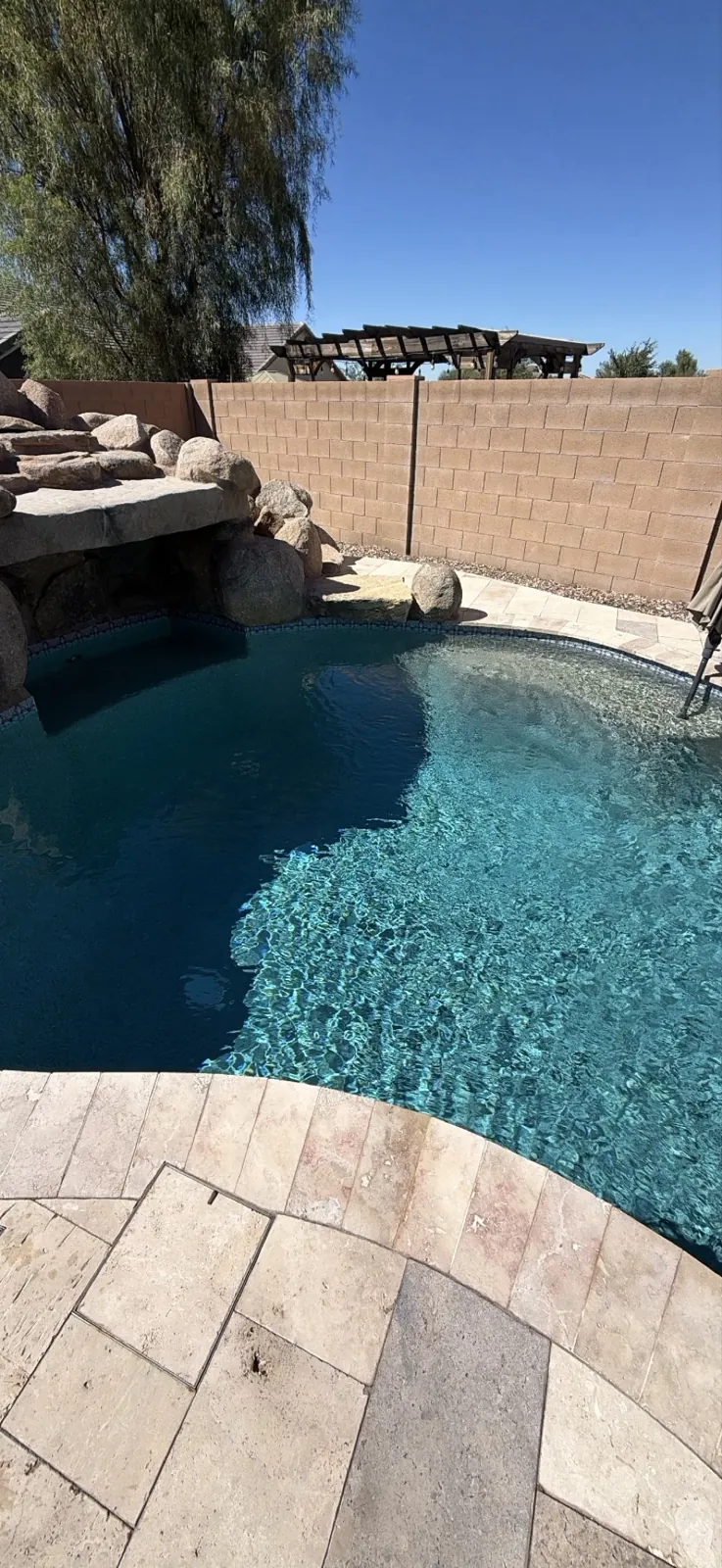
Yes, and we see it every week. A boulder and rock waterfall feature with a raised stacked-stone ledge, serviced on the same weekly schedule, showed no staining and no calcium at all. The tile line and stonework looked clean against the travertine deck. Likewise, a round raised spa with a blue glass-tile band spilling into the main pool stayed completely free of buildup, with tile and plaster in good condition.
The difference between these clean features and the ones starting to scale is not the design of the water feature. It's consistency. Weekly brushing knocks loose mineral deposits before they have time to bond to the stone. Skip a few weeks, especially during a hot stretch when evaporation runs high, and that same stone starts collecting the white haze that is much harder to remove later.
What else helps protect a raised spa or scupper between visits?
Between our weekly stops, homeowners with a stacked-stone spa, scupper, or rock feature can slow calcium buildup with a few habits:
- Run the water feature or waterfall a little less during the hottest part of the day, since faster evaporation means faster mineral deposit.
- Rinse visible white residue off stone with a hose as soon as it appears, rather than letting it dry and harden further.
- Keep an eye on water level, since a low spa or pool makes scuppers and spillways run drier and deposit more scale per cycle.
- Avoid scrubbing with wire brushes or harsh acid on your own, since stacked stone and travertine can etch or discolor if treated incorrectly.
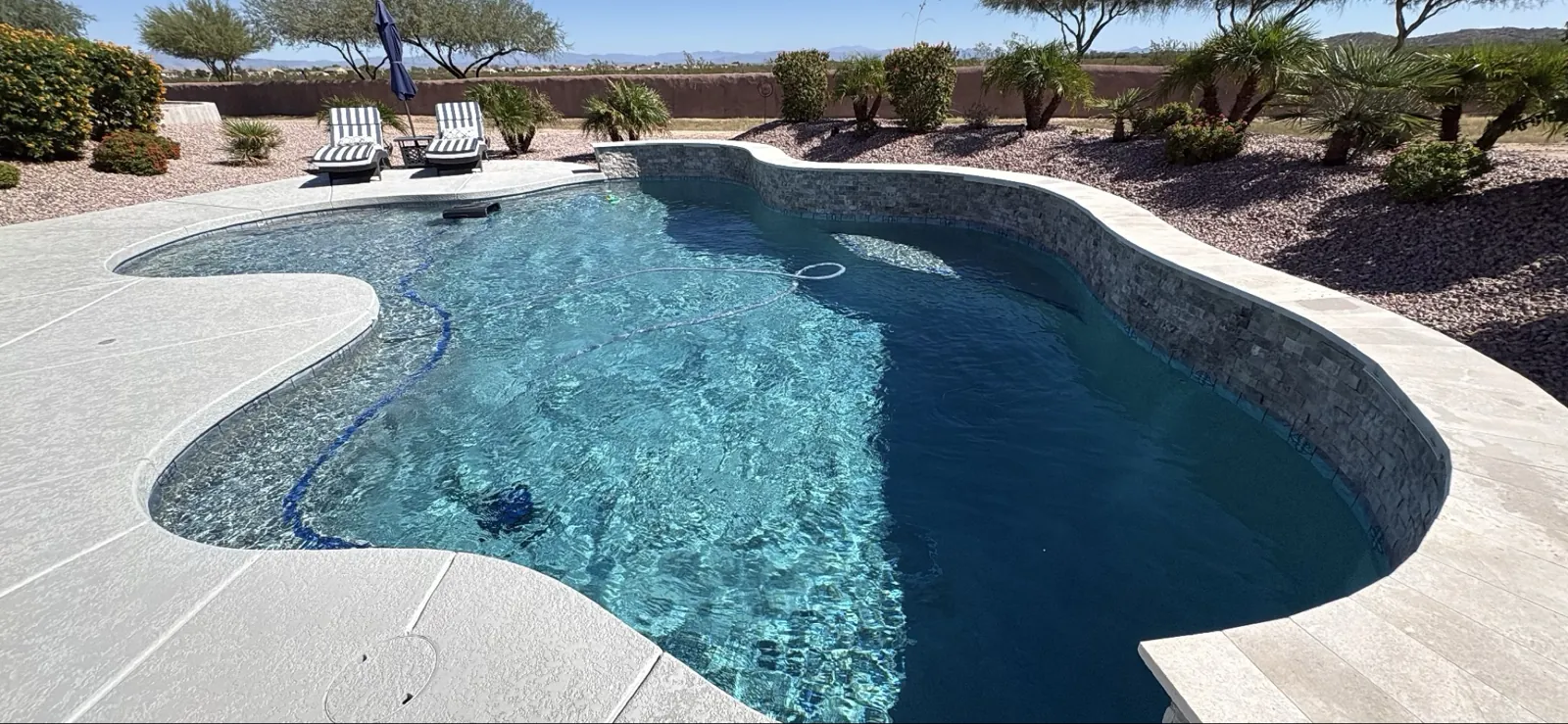
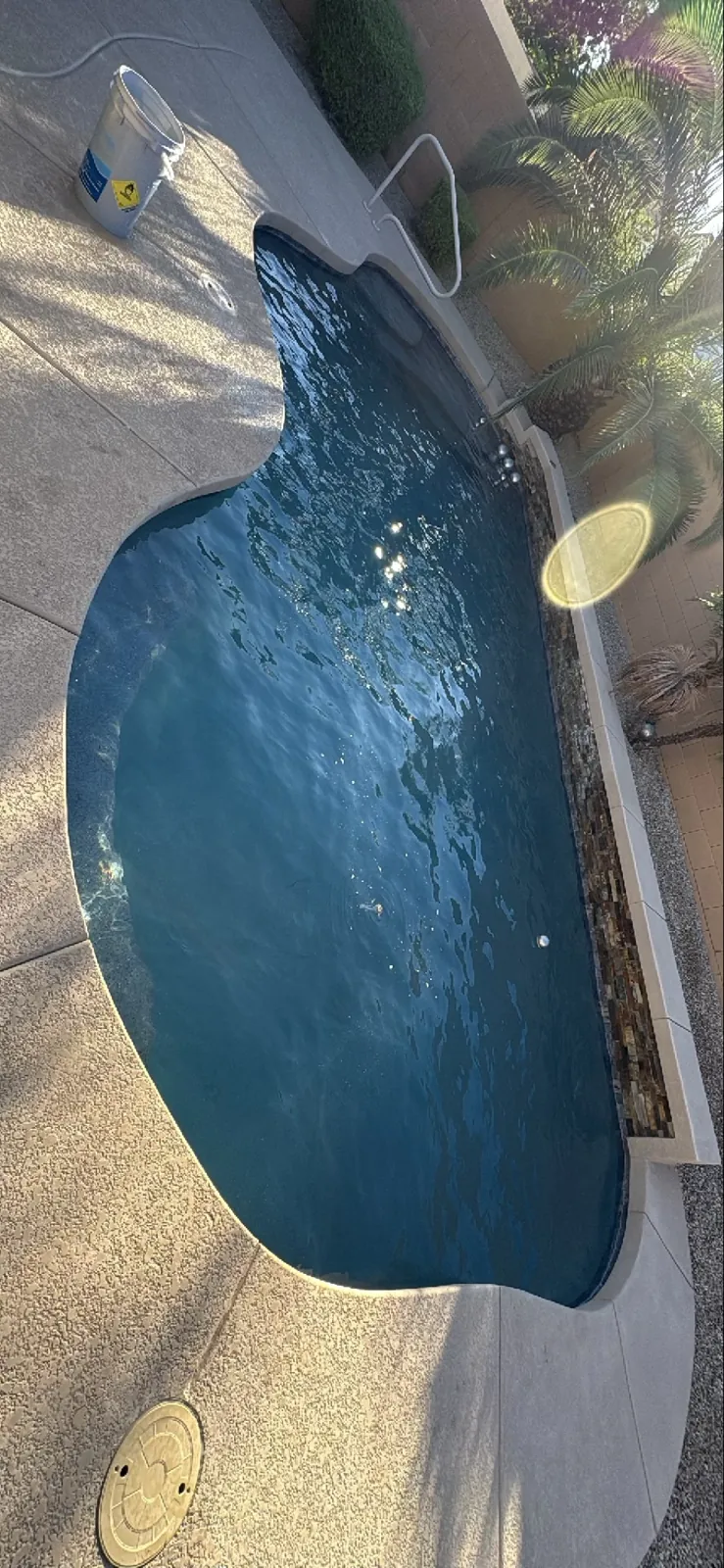
A raised stacked-stone wall with a small scupper, serviced weekly with a vacuum line run across the floor during each visit, has stayed clear and well balanced season after season with this routine. The same goes for a curved accent wall with metal deck jets, where good circulation and weekly attention keep the water clear with no buildup on the wall itself.
How often does a water feature need professional attention?
Most San Tan Valley water features do fine with weekly brushing as part of standard service. But once calcium has hardened into visible scale, brushing alone will not remove it. At that point a proper acid wash or tile and calcium removal service is the only way to get the stone back to its original look.
Tartan Pools currently keeps 177 San Tan Valley pools on weekly service, and our techs completed 6,430 visits across the city in the last 12 months. That steady schedule is what catches calcium at the stage shown on the spa wall above, before it turns into the staining seen on the rock waterfall feature.
What does weekly service cost in San Tan Valley?
Weekly pool service in San Tan Valley starts at $140 a month plus chemicals, or $179 a month with chemicals included. If a water feature or pool has already gone green or has heavy scale buildup, a green-to-clean service typically runs $300 to $700 depending on condition. Filter cleaning, when needed alongside feature maintenance, runs $125 for cartridge filters or $150 for DE filters.
If you want your raised spa or rock waterfall checked before calcium sets in, reach out for a free quote or text or call (480) 999-9226.
Frequently asked questions
Why do stacked-stone spas get calcium buildup faster than the pool itself?
Stacked-stone spas, scuppers, and waterfalls are wet and dry in cycles all day as water splashes and evaporates off the stone. Each cycle leaves behind minerals, while a submerged pool wall rarely dries out enough to deposit scale in the same way.
Is San Tan Valley water harder than other nearby cities?
Many San Tan Valley homes run on well-fed water sources with higher mineral content, which means water features here tend to show calcium and efflorescence sooner than pools on softer city water.
Can I remove calcium buildup on a water feature myself?
Light buildup often comes off with regular brushing. Hardened scale usually needs a professional acid wash or tile and calcium removal service, since household scrubbing or harsh chemicals can etch stacked stone or travertine.
How much does it cost to fix a water feature that has already gone green or scaled over?
A green-to-clean service typically runs $300 to $700 depending on how far the pool or feature has gone. Catching calcium early with weekly service is far less costly than waiting for heavy buildup.
Does weekly pool service include brushing the water feature?
Yes. Weekly service in San Tan Valley starts at $140 a month plus chemicals, or $179 a month with chemicals included, and includes brushing stacked-stone walls, scuppers, and waterfall features as part of each visit.