
Salt System Installation & Salt Cell Service in Queen Creek, AZ
Salt chlorine generators are popular across Queen Creek — but they face a challenge here that most pool companies don't fully understand: Queen Creek's well water. The elevated mineral content, particularly calcium, iron, and sometimes manganese, in Queen Creek well water creates scaling and staining conditions that dramatically shorten salt cell life if the system isn't properly managed. Tartan Pools has been maintaining salt systems on Queen Creek well water for years, and we've developed specific protocols that extend cell life and prevent the mineral-related failures that catch other companies off guard.
Call us at (480) 999-9226 or email us for a free assessment.
Salt Systems and Queen Creek Well Water
Well water changes everything about how salt systems are maintained. Here's what we manage differently in Queen Creek:
Accelerated Cell Scaling: Queen Creek well water running 350-500+ ppm calcium hardness creates heavy scaling on cell plates in weeks rather than months. Without frequent inspection and cleaning, calcium scale insulates the plates from the water, reducing chlorine output while the system shows 'normal' operation. We inspect cells every visit and clean with acid when scale is visible — not on a fixed calendar schedule.
Iron Interaction with Salt Cells: Iron dissolved in Queen Creek well water precipitates onto cell plates during the electrolysis process. This iron scale doesn't respond to standard acid cleaning — it requires a specific oxalic acid treatment. Using the wrong cleaning agent on iron-scaled cells can permanently damage the platinum coating.
TDS Creep from Well Water Fills: Total dissolved solids (TDS) in Queen Creek well water are naturally elevated. Every time you add well water to replace evaporation, TDS increases. High TDS interferes with salt cell sensor accuracy and can cause the system to over-produce chlorine, wasting cell life. We monitor TDS and recommend periodic partial drains to keep levels manageable.
Metal Staining Prevention: When a salt system runs in well water with dissolved metals, the electrolysis process can precipitate those metals onto pool surfaces — creating brown, green, or purple stains on plaster and pebble-tec. We add chelating agents and metal sequestrants as part of our Queen Creek salt pool chemistry to prevent staining.
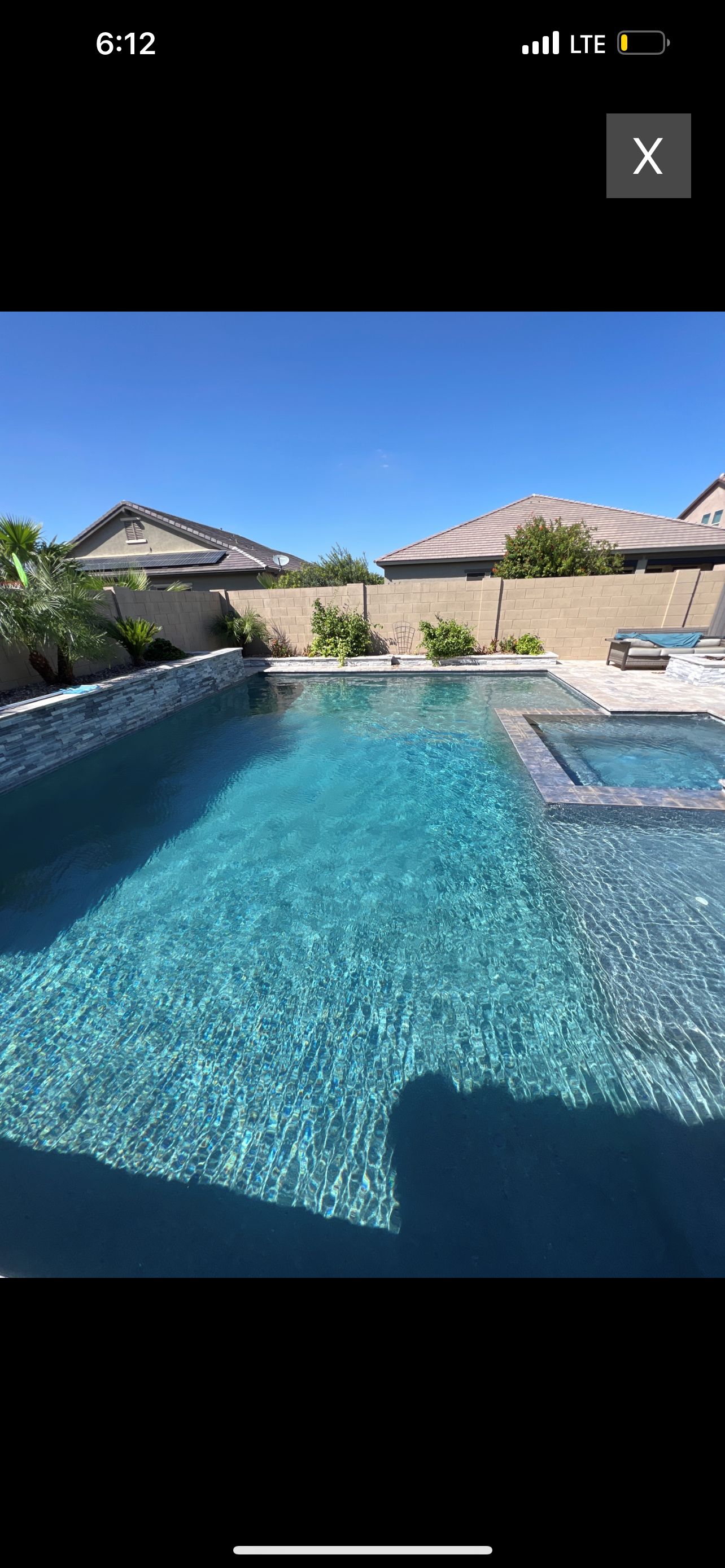
Salt System Options for Queen Creek Homes
Choosing and configuring the right salt system for Queen Creek conditions requires specific knowledge:
Reverse-Polarity Cell Selection: We exclusively recommend salt cells with automatic reverse-polarity function for Queen Creek installations. Reverse-polarity periodically flips the electrical charge on cell plates, which helps shed calcium scale before it hardens. Budget cells without this feature scale faster in Queen Creek water and fail in half the expected lifespan.
Oversized Cell Recommendation: For Queen Creek pools, we recommend one cell size larger than the pool's volume would typically require. A larger cell running at 50-60% output produces adequate chlorine while operating less aggressively — which means slower scaling, less wear on the platinum coating, and longer cell life. The upfront cost difference ($100-$200) typically extends cell life by 1-2 years.
City Water vs. Well Water Configuration: Queen Creek is increasingly served by city water as the town grows. Homes on city water can run standard salt system configurations. Homes on well water need modified settings — lower output percentages, more frequent cell cleaning schedules, and supplemental chemistry for metal management. We configure each system based on its specific water source.
Hybrid Chlorine Backup: For Queen Creek homes with challenging well water, we sometimes recommend a hybrid approach — salt system for primary sanitization with a backup tablet feeder for supplemental chlorine during periods of heavy use or when the cell is being cleaned. This ensures the pool never goes unprotected.
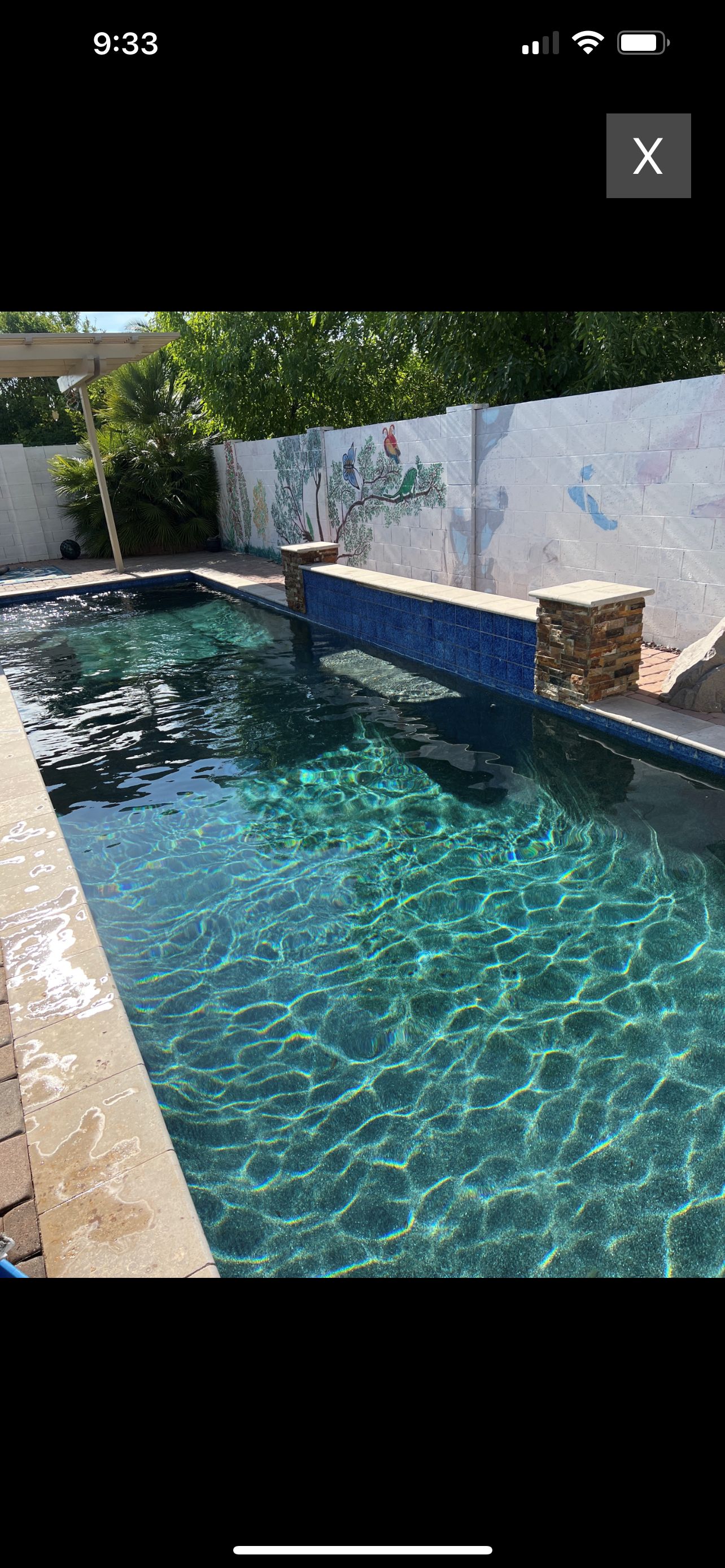
Our Salt Cell Cleaning Process
Proper cell cleaning is the single most important factor in salt cell lifespan. Here's our Queen Creek protocol:
Visual Inspection First: We inspect the cell plates through the housing before removal. Early-stage scale appears as white deposits on the plates. In Queen Creek, we also look for orange/brown iron deposits from well water that require a different cleaning agent than calcium scale.
Acid Soak Protocol: We use a 1:4 muriatic acid to water solution for calcium scale removal. The cell is soaked for 5-10 minutes — we monitor the reaction and remove the cell as soon as scale dissolves completely. Over-soaking damages the precious metal coating. Budget pool companies leave cells in acid for 30+ minutes, which strips the coating prematurely.
Iron Scale Treatment: For Queen Creek well water cells with iron deposits, we use oxalic acid instead of muriatic. Muriatic acid doesn't dissolve iron scale effectively and can actually damage the cell. Knowing which cleaning agent to use for which type of scale is critical in Queen Creek.
Flow Sensor Cleaning: While the cell is out, we also clean the flow sensor and temperature sensor. Mineral-coated sensors give false readings, causing the system to over-produce chlorine (wasting cell life) or under-produce (risking algae). Clean sensors ensure accurate system operation.
Connection Inspection: We inspect the cell cable connections, O-rings, and housing for corrosion or damage. Desert dust and temperature cycling can degrade these components. A corroded cell connection triggers error codes that mimic cell failure, leading to unnecessary cell replacements by less experienced companies.
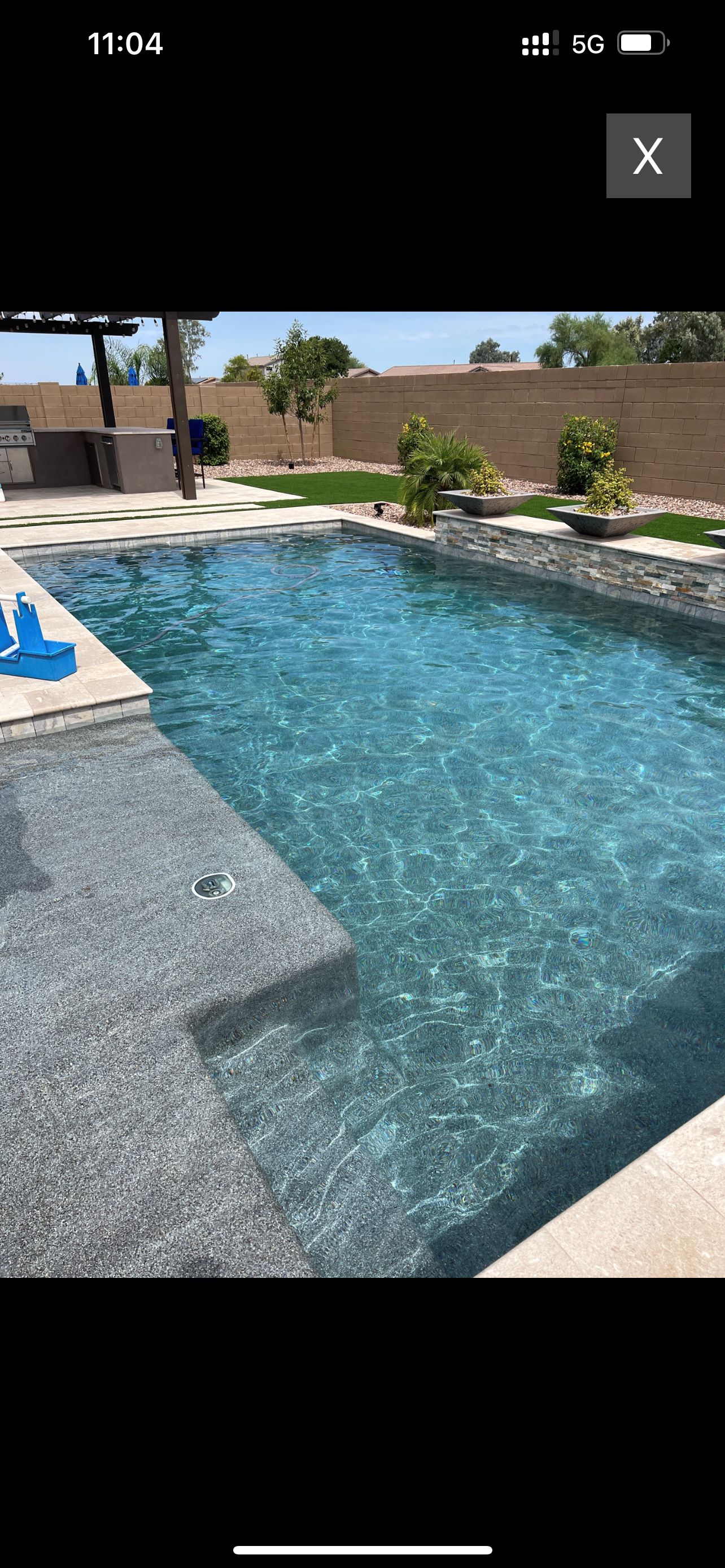
Salt System Brands We Install in Queen Creek
Our recommendations account for Queen Creek's well water challenges:
Pentair IntelliChlor (Our Top Pick): Industry-leading reverse-polarity technology that actively fights scale buildup. The IC-40 handles pools up to 40,000 gallons, but for Queen Creek well water pools over 15,000 gallons, we recommend the IC-40 even on smaller pools — running at lower output extends cell life significantly. Full automation integration with Pentair IntelliCenter. Cell: $500-$700. Complete system: $1,600-$2,200.
Hayward AquaRite (Best Value): Reliable, proven system with excellent sensor accuracy. The TurboCell is durable and handles Queen Creek conditions well. Simple interface that homeowners can understand easily. Cell: $400-$600. Complete system: $1,200-$1,800.
Pentair iChlor: Budget-friendly Pentair option with good performance. Simpler controls than the IntelliChlor but same quality cell construction. Good choice for straightforward Queen Creek installations without automation. Cell: $350-$500. Complete system: $1,000-$1,500.
Jandy AquaPure: Excellent choice for pools already on Jandy iAquaLink automation. Seamless integration with existing Jandy equipment. Reliable cell with good well water tolerance. Cell: $450-$650. Complete system: $1,400-$2,000.
Salt System Installation and Replacement Costs in Queen Creek
Complete pricing transparency:
Salt Cell Replacement Only: $400-$900 depending on brand and cell size. We use genuine OEM cells exclusively — aftermarket cells fail 30-50% faster in Queen Creek's hard water conditions, making them a false economy.
Complete Salt System Installation: $1,200-$2,500 including cell, control board, salt sensor, plumbing integration, and initial salt addition. Queen Creek installations may require additional plumbing work if the equipment pad is crowded or the cell needs specific orientation for optimal flow.
Salt Cell Acid Cleaning: $75-$125 per cleaning. For well water pools requiring the oxalic acid iron protocol, add $25-$50. Included in our weekly service plans at no additional charge.
Sensor Replacement: $150-$300. Salt sensors and flow sensors degrade over time, especially in high-TDS Queen Creek water. Faulty sensors cause inaccurate readings that lead to over/under-chlorination.
Control Board Replacement: $300-$600. Heat, dust, and moisture damage control boards. Queen Creek's equipment pads get direct sun exposure, which accelerates board degradation. We recommend shade structures for exposed equipment.
Saltwater Conversion (Tablet to Salt): $1,200-$2,500 for the system plus $50-$100 for initial salt. Includes partial drain-and-refill to reduce CYA before converting. Most conversions are completed in 2-3 hours.
Call (480) 999-9226 for your free salt system assessment in Queen Creek.
Salt Pool Chemistry in Queen Creek — What's Different
Salt pool chemistry requires ongoing management, and Queen Creek adds complexity:
pH Rises Constantly: The electrolysis process in salt cells naturally raises pH. In Queen Creek, with already-elevated calcium and alkalinity from well water, unchecked pH creates aggressive scaling on surfaces, equipment, and the cell itself. We adjust pH weekly on every salt pool visit — this single step prevents more problems than any other aspect of salt pool management.
Zero CYA Buildup: Unlike tablet chlorine (trichlor), salt-generated chlorine doesn't add cyanuric acid (stabilizer). This eliminates the #1 cause of "green pool despite adding chlorine" — high CYA. You still need CYA in a salt pool (we maintain 60-80 ppm manually), but it stays stable instead of climbing endlessly. This alone saves Queen Creek homeowners one partial drain-and-refill ($300-$500) per year.
Salt Level Monitoring: Maintaining proper salt concentration (2,700-3,400 ppm for most systems) is critical. Too low = insufficient chlorine production. Too high = corrosion risk and TDS issues. We test salt independently with a calibrated meter every visit — not relying on the system's built-in sensor, which drifts with mineral coating in Queen Creek water.
Metal Management: Queen Creek well water metals (iron, copper, manganese) can precipitate during electrolysis and stain surfaces. We add chelating agents monthly to bind dissolved metals, preventing the brown/green/purple surface stains that frustrated Queen Creek salt pool owners before they found us.
Extending Salt Cell Life in Queen Creek
Salt cells are the most expensive consumable in your pool system. Here's how we maximize their lifespan:
Condition-Based Cleaning: We inspect cells visually on every weekly visit and clean when scale is visible — not on a fixed calendar. This prevents both under-cleaning (letting scale harden and become difficult to remove) and over-cleaning (unnecessary acid exposure that erodes the coating). In Queen Creek, this means cleaning every 2-3 months for well water and 3-4 months for city water.
Proper Output Settings: Running a cell at 100% output produces more chlorine but ages the cell faster. We size cells larger than minimum and run them at 50-60% output. This "low and slow" approach produces adequate chlorine while dramatically extending cell life.
Seasonal Adjustment: We reduce salt cell output during winter when chlorine demand drops. A cell running at summer levels during December is wasting plate life on chlorine that dissipates unused. We adjust output seasonally — 50-70% in summer, 20-40% in winter.
Water Chemistry Optimization: Keeping calcium below 400 ppm, pH at 7.4-7.6, and TDS manageable reduces scaling rate on cell plates. When well water raises these parameters above optimal, we recommend a partial drain-and-refill before the cell suffers — a $150 water exchange is cheaper than a $500+ cell replacement.
Salt system maintenance is included in all our weekly service plans. Call (480) 999-9226 to speak with a salt system specialist.
Frequently Asked Questions
City water: 3-5 years. Well water: 2-4 years, depending on mineral content and cleaning frequency. Our proactive, condition-based cleaning protocol extends Queen Creek cell life by 1-2 years compared to reactive maintenance approaches.
In Queen Creek, this usually means mineral coating on the salt sensor causing inaccurate readings, or high TDS interfering with sensor accuracy. We clean the sensor, verify salt with a calibrated independent meter, and recalibrate. Sometimes a partial drain to reduce TDS is needed.
Yes — we install salt systems on Queen Creek well water routinely. It requires specific configuration (oversized cell, lower output percentage), more frequent cell cleaning (every 2-3 months), and supplemental chemistry for metal management. Properly managed, a well water salt pool works great.
Complete system: $1,200-$2,500 installed. Cell replacement only: $400-$900. We use genuine OEM cells exclusively — aftermarket cells fail 30-50% faster in Queen Creek's hard water, making them a false economy. Written quotes before any work.
Signs: chlorine output drops despite proper salt levels, frequent 'check cell' errors, scale that won't clean with acid, or visible erosion of the cell plates. We test cell output on every visit and give you advance warning when replacement is approaching — never a surprise bill.
Long-term, yes. Salt and electricity cost ~$15-$25/month vs $30-$50 for tablets. The system pays for itself in 2-3 years. Plus you eliminate CYA buildup (saving $300-$500/year in partial drains), get softer-feeling water, and no chlorine tab storage hassle.
Not if properly maintained. Salt systems raise pH naturally, which can cause scaling if unchecked — but that's a maintenance issue we manage on every weekly visit. The bigger surface risk in Queen Creek is from well water metals, which we control with chelating agents and metal sequestrant chemistry.
Every 2-3 months for well water pools, 3-4 months for city water. We inspect cells visually every week and clean based on condition rather than a fixed calendar. This approach prevents both over-cleaning (excessive acid exposure) and under-cleaning (hardened scale that shortens cell life).
Service Areas
We provide salt system & cell replacement in queen creek across the East Valley: