
Pool Filter Cleaning, Repair & Replacement in Queen Creek, AZ
If there's one piece of pool equipment that matters more in Queen Creek than anywhere else in the Valley, it's the filter. Queen Creek pools are exposed to agricultural dust, desert sand, well water minerals, and open-terrain wind debris that urban pools never encounter at this intensity. Your filter is the single line of defense between all of that contamination and your swimming water. Tartan Pools provides comprehensive filter service across Queen Creek — from routine cleanings to full system replacements — with the local knowledge to match the right filter to Queen Creek's demanding conditions.
Call us at (480) 999-9226 or email us for a free assessment.
Why Queen Creek Destroys Pool Filters Faster
Queen Creek's environment is harder on pool filters than any other area we service. Here's what your filter is up against:
Agricultural Particulate Loading: Queen Creek is surrounded by active farmland — cotton, alfalfa, sod, and citrus operations generate airborne particulates that settle into pools continuously. These aren't just dust particles — they include organic matter, fertilizer residue, and fine clay that creates a dense, sticky filter cake that's harder to clean than standard desert dust.
Well Water Mineral Precipitation: Queen Creek homes on well water introduce dissolved minerals that precipitate out when chlorinated, creating a mineral sludge that coats filter media. This isn't visible debris you can hose off — it's a chemical deposit that requires acid soaking to remove. Standard filter cleaning that works in city-water communities doesn't fully restore Queen Creek well-water filters.
Wind-Driven Sand Infiltration: Queen Creek's open terrain means windblown sand enters pools in quantities that overwhelm standard skimmer systems. Fine sand particles pass through baskets and load directly into the filter, filling capacity rapidly. We see Queen Creek filters reaching cleaning-required pressure in 6-8 weeks compared to 12-16 weeks for the same filter in a protected urban setting.
Construction Phase Contamination: Queen Creek's ongoing residential development generates construction dust — a fine particulate containing concrete powder, drywall dust, and disturbed caliche soil — that is extremely hard on filters. Pools near active construction sites may need monthly filter cleanings until building activity stops.
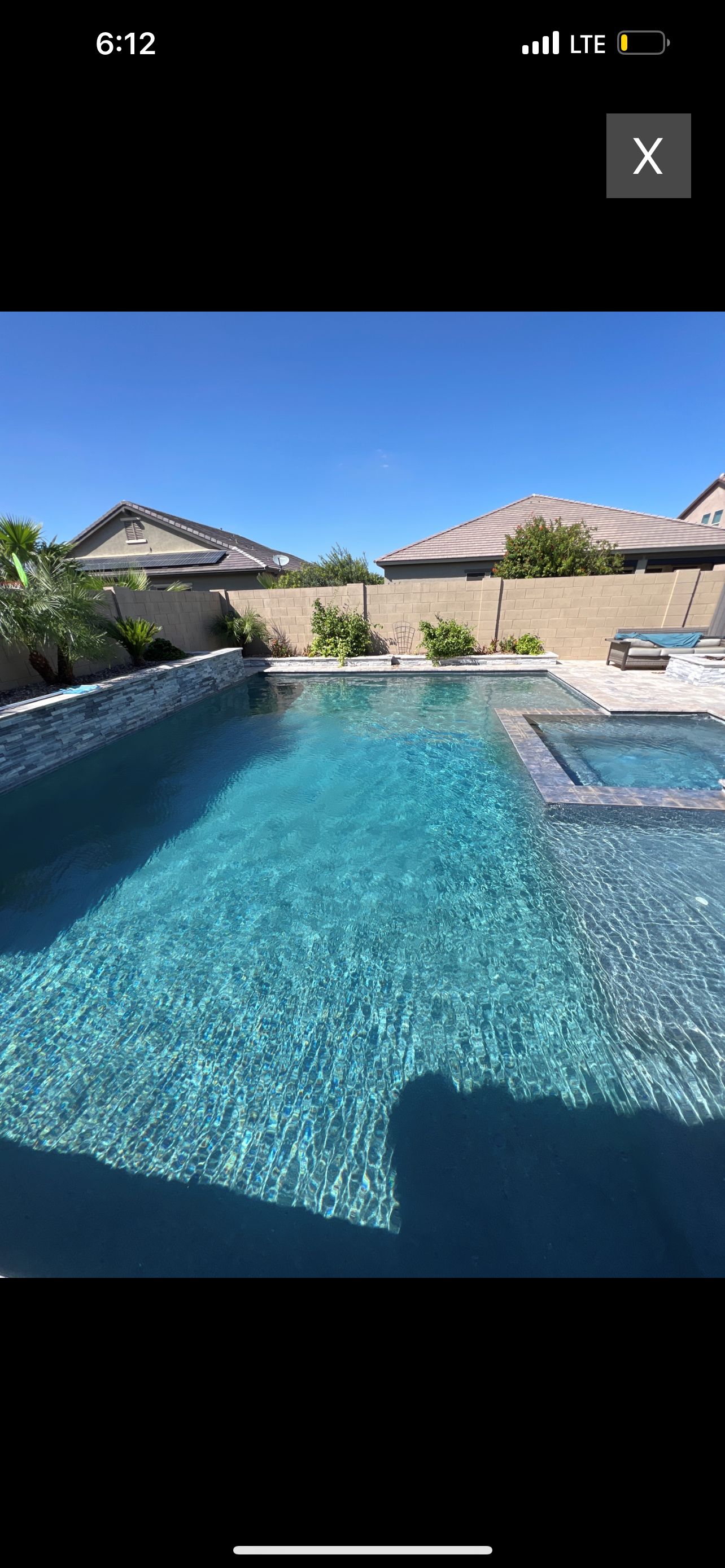
Queen Creek Filter Service and Recommendations
Based on our years of servicing Queen Creek pools, here's how we approach filtration for this unique environment:
Oversized Filter Recommendations: For Queen Creek pools, we recommend one size larger filter than the manufacturer's minimum recommendation. A pool that would normally run a 200 sq ft cartridge filter performs significantly better with a 300 sq ft unit. The extra capacity extends cleaning intervals and provides a buffer against Queen Creek's heavy debris loading.
Acid Soak Protocol for Well Water: Standard rinse cleaning isn't enough for Queen Creek filters on well water. We perform a full acid soak every other cleaning — dissolving mineral deposits that build up between the pleats where hose pressure can't reach. This protocol extends cartridge life by 50-100% compared to rinse-only cleaning.
Pre-Filter Installation: For Queen Creek pools with chronic sand or debris problems, we install in-line pre-filters or upgraded pump baskets with fine-mesh inserts that catch larger particles before they reach the main filter. This inexpensive addition dramatically reduces filter loading and extends cleaning intervals.
Filter Size Upgrades: Many Queen Creek builder-installed filters are undersized for the actual debris loading the pool receives. A filter that worked fine in Year 1 with fresh landscaping may be inadequate in Year 5 when trees mature, landscaping fills in, and the surrounding area develops. We evaluate filter sizing during every service visit and recommend upgrades when the math doesn't add up.
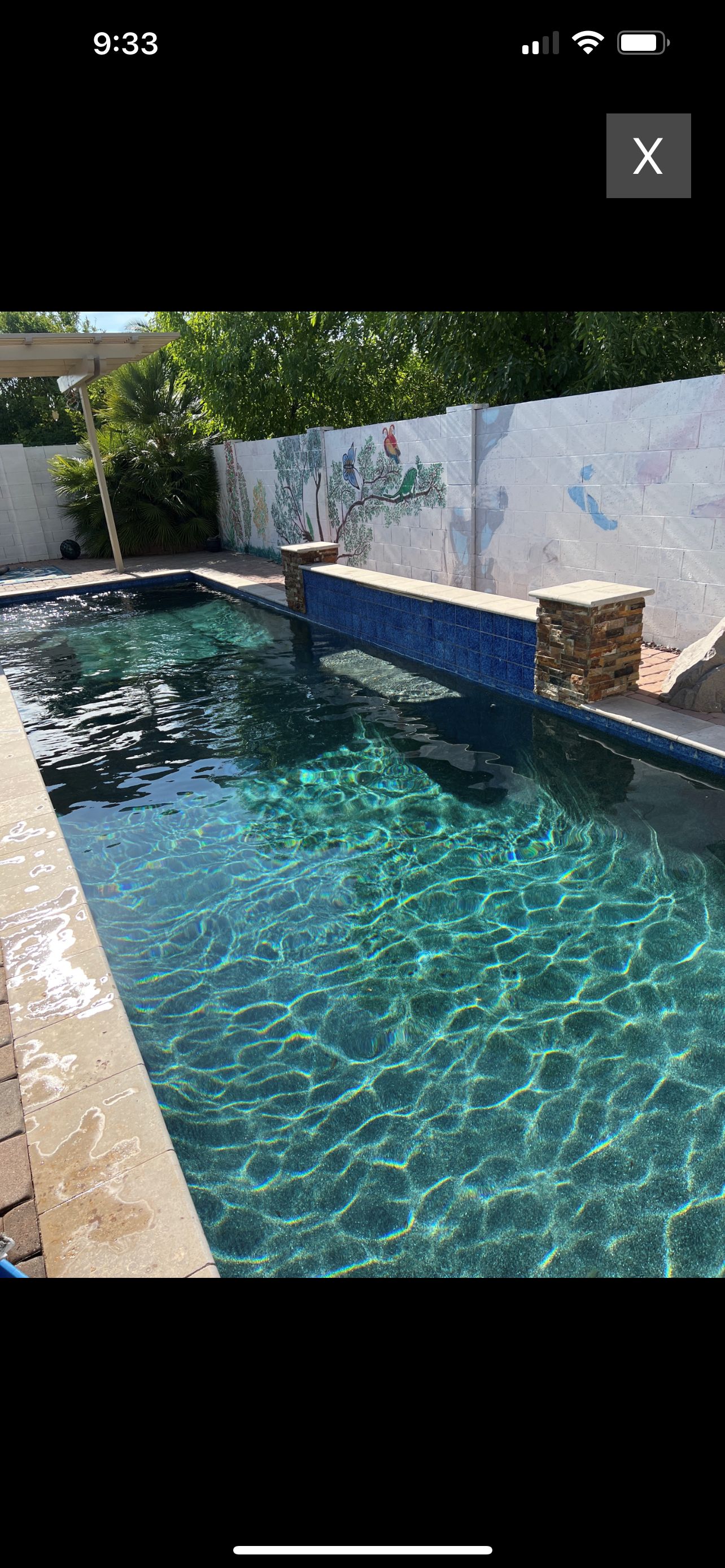
Our Filter Cleaning Process for Queen Creek
Standard cleaning isn't enough for Queen Creek conditions. Here's our professional protocol:
Pressure Baseline Recording: Before touching the filter, we record the current operating pressure and compare it to the filter's clean baseline. A pressure rise of 8-10 PSI above clean indicates the filter needs cleaning. We track this data over time to identify cartridges that are losing capacity and approaching replacement.
Full Disassembly and Inspection: We remove each cartridge element and inspect for damage — tears, collapsed pleats, hardened fabric, and end cap separation. In Queen Creek, we find more cartridge damage from sand abrasion than in urban pools, where damage typically comes from chemical exposure. Damaged cartridges filter poorly regardless of how clean they look.
High-Pressure Rinse: Each element gets individual attention with a hose nozzle, working from top to bottom between every pleat. Queen Creek's sticky agricultural debris requires more time than standard desert dust. We spend 5-8 minutes per element — not the 60-second rinse that budget pool companies give.
Acid Soak (Every Other Cleaning): For Queen Creek pools, especially those on well water, we alternate between standard cleaning and acid soak cleaning. The acid dissolves calcium, iron, and mineral deposits that embed in the filter fabric and can't be removed by rinsing. This restores filtration capacity that rinse-only cleaning leaves behind.
Tank Interior Cleaning: While cartridges are out, we rinse the tank interior, clean the manifold, inspect O-rings and clamp bands, and lubricate seals. Sand and grit sitting in the tank bottom gets flushed completely — preventing it from re-contaminating the clean cartridges.
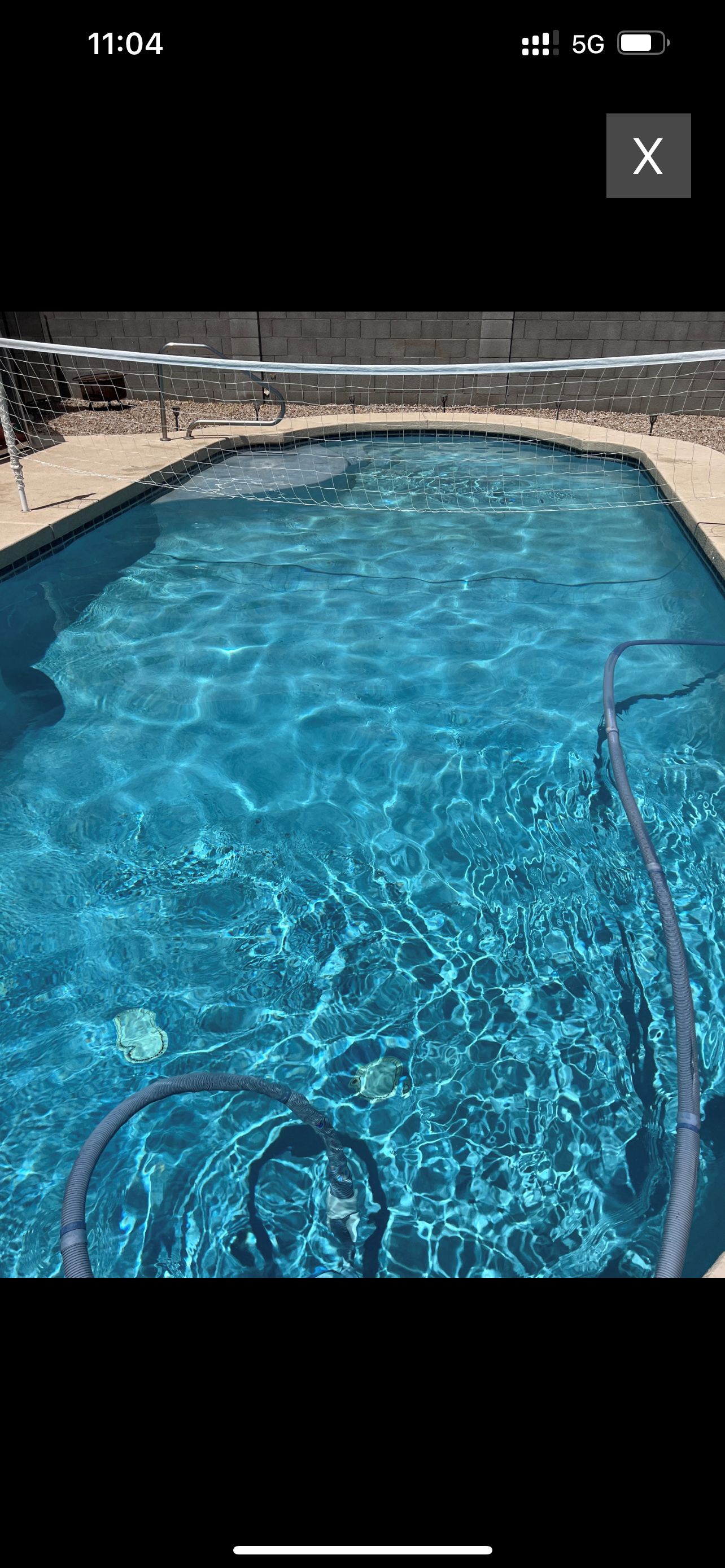
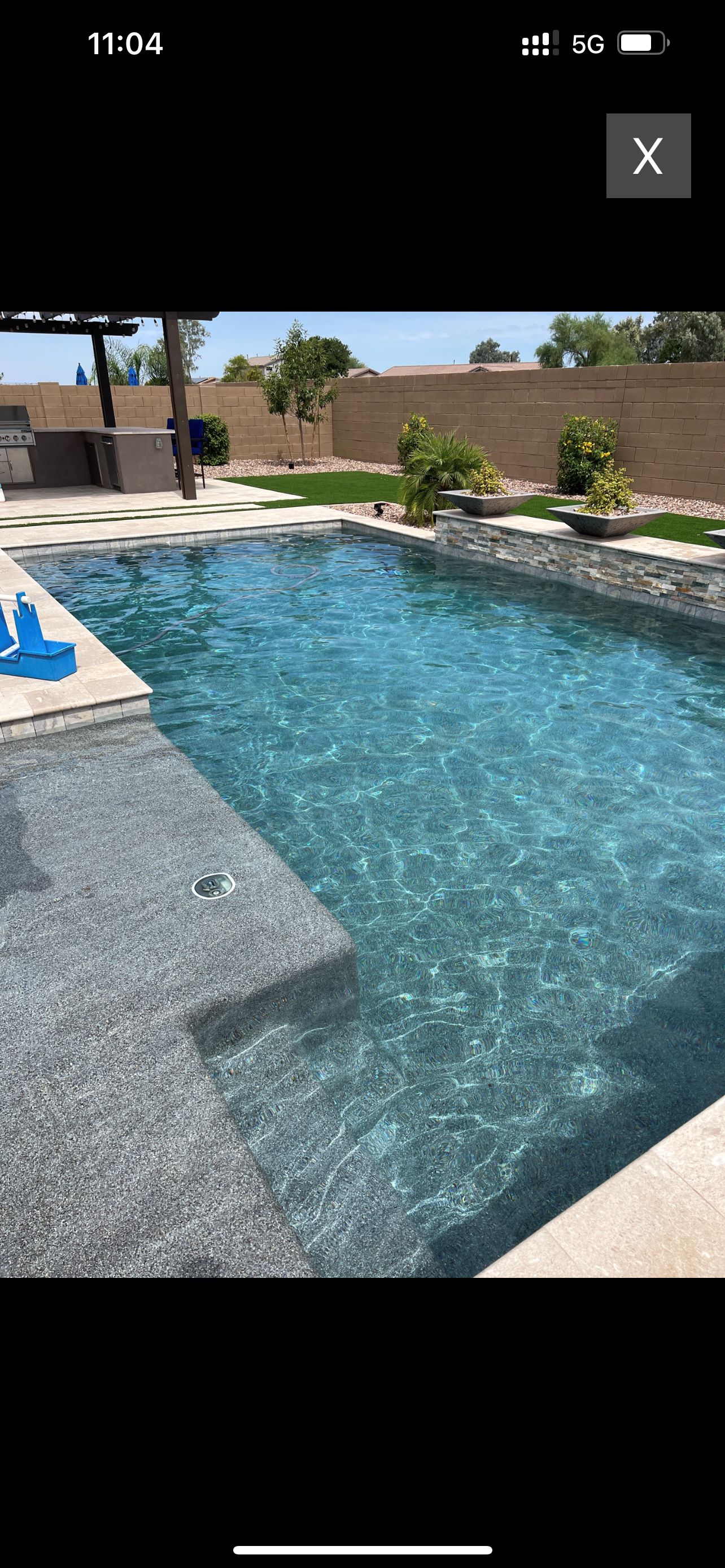
Filter Brands and Types for Queen Creek
We service and install every major brand. Here's what works best in Queen Creek:
Pentair Clean & Clear Plus (Our Top Pick): Available in 320 and 420 sq ft configurations. The 420 sq ft model is our standard Queen Creek recommendation — the extra capacity handles heavy debris loading without the rapid pressure climbs that smaller filters experience. Equipped with large cartridge elements that are easy to clean. Installed: $1,800-$2,800.
Hayward SwimClear: Excellent large-capacity option with 325-525 sq ft configurations. The 4-element design distributes loading evenly. Easy access for cleaning. The C5030 (525 sq ft) is outstanding for larger Queen Creek pools. Installed: $1,600-$3,000.
Pentair Quad DE: For homeowners who want the ultimate water clarity, DE (diatomaceous earth) filters capture particles as small as 3-5 microns. The Quad design allows easy element cleaning without DE backwashing. Higher maintenance requirement but unmatched water clarity. Installed: $2,200-$3,800.
Hayward Pro-Grid DE: Traditional DE filter with proven performance. The Pro-Grid vertical grid design is efficient and easy to service. We recommend this for pools where water clarity is the top priority and the owner doesn't mind quarterly grid cleaning. Installed: $1,800-$3,200.
Filter Service Costs in Queen Creek
Complete pricing transparency:
Standard Filter Cleaning: $75-$125. Full disassembly, individual element rinse, tank interior cleaning, O-ring inspection, and reassembly. Includes pressure testing after reassembly.
Acid Soak Cleaning: $125-$175. Everything in standard cleaning plus full acid soak to dissolve mineral and organic deposits. Recommended every other cleaning for Queen Creek well water pools.
Cartridge Replacement (Elements Only): $80-$250 depending on filter model and number of elements. We use OEM or equivalent-quality cartridges — never cheap knockoffs that collapse under pressure.
Filter System Replacement: $1,500-$3,800 depending on type, size, and plumbing modifications. Queen Creek pools often benefit from upsizing, which adds $200-$500 but dramatically improves performance and extends cleaning intervals to 10-12 weeks.
DE Grid Replacement: $200-$400. DE grids wear out over time and develop tears that allow DE powder to pass into the pool. We inspect grids during every DE cleaning and replace as needed.
Multiport Valve Repair/Replacement: $200-$500. For sand and DE filters, the multiport valve controls backwash, rinse, and filter modes. Internal gaskets wear out and cause cross-channeling between ports.
Call (480) 999-9226 for your free filter assessment in Queen Creek.
Filter Sizing for Queen Creek — Bigger Is Better
One of the most impactful upgrades for a Queen Creek pool is proper filter sizing:
The Builder-Grade Problem: Builders install the minimum filter size that meets code. For a standard 14,000-gallon Queen Creek pool, that's typically a 200 sq ft cartridge filter. In an urban setting with city water and wind protection, that filter works fine. In Queen Creek's open-exposure, heavy-debris environment, it's undersized from day one.
Our Recommendation: We specify filters at 1.5x the minimum for Queen Creek pools. A pool that technically needs 200 sq ft gets a 320 sq ft unit. One that needs 300 sq ft gets a 420-520 sq ft unit. The cost difference is $200-$500 — a one-time investment that reduces cleaning frequency by 40-50% for the life of the filter.
Flow Rate Matching: An oversized filter doesn't just capture more debris — it reduces flow velocity through the media, which improves filtration quality. Water passing through a 420 sq ft filter at typical pump Flow is moving slower than through a 200 sq ft filter, giving the media more time to capture fine particles.
Variable-Speed Pump Synergy: If you have a variable-speed pump running at low RPM (which we recommend), an oversized filter is even more beneficial. The reduced flow rate at low speed combined with larger filter area produces exceptional water clarity — the kind of crystal-clear water that makes Queen Creek pool owners ask "what changed?"
Seasonal Filter Tips for Queen Creek Pools
Your filter's workload changes dramatically with Queen Creek's seasons:
Spring (March-May): Wind season brings the heaviest particulate loading of the year. Desert wildflowers produce pollen, spring winds carry agricultural dust, and new construction activity kicks up fine debris. Schedule a filter cleaning in March before the May heat wave starts — you don't want a dirty filter when water temps hit 85°F and filtration demand peaks.
Summer/Monsoon (June-September): Peak demand. Heat drives higher chlorine demand, increased swimmer usage adds body oils and sunscreen to the filter load, and monsoon dust storms can spike filter pressure overnight. We schedule cleanings more frequently (every 6-8 weeks) during this period. Post-monsoon cleanings are critical.
Fall (October-November): Tree leaf drop — especially from Queen Creek's mesquite, palo verde, and citrus trees — creates bulk debris that skimmer baskets catch but also generates fine organic particulates that pass through to the filter. A cleaning in late October sets you up for the low-demand winter season.
Winter (December-February): The easiest period for filters. Reduced debris, less swimmer usage, and lower biological activity mean filters can go 10-12 weeks between cleanings. This is the ideal time for cartridge replacement if elements are approaching end-of-life.
Filter maintenance is included in our weekly service plans. Call (480) 999-9226 to keep your Queen Creek pool crystal clear.
Frequently Asked Questions
Every 6-10 weeks for most Queen Creek pools — roughly twice as often as urban pools. Well water homes, properties near construction, or heavy tree areas may need cleaning every 4-6 weeks. We track your filter's pressure trend and schedule proactively.
Almost certainly. Queen Creek's heavy particulate loading exhausts filter media faster than urban pools. Cartridges over 18 months old are likely past effective life in Queen Creek conditions. New cartridges combined with our acid soak protocol typically resolve chronic haze within one cleaning cycle.
Large-capacity cartridge filters for most pools — they provide excellent filtration without backwashing (saving water) and handle heavy debris loading well. For ultimate clarity, DE filters capture particles down to 3-5 microns. We recommend oversizing by 1.5x the minimum for Queen Creek's conditions.
Cartridge elements: $80-$250. Full filter system: $1,500-$3,800. Queen Creek pools benefit from upsizing ($200-$500 more) which extends cleaning intervals by 40-50% and dramatically improves water clarity. Written quotes before any work begins.
You can rinse cartridges with a garden hose, but that only removes surface debris. Queen Creek's agricultural and mineral deposits embed deep in filter pleats and require acid soaking to dissolve. Professional cleaning restores 90-95% of capacity vs 60-70% from rinse-only cleaning.
Signs: pressure rises to cleaning-required levels in under 6 weeks, water never achieves crystal clarity even after fresh cleaning, and you see debris returning through jets. Many Queen Creek builder-installed filters are effectively undersized for the actual debris loading. Upsizing is usually the highest-impact upgrade available.
Usually yes for Queen Creek pools. Sand filters only capture particles 20-40 microns, while cartridge filters reach 10-15 microns — catching the fine agricultural particulates that Queen Creek produces. Plus cartridge filters don't require backwashing, saving significant water. The upgrade typically costs $1,500-$2,500 installed.
Queen Creek's agricultural dust, desert sand, and well water minerals load filters 2-3x faster than urban pools. If pressure rises 8+ PSI above clean baseline in under 6 weeks, consider upsizing. A larger filter handles more debris between cleanings based on surface area, not magic — it's simple math.
Service Areas
We provide pool filter service & replacement in queen creek across the East Valley: