
Pool Drain, Acid Wash & Tile Clean in Chandler, AZ
Over time, even well-maintained pools develop staining, calcium scale buildup, and surface discoloration that regular weekly service can't remove. Arizona's extreme UV exposure, 300-500 ppm calcium water, and year-round algae pressure take a toll on plaster, pebble, and tile surfaces. Tartan Pools provides complete pool drain and restoration services across Chandler — from full acid wash resurfacing to precision tile descaling and waterline cleanup. We handle pools in every condition, from light cosmetic refresh to full green pool restoration requiring drain, wash, and refill.
Call us at (480) 999-9226 or email us for a free assessment.
When Does Your Chandler Pool Need Draining?
Not every pool problem requires a drain — but some issues can only be resolved with the pool empty. Here's when draining is necessary:
Total Dissolved Solids (TDS) Over 3,000 ppm: Chandler's already-hard water accumulates dissolved minerals faster than pools in softer-water areas. When TDS exceeds 3,000 ppm, the water becomes saturated and can no longer hold chemicals in solution effectively. You'll notice cloudy water that won't clear regardless of filtration, chlorine demand that spikes unexpectedly, and surface staining that accelerates. A fresh water refill is the only solution.
Cyanuric Acid (CYA) Over 100 ppm: Stabilizer buildup is the #1 reason Chandler pools need draining. Every time you add stabilized chlorine (trichlor tablets), CYA accumulates — and it doesn't evaporate, break down, or filter out. At 100+ ppm, CYA locks up free chlorine so effectively that your pool becomes vulnerable to algae blooms even with a 5+ ppm chlorine reading. Partial drain (50-75%) and refill is the standard fix.
Calcium Hardness Over 600 ppm: Chandler source water already runs 250-400 ppm calcium. As water evaporates (you lose 1/4"-1/2" per day in summer but the calcium stays), hardness concentrates. At 600+ ppm, calcium precipitates out of solution and deposits as white scale on tile, plaster, equipment, and salt cells. Draining replaces the saturated water with fresh supply water.
Surface Staining & Discoloration: Metal staining (copper = blue/green, iron = rust/brown), organic staining (leaf tannins = brown), and mineral deposits that won't respond to chemical treatment require an acid wash with the pool drained to restore the surface appearance.
Plaster or Pebble Repairs: Delaminating plaster, popping pebbles, or structural crack repairs all require the pool to be drained for proper bonding and curing of repair materials.
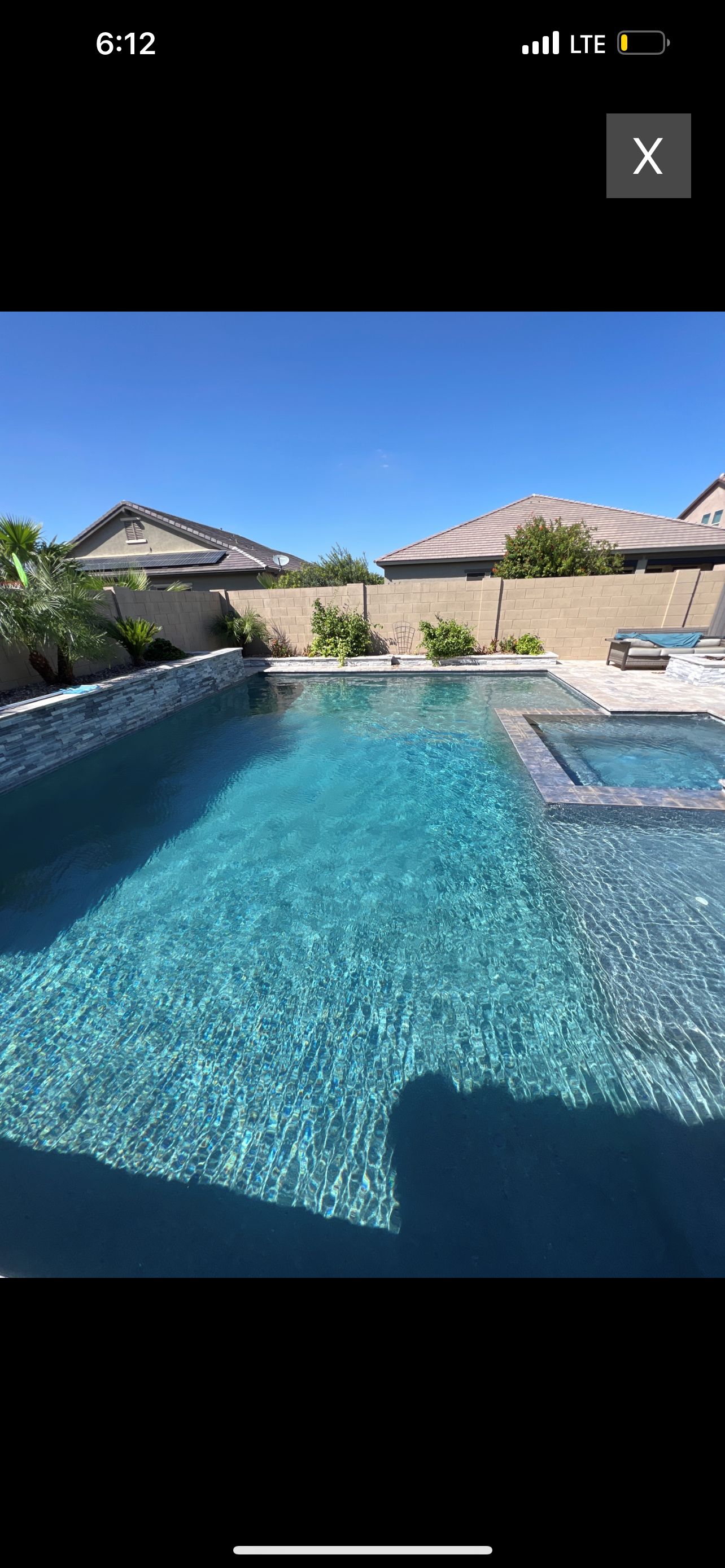
Our Acid Wash Process — Professional Grade
Acid washing is not a DIY project. Improper acid concentration, uneven application, or inadequate rinsing can permanently damage your pool surface. Our process ensures even, controlled results:
Step 1 — Controlled Drain & Pump Setup: We drain the pool using a submersible pump with a discharge rate matched to your pool size — typically 4-8 hours for a standard 15,000-20,000 gallon Mesa pool. We position the discharge to comply with city drainage requirements (Chandler both require pool drain water to go to sanitary sewer, not storm drains). We monitor the drain continuously to prevent hydrostatic uplift in high water table areas.
Step 2 — Debris Removal & Surface Prep: Once empty, we remove all sediment, debris, and loose material from the floor and walls. We inspect the surface for structural issues — cracks, delamination, hollow spots — and document any pre-existing damage before acid contact.
Step 3 — Acid Application (Top-Down): We mix muriatic acid at the appropriate dilution for your surface type — stronger for plaster (1:1 acid to water), weaker for pebble finishes (1:2 or 1:3) to avoid exposing aggregate. Application starts at the top of the walls and works down in 3-4 foot sections. The acid dissolves a thin layer of stained, scaled surface material, revealing clean material underneath. Each section gets 30-60 seconds of acid contact before neutralization.
Step 4 — Neutralization & Rinse: We neutralize each section with soda ash solution immediately after acid treatment, then power-rinse with fresh water. The neutralized rinse water is pumped to the sewer connection. Multiple rinse passes ensure no acid residue remains on the surface.
Step 5 — Refill & Startup Chemistry: We begin refilling immediately after the final rinse — a freshly acid-washed surface should not sit dry in Chandler's sun for more than a few hours or it can check and crack. During refill, we pre-treat the water with sequestering agent to prevent Chandler's high-calcium fill water from immediately depositing scale on the fresh surface. Full chemical balancing follows within 24 hours of fill completion.
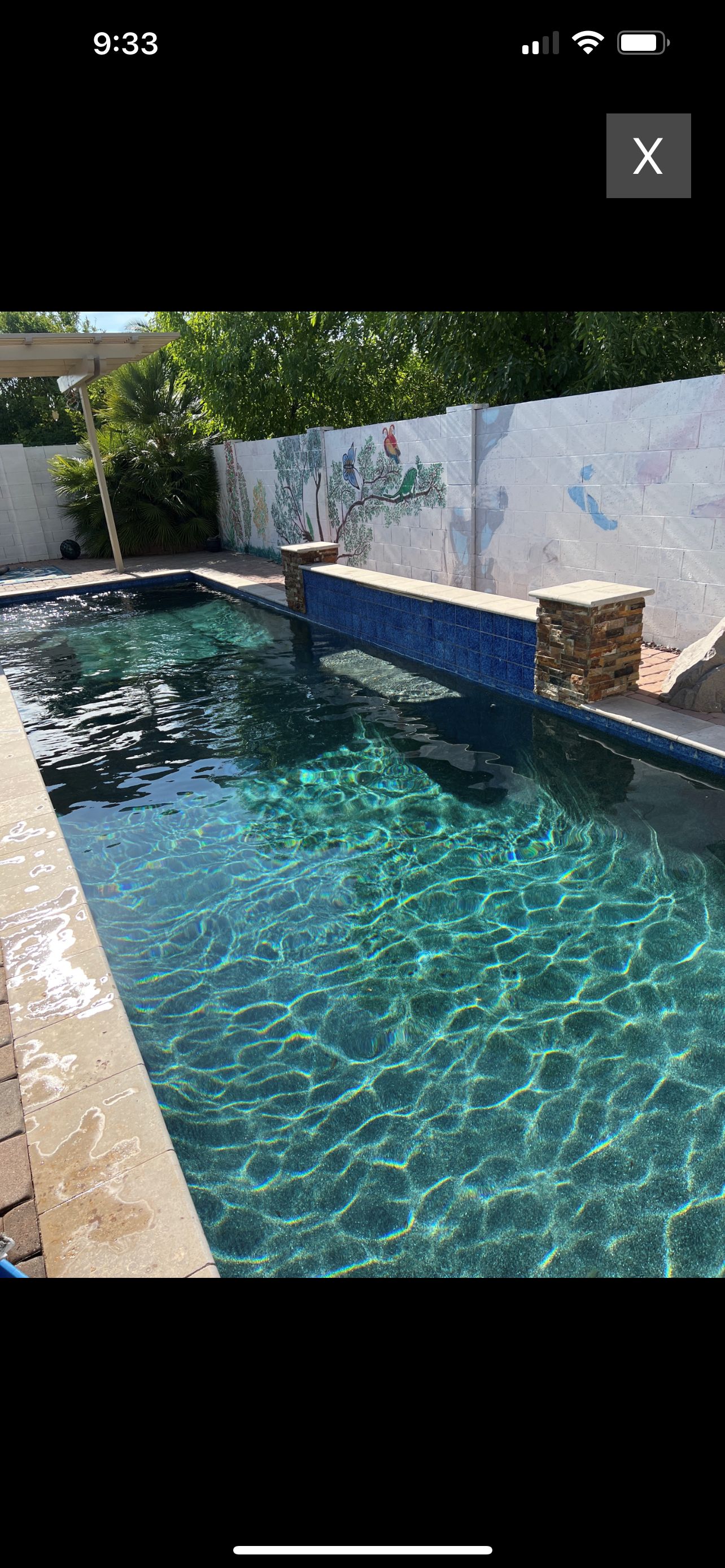
Tile Cleaning & Calcium Scale Removal
Arizona's hard water creates a unique tile cleaning challenge. The white calcium line at your waterline isn't just cosmetic — it's mineral scale that bonds to tile at a molecular level:
Glass Bead Blasting: Our primary method for heavy calcium scale on ceramic and porcelain tile. Our natural blasting media is gentle enough to avoid scratching tile glaze while powerful enough to remove years of calcium buildup. We never use sand or glass bead. This method works without draining — we blast at waterline level while the pool is full. Results are immediate and dramatic.
Pumice Stone Scrubbing: For moderate calcium on standard pool tile, hand pumice scrubbing provides excellent results at a lower cost than media blasting. We use pool-grade pumice (not hardware store pumice, which can scratch) and work in sections along the waterline. Best for pools with 1-2 years of buildup.
Chemical Descaling: For light scale or maintenance cleaning between deep cleans, we use professional acid-based tile cleaners that dissolve calcium deposits without mechanical abrasion. This method is ideal for quarterly maintenance to prevent heavy buildup from forming.
Grout Restoration: Arizona's UV exposure deteriorates pool tile grout faster than in moderate climates. Cracked, missing, or stained grout allows water behind tiles, leading to tile popping and delamination. We remove failed grout and apply pool-rated epoxy grout that resists UV, chemicals, and thermal cycling.
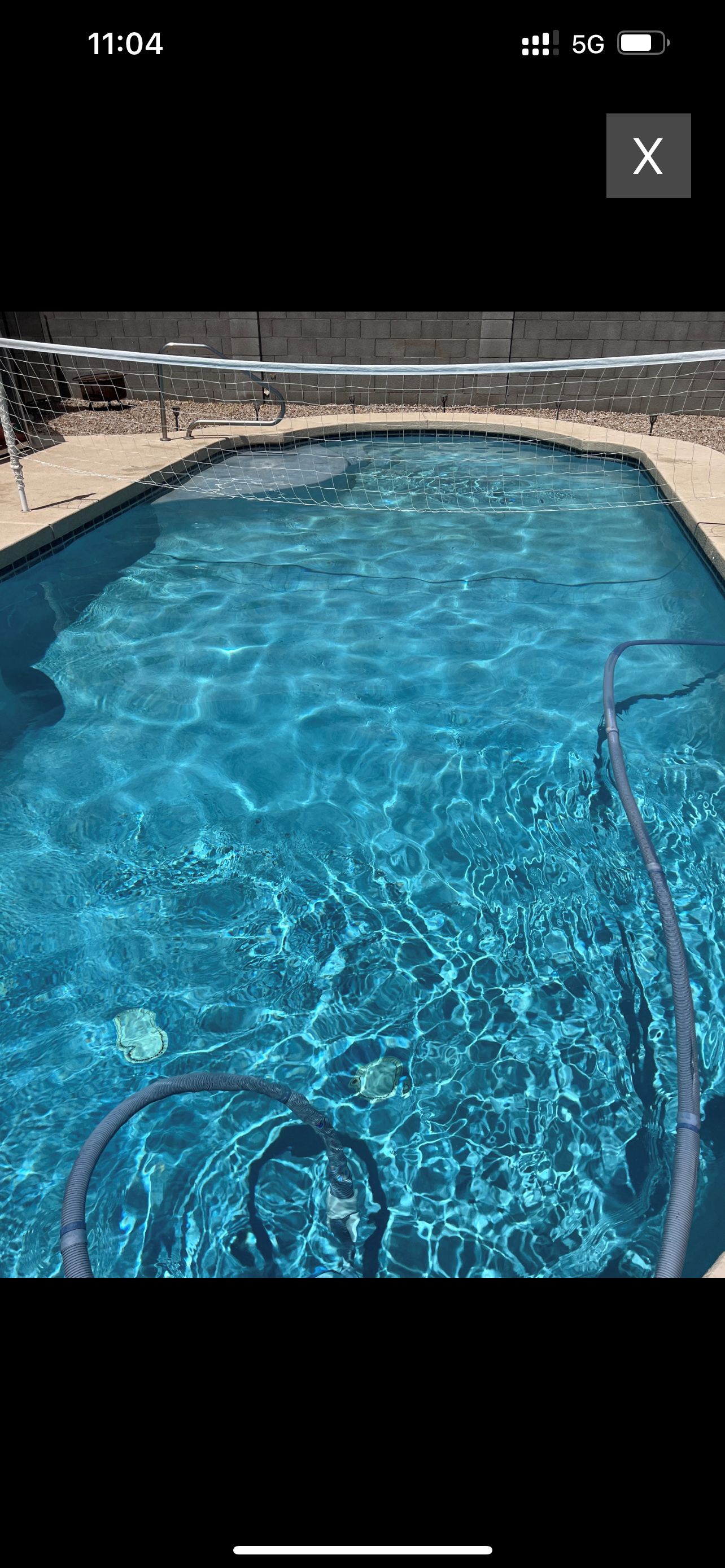
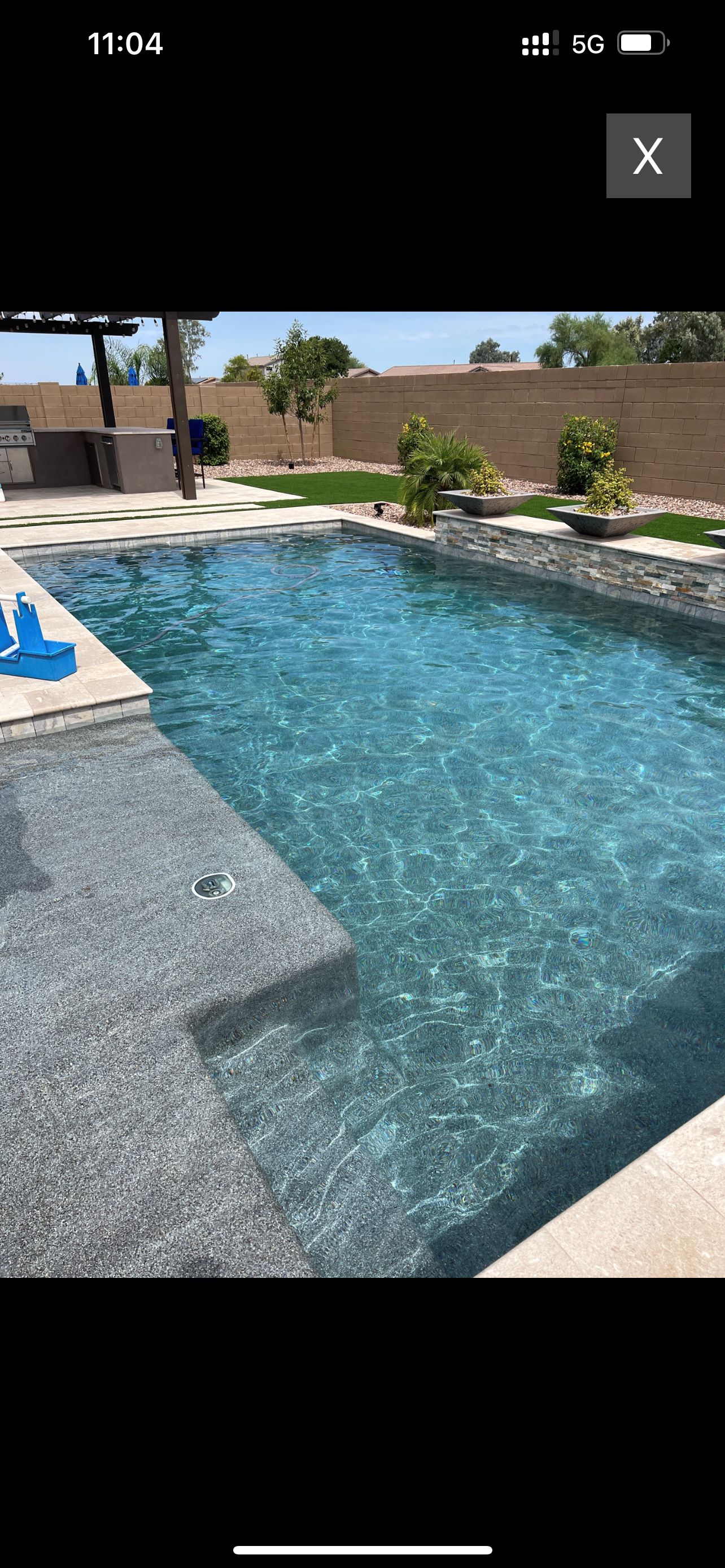
Drain, Acid Wash & Tile Clean Pricing
Transparent pricing — no hidden charges:
Pool Drain & Refill Only: $300-$500. Includes submersible pump setup, monitored drain, city sewer compliance, and startup chemical balance on refill. Price depends on pool size and water disposal logistics.
Standard Acid Wash: $500-$900. Full drain, acid wash of all walls and floor, neutralization, rinse, refill, and startup chemistry. For pools with surface staining, moderate discoloration, or calcium deposits on the plaster surface.
Heavy-Duty Acid Wash (Green Pool / Severe Staining): $800-$1,400. For pools that have been neglected, abandoned, or have severe organic/metal staining requiring multiple acid passes. Includes extra rinse cycles and heavier chemical treatment.
Chlorine Wash: $400-$700. An alternative to acid wash that uses concentrated chlorine solution instead of acid. Better for removing organic stains (algae, leaf tannins) without dissolving plaster. Often used on newer plaster surfaces where acid wash would be too aggressive.
Tile Cleaning — Glass Bead Blasting: $350-$700 depending on linear footage of tile and severity of calcium buildup. Most Chandler pools have 60-100 linear feet of waterline tile.
Tile Cleaning — Pumice Scrub: $200-$400. Manual cleaning for moderate calcium buildup. Takes longer but costs less than natural-media blasting.
Combo: Acid Wash + Tile Clean: $800-$1,400. Bundle discount when you do both services during the same drain. This is our most popular package for spring pool refreshes.
Call (480) 999-9226 for your free pool assessment.
Important Safety Considerations for Arizona Pool Drains
Draining a pool in Chandler isn't as simple as unplugging the drain. Arizona-specific risks must be managed:
Hydrostatic Uplift Risk: In areas with high water tables or after monsoon saturation, an empty pool shell can literally float out of the ground. This is most common in lower-elevation Mesa neighborhoods, near canal zones, and in Gilbert areas near retention basins. We check groundwater conditions and install hydrostatic relief valves before draining in susceptible areas.
Sun Damage to Empty Shells: An empty pool exposed to Chandler's 115°F+ summer sun can crack, check, and delaminate within hours. We schedule drain services to minimize empty time and begin refilling immediately after the wash is complete. We never leave a pool empty overnight during summer months.
City Drain Regulations: Both Chandler require pool drain water to be discharged to sanitary sewer (typically via a cleanout connection), not to the street, storm drain, or landscaping. Chlorinated or chemically treated water discharged to storm drains violates city codes and can result in fines. We handle all discharge setup and compliance.
Refill Water Treatment: Fresh Mesa/Gilbert water is alkaline (pH 8.0-8.4) with high calcium. Without proper startup treatment, the fill water will immediately deposit calcium scale on your freshly cleaned surface. We pre-treat with sequestering agent during fill and perform full chemical balancing within 24 hours.
Best Time to Acid Wash Your Chandler Pool
Timing matters for pool draining in Arizona:
Ideal Window: October — March. Cooler temperatures (60-85°F) reduce the risk of sun damage to the empty shell, minimize evaporative water loss during refill, and lower the chemical demand during startup. Most Chandler pool drains are scheduled in this window.
Avoid: June — August. Summer drain services carry higher risk due to extreme heat affecting the empty shell, rapid evaporation increasing refill time and cost, and risk of monsoon interference. We can do summer drains if necessary, but they require faster turnaround and additional precautions.
Post-Monsoon (September): If your pool survived a green algae bloom during monsoon season and the staining won't respond to chemical treatment, September is a good time for a drain and acid wash before the swimming season winds down.
Every 3-5 Years: Most Chandler pools benefit from a drain and acid wash every 3-5 years to reset TDS, CYA, and calcium levels while restoring the surface appearance. This schedule extends the life of your plaster or pebble finish significantly.
Ready to restore your pool? Call (480) 999-9226 to schedule.
Frequently Asked Questions
Most pool drain and acid wash services take 1-2 days total. Day one: drain (4-8 hours for a 15,000-20,000 gallon pool), wash, neutralize, and begin refill. Day two: complete refill and startup chemistry. We never leave a pool empty overnight in summer.
A full refill of a 15,000-20,000 gallon pool costs approximately $50-$100 on your water bill depending on your current tier and city rates. Chandler offer pool refill allowances — contact your water provider to apply so the refill doesn't push you into the highest pricing tier.
A properly performed acid wash removes a very thin layer (1/16 inch or less) of surface plaster. Most plaster surfaces can handle 3-5 acid washes over their lifetime before replastering is needed. We assess your plaster thickness before recommending an acid wash. For newer or thinner plaster, we may recommend a chlorine wash instead, which cleans without dissolving surface material.
Acid wash uses diluted muriatic acid to dissolve a thin layer of plaster surface, removing stains, scale, and discoloration embedded in the material. Chlorine wash uses concentrated liquid chlorine to kill and remove organic staining (algae, leaf tannins) without dissolving plaster. Acid wash is more aggressive and effective for mineral/metal stains. Chlorine wash is gentler and better for biological stains on newer surfaces.
Yes, but with additional precautions. The empty shell is exposed to 115°F+ temperatures and intense UV that can cause plaster to check and crack. We schedule summer drains to minimize empty time — ideally draining overnight and washing at first light. We begin refilling immediately after the wash and never leave a pool empty during daylight hours in June-August.
Three things prevent rapid calcium return: (1) Keep calcium hardness below 400 ppm through periodic partial drains. (2) Maintain pH between 7.4-7.6 — higher pH causes calcium to precipitate out of solution faster. (3) Use a sequestering agent monthly that keeps calcium dissolved in the water instead of depositing on surfaces. With this maintenance protocol, tile cleanings can last 2-3 years.
Yes, but with a more diluted acid solution and shorter contact time than standard plaster. Pebble finishes (PebbleTec, PebbleSheen, etc.) use exposed aggregate that can be damaged by over-aggressive acid application. We use 1:2 or 1:3 acid dilution ratios for pebble surfaces and work in smaller sections with faster neutralization. The result cleans the cement matrix between pebbles without damaging the aggregate stones.
Both Chandler require pool drain water to go to the sanitary sewer system — typically through a cleanout connection on your property. Discharging pool water to the street, storm drain, or landscaping violates city code. We set up the discharge connection and ensure full compliance. If no cleanout is accessible, we coordinate with the city for approved disposal options.
Service Areas
We provide pool drain, acid wash & tile cleaning across the East Valley: