
Green Pool Cleanup & Algae Removal in San Tan Valley, AZ
San Tan Valley sits further into the Sonoran Desert than any community we serve — and that isolation shows up in pool water. Out here, you're dealing with well water that can run 500+ ppm calcium hardness, desert wind that carries abrasive caliche dust from undeveloped land, and temperature swings of 30-40 degrees between day and night that stress both chemistry and equipment. When a San Tan Valley pool goes green, it's typically more contaminated than an equivalent urban pool because the environmental loading is heavier and help is further away. Tartan Pools provides dedicated green pool restoration across San Tan Valley — from the established neighborhoods in Johnson Ranch to the newer communities along Hunt Highway.
Call us at (480) 999-9226 or email us for a free assessment.
San Tan Valley: The Toughest Pool Environment in the East Valley
San Tan Valley pools face conditions that urban Valley pools never encounter:
Extreme Well Water Conditions: Most San Tan Valley homes rely on well water from the Pinal Active Management Area, which produces some of the hardest, most mineral-laden water in the Phoenix metropolitan area. Calcium hardness of 400-600+ ppm, elevated TDS, and measurable iron are common. This water doesn't just make pool maintenance harder — it fundamentally changes the chemistry approach required to keep water clear and surfaces stain-free.
Unprotected Desert Exposure: San Tan Valley has minimal urban buffering. Pools face direct exposure to open desert on all sides, receiving wind-driven sand, caliche dust, and native plant debris in quantities that urban communities never experience. A single haboob can deposit enough material to cloud a pool overnight.
Temperature Extremes: San Tan Valley experiences wider temperature swings than the central Valley — hotter daytime highs and cooler overnight lows. This thermal cycling stresses pool chemistry, causes faster chlorine degradation during the day, and can crack equipment components that expand and contract repeatedly.
Distance from Service: San Tan Valley is the furthest community from most pool service companies' base of operations. Many companies send technicians out here last, arriving late in the day when chlorine added has less time to work before sunset reduces UV exposure. Tartan Pools routes San Tan Valley strategically to ensure morning service when chemical treatments are most effective.
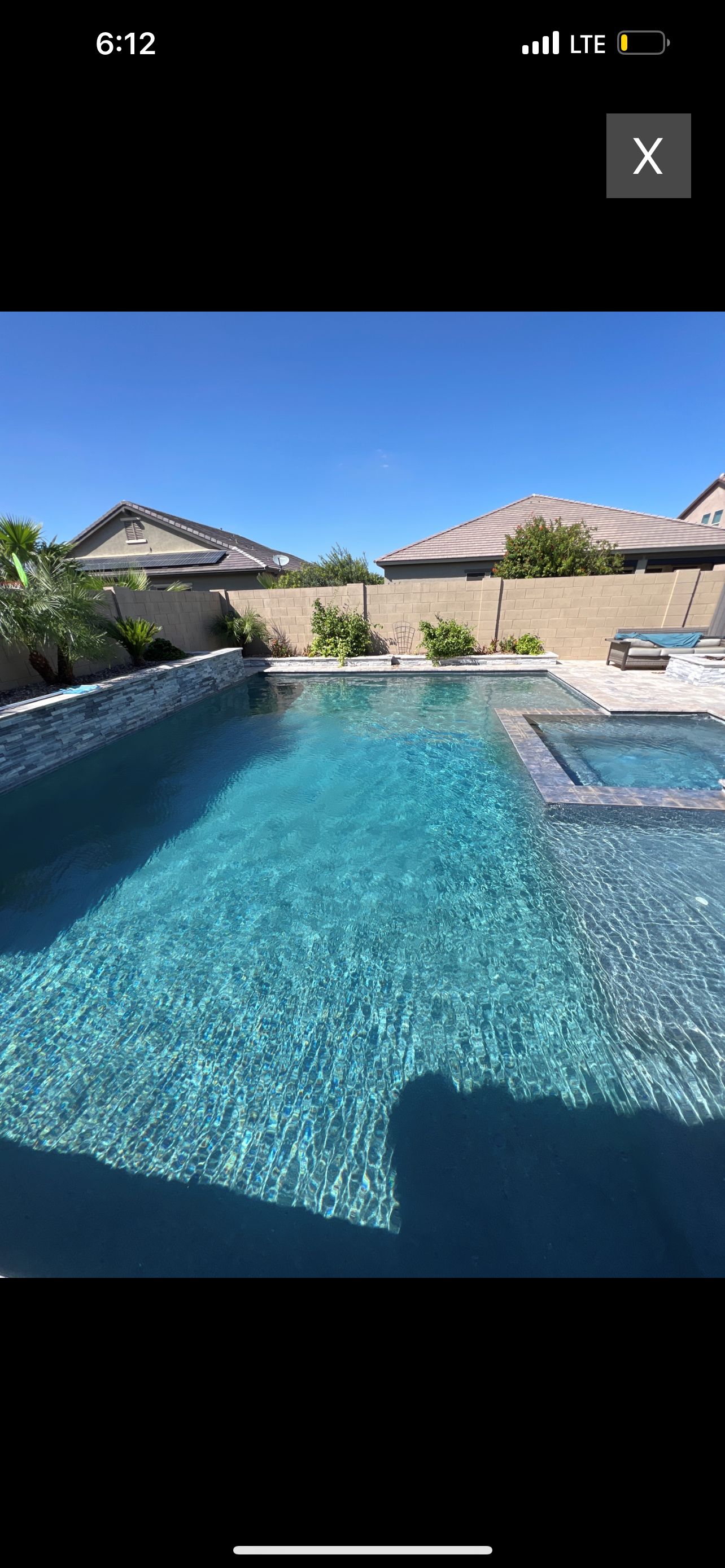
Our San Tan Valley Green Pool Approach
San Tan Valley green pools require a more aggressive and nuanced restoration than any other community we serve:
Comprehensive Water Source Analysis: Before treating, we analyze the fill water source. San Tan Valley well water can contain iron, manganese, copper, and sulfides that require pre-treatment before shocking. Dumping shock chemicals into mineral-laden water without sequestrant treatment first creates staining that's more difficult and expensive to fix than the algae.
Multi-Day Treatment Protocol: San Tan Valley green pools typically require 4-7 days of active treatment — longer than urban pools — due to the higher mineral content that interferes with chlorine efficacy and the heavier sediment loads on pool surfaces. We visit daily during active restoration, not just on day one and day five.
Drain and Dilution Strategy: When San Tan Valley pool water has TDS above 3,000 ppm or calcium above 600 ppm, chemical treatment alone can't restore clarity. We perform partial-drain-and-dilution with analyzed fill water to bring chemistry into a manageable range before final treatment. This step is unique to high-mineral communities like San Tan Valley.
Equipment Hardening: After restoration, we evaluate whether equipment upgrades are needed to prevent recurrence in San Tan Valley's harsh conditions. Larger filters, upgraded baskets, timer battery backups, and surge protectors are common recommendations for STV pools.
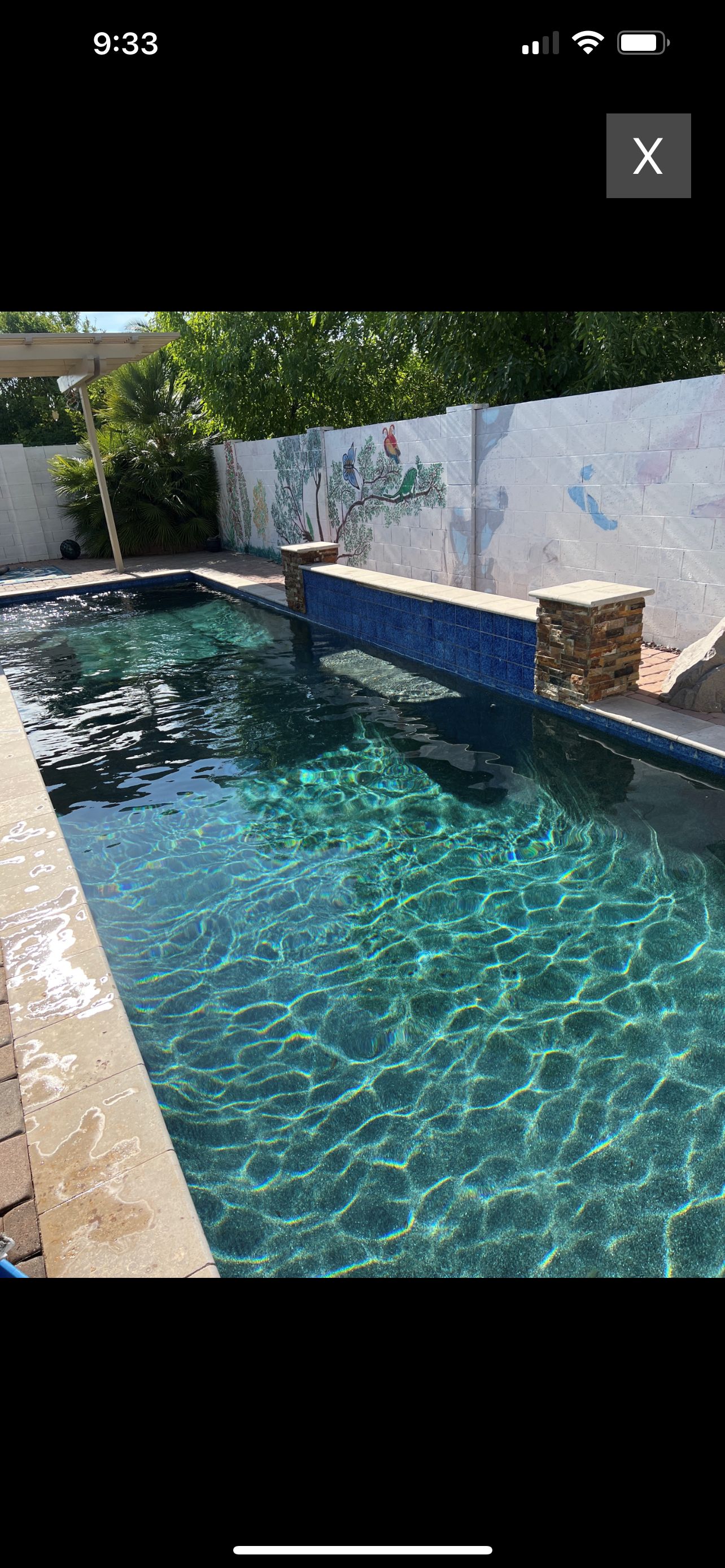
Algae Types Common in San Tan Valley Pools
San Tan Valley's unique conditions foster specific algae strains. Here's what we encounter:
Green Algae (Dominant Strain): Free-floating green algae thrives in San Tan Valley's warm, phosphate-rich water. With well water providing mineral nutrients and wind-deposited organic matter providing phosphates, green algae can bloom explosively — a pool can go from clear to opaque green in 24-48 hours during July-August peak heat. Treatment: aggressive chlorine shock (30-40 ppm), algaecide, phosphate remover, and continuous filtration.
Mustard (Yellow) Algae: Particularly stubborn in San Tan Valley because it thrives in pool areas that get partial shade from block walls and structures during afternoon hours. Mustard algae adheres to walls and floors in brushable yellow-green sheets and is chlorine-resistant at normal levels. We use specialized yellow algaecide combined with super-chlorination and aggressive brushing. All pool toys and floats must be treated simultaneously to prevent recontamination.
Black Algae: San Tan Valley's plaster and pebble-tec pools are susceptible to black algae, which develops deep root structures into porous surfaces. The waxy protective cap resists standard chlorine. Our protocol: wire brush to break caps, direct application of concentrated trichlor granules, and sustained elevated chlorine for 7-10 days. Severe infestations may require acid washing.
Pink Biofilm: Not technically algae — it's Methylobacterium bacteria that forms slimy pink/orange deposits in PVC fittings, skimmers, and return jets. More common in San Tan Valley salt pools where elevated pH creates favorable biofilm conditions. Requires targeted oxidizer application inside plumbing lines, not just surface treatment.
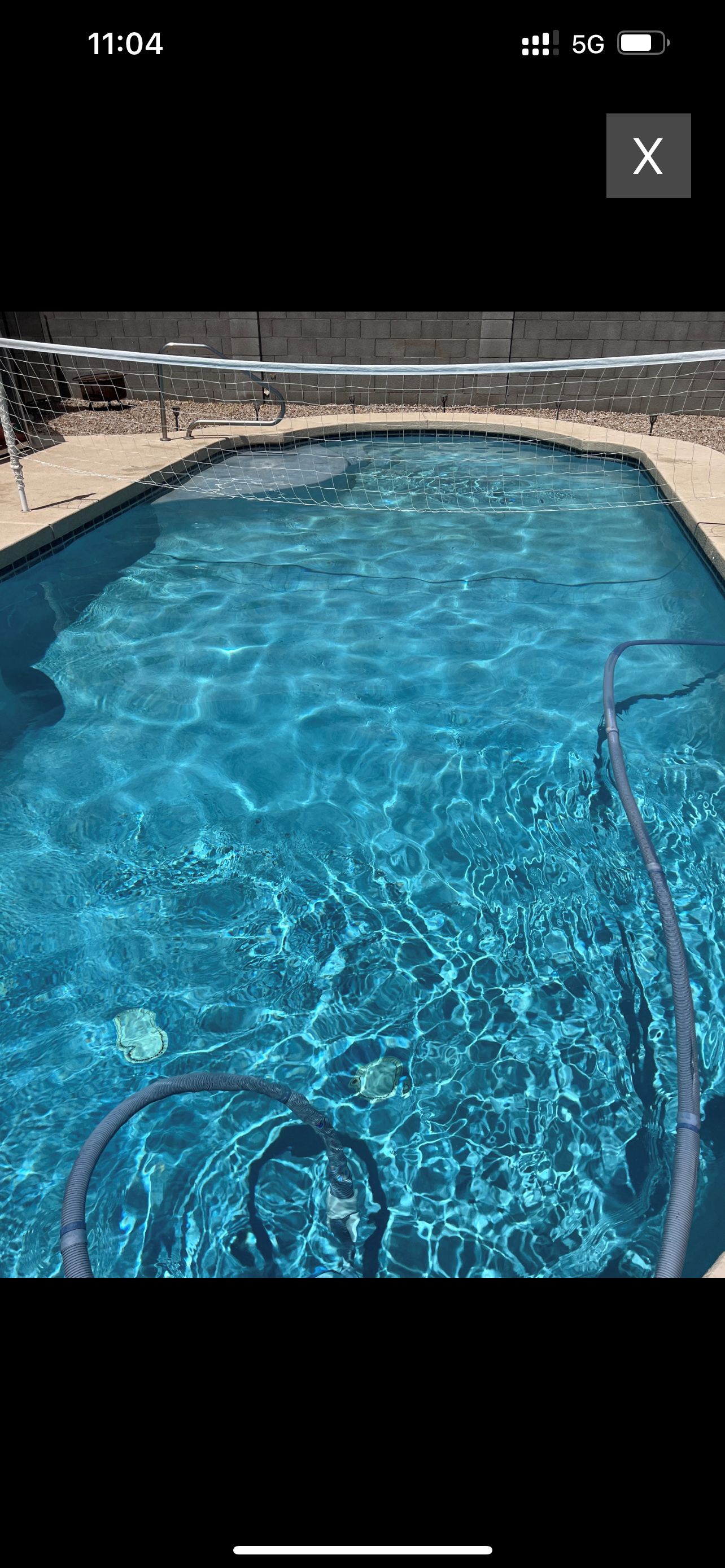
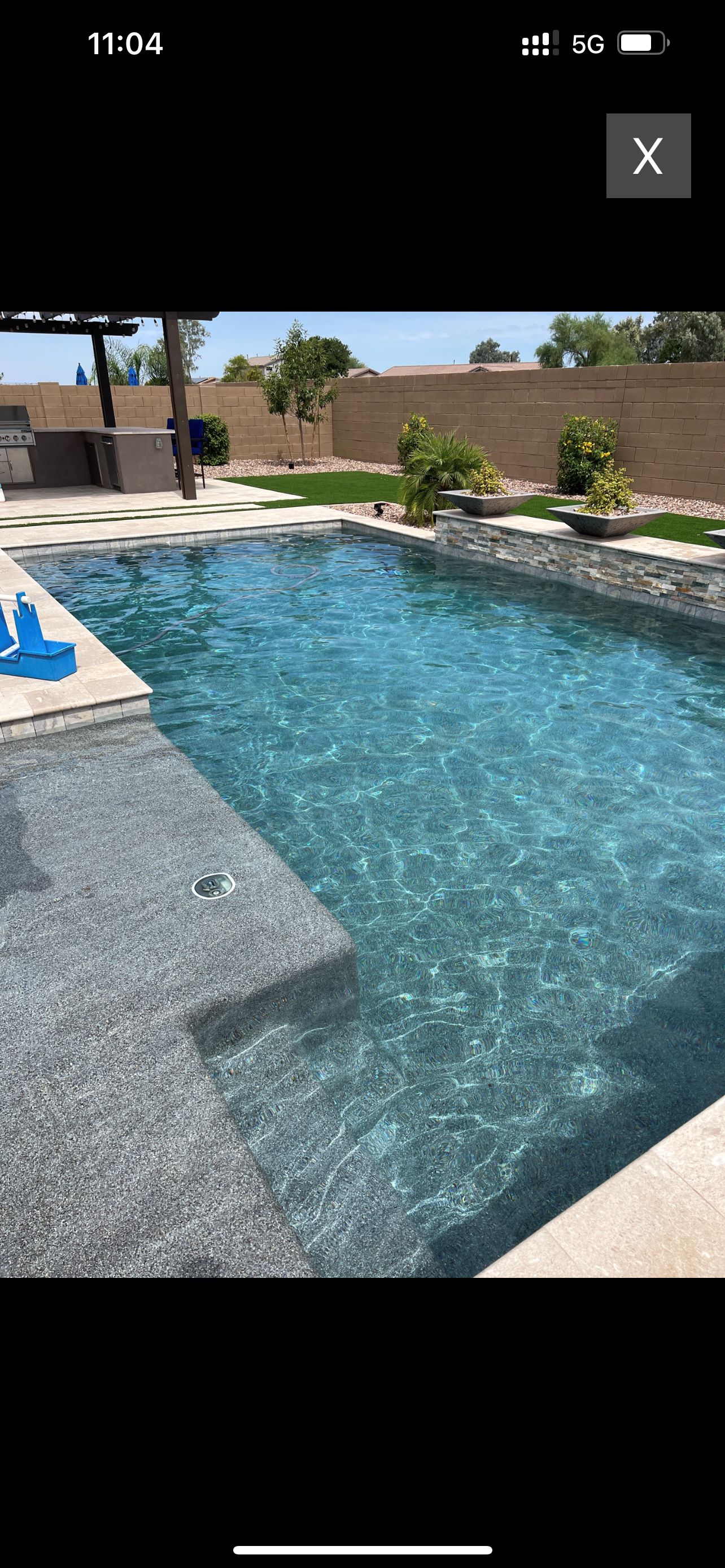
Green Pool Cleanup Costs in San Tan Valley
San Tan Valley restorations run slightly higher than urban areas due to the more intensive treatment requirements:
Light Green (Can See Bottom): $350-$450. Pool is green but translucent. Chemistry shock, algaecide, phosphate treatment, filter clean, and 3-4 follow-up visits over 4-5 days. San Tan Valley's well water typically adds a metal sequestrant step not needed in city water pools.
Dark Green (Opaque): $450-$600. Can't see the bottom, heavy algae throughout. Multiple shock treatments, vacuum to waste, filter cleaning (often twice), phosphate knockout, and 4-5 follow-up visits over 5-8 days. Well water complications add 1-2 extra days.
Black/Swamp (Severe): $600-$750. Standing-water appearance, heavy sediment, possible mosquito larvae. May require partial drain-and-dilution to reduce mineral load before treatment can be effective. Extensive vacuuming, multiple treatment rounds, and 5-7 follow-up visits over 8-12 days.
Well Water Surcharge: Included in all STV pricing above. Covers iron sequestrant, additional chemical steps, longer treatment timeline, and mineral management that San Tan Valley's water demands.
Black Algae Treatment: Add $150-$300 to any tier. The specialized treatment, repeated brushing, and extended monitoring require significantly more labor and chemicals.
Drain-and-Refill (When Necessary): $600-$1,400 depending on pool size. Well water refills require water analysis before filling and chemistry startup is more complex. Includes surface cleaning while empty, refill monitoring, and complete chemistry startup.
Call (480) 999-9226 — same-day response for San Tan Valley green pool emergencies.
San Tan Valley's Monsoon and Dust Storm Impact
San Tan Valley is ground zero for monsoon-related pool problems:
Extreme Haboob Exposure: San Tan Valley sits directly in the path of Phoenix's most severe haboob dust storms. With no urban structures to buffer wind, pools receive the full force of airborne caliche, agricultural silt, and desert particulates. A major haboob can deposit 5-10 pounds of material into an uncovered pool — overwhelming filters and creating massive chlorine demand within hours.
Flash Flood Runoff Contamination: During intense monsoon rainfall, properties near washes and low-lying areas in San Tan Valley can experience landscape runoff entering pools. This runoff carries fertilizer, pesticides, animal waste, and decomposed organic matter — all of which consume chlorine rapidly and introduce bacteria and algae spores. Pools that receive runoff typically need complete chemistry restoration.
Power Outage Vulnerability: San Tan Valley's electrical infrastructure, being at the end of distribution lines, experiences more frequent monsoon-related power outages than urban communities. When the pump stops running, circulation stops, chlorine distribution stops, and algae gets a head start. A 24-48 hour power outage during 115°F heat can trigger a green bloom even in a well-maintained pool.
Our Monsoon Protocol: Weekly service clients receive pre-monsoon phosphate treatment (June), elevated chlorine targets (5 ppm vs standard 3 ppm) from July through September, emergency post-storm adjustments, and mid-week chemistry checks during active monsoon weeks. This protocol keeps our San Tan Valley clients clear all summer while their neighbors go green.
Well Water Challenges for San Tan Valley Pools
San Tan Valley has arguably the most challenging well water for pool maintenance in the entire East Valley:
Extreme Calcium Hardness: San Tan Valley well water commonly tests 400-600+ ppm calcium — well above the recommended 200-400 ppm range. At these levels, calcium precipitates out of solution and deposits on surfaces, equipment, and salt cells aggressively. Every time you add well water to replace evaporation, you're adding more calcium with no natural way to reduce it except drain-and-dilution.
Iron and Metal Content: Iron levels of 0.3-1.5+ ppm are common in San Tan Valley wells. When you shock a pool with dissolved iron, the chlorine oxidizes the iron, turning it into visible rust-colored particles that stain plaster, pebble-tec, and tile. We always add iron sequestrant before shocking a San Tan Valley pool to prevent this — a step that many pool companies skip because they don't understand the water source.
Elevated TDS: Total dissolved solids in San Tan Valley well water can exceed 1,000-2,000 ppm. High TDS makes water feel "heavy," reduces chlorine effectiveness, and interferes with salt system sensor accuracy. Pools on well water typically need partial drain-and-refill every 18-24 months to keep TDS manageable.
Sulfide Content: Some San Tan Valley wells produce water with detectable hydrogen sulfide (the "rotten egg" smell). While sulfide levels dissipate with aeration, they can interfere with chlorine chemistry and cause temporary black staining on pool surfaces during initial fill or top-off events. We test for sulfides as part of our San Tan Valley water analysis.
Preventing Green Pools Year-Round in San Tan Valley
Our prevention strategy is specifically engineered for San Tan Valley's extreme conditions:
Aggressive Phosphate Management: We test and treat phosphates monthly on every San Tan Valley pool. Phosphates above 300 ppb get professional-grade removal treatment. San Tan Valley's open desert exposure continuously introduces phosphates from dust, organic debris, and landscape runoff. Starving algae of its primary food source is the #1 prevention strategy.
CYA Monitoring: Cyanuric acid protects chlorine from UV degradation — critical in San Tan Valley's intense sun. But CYA from tablet use climbs continuously, and above 80 ppm, chlorine becomes essentially ineffective regardless of how much you add. We monitor CYA quarterly and recommend partial drain-and-refill when levels approach 70 ppm.
Equipment Reliability Focus: A pump failure in San Tan Valley's summer heat is a green pool within 48 hours. We inspect pumps, timers, automation, and electrical connections on every weekly visit. Equipment failures are more common in San Tan Valley due to power fluctuations, pest intrusion, and extreme thermal cycling.
Morning Service Scheduling: We route San Tan Valley pools for morning service when chlorine treatments have maximum effect. Companies that service STV last (arriving at 3-4 PM) apply chemicals that have only a few hours of sunlight-active time before sunset. Our morning service ensures a full day of active treatment.
Call (480) 999-9226 to start weekly service and protect your San Tan Valley pool year-round.
Frequently Asked Questions
Three compounding factors: well water minerals feed algae differently, open desert exposure introduces massive organic debris and phosphates, and wider temperature swings degrade chlorine faster. A service gap that causes slight haze in Mesa causes a full green bloom in San Tan Valley.
Absolutely. San Tan Valley well water with iron above 0.3 ppm, copper, or manganese requires metal sequestrant treatment before shocking. Without it, metals precipitate and stain surfaces brown, green, or purple — creating a problem worse than the algae. We always test water source before treatment.
Light green: $350-$450. Dark green: $450-$600. Severe/black: $600-$750. Black algae adds $150-$300. Drain-and-refill: $600-$1,400. STV runs slightly higher than urban areas due to well water complications and longer treatment timelines. Detailed quotes after on-site assessment.
Consistent weekly professional service is #1. Beyond that: monthly phosphate testing and removal, quarterly CYA monitoring (with drain-and-dilution when needed), properly sized equipment for STV's heavy debris load, and monsoon-season elevated chlorine targets. We manage all of this in our weekly service plans.
Light green: 3-4 days. Dark green: 5-8 days. Black/swamp: 8-12 days or may require drain-and-refill. San Tan Valley takes 1-2 days longer than urban pools due to well water mineral complications, heavier sediment loads, and the need for metal sequestrant pre-treatment.
Yes. Pinal County Environmental Health actively monitors for green/stagnant pools due to mosquito-borne illness concerns. Fines start at $100/day. We offer same-day emergency response and can provide documentation of active remediation to the county upon request.
Absolutely — this is our most common San Tan Valley call. Snowbird properties and investment homes go green within 1-2 weeks without service in summer. We do full assessment and begin treatment same-day you call. Most vacant-home pools clear within 7-10 days. Pro tip: keep us on service year-round — it's cheaper than one green pool restoration.
Chemical treatment is usually cheaper ($350-$750) vs drain-and-refill ($600-$1,400). However, San Tan Valley's extreme well water may require partial drain when TDS exceeds 3,000 ppm or calcium surpasses 600 ppm. We test chemistry first and recommend the most cost-effective option. Draining also carries surface damage risk in extreme heat.
Service Areas
We provide green pool cleanup & algae removal in san tan valley across the East Valley: